
Generation
Article 2 of 20 · Generation and storageRooftop solar vs. ground-mounted solar: a guide for businesses
Direct answer
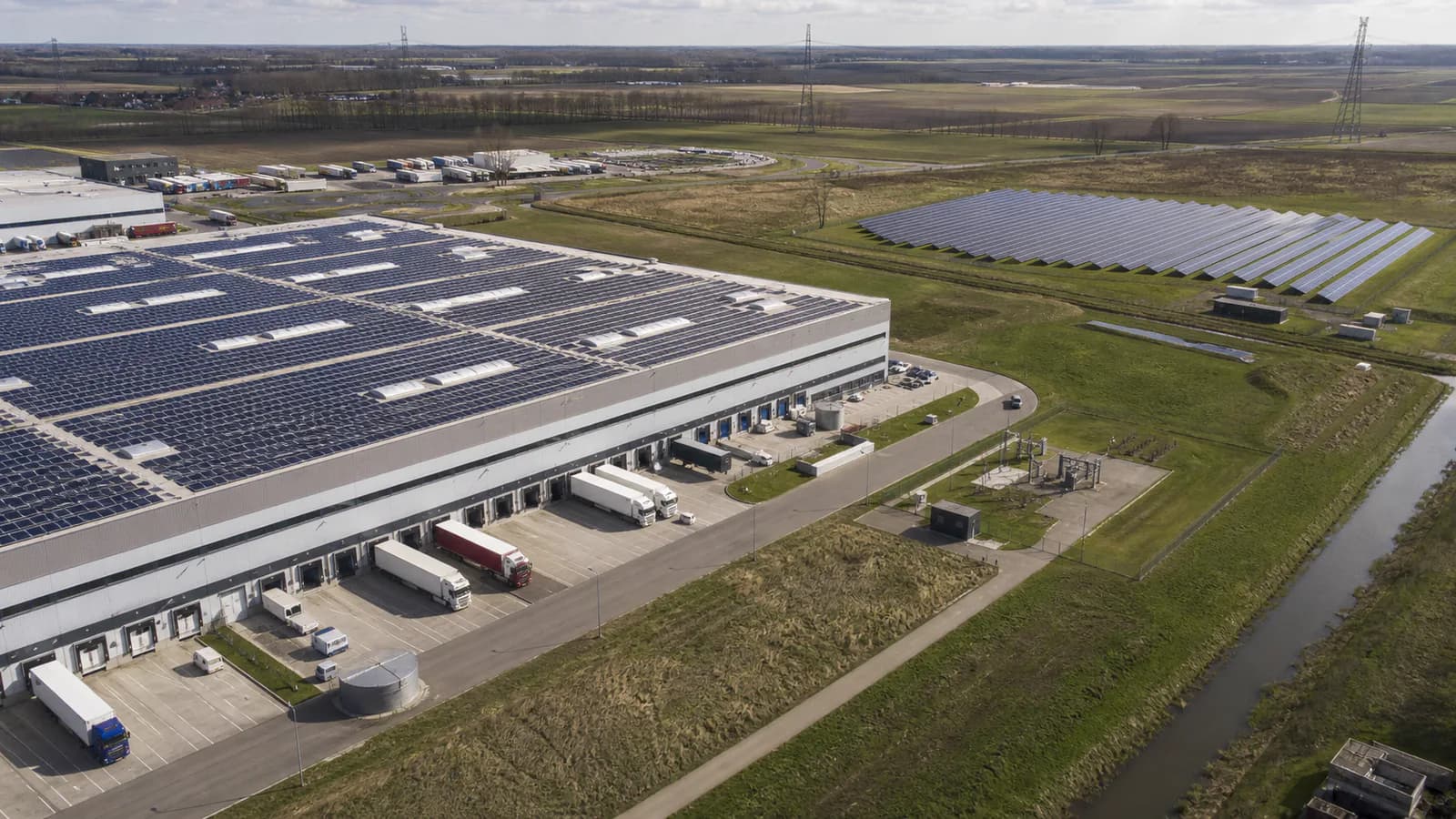
The difference between rooftop solar (zon-op-dak) and ground-mounted solar (zon-op-veld) lies in where the panels sit: rooftop solar goes on the roofs and facades of buildings, while ground-mounted solar stands as a solar park on the land. The Dutch preference order, the solar ladder, chooses roofs and unused sites first. Only afterwards does agricultural or natural land come into view, and then only by exception.
- Clear definition
- Data-driven assessment
- Risks and opportunities visible
- Practical next steps
Rooftop solar vs. ground-mounted solar: scattered information versus Energy Intelligence
Anyone wanting to generate solar power faces a choice: panels on the roof or a solar park on the ground. A business with a large warehouse often looks up first, while a landowner with an empty plot thinks of a field. In a country with little space, that clashes with policy. The Dutch government therefore steers firmly towards roofs and makes land for solar parks increasingly hard to obtain. That affects everyone who wants to use the sun commercially.
- Rooftop solar uses space that already exists and spares scarce land; ground-mounted solar delivers more capacity per project but takes up open landscape.
- The solar ladder has four steps: first roofs and facades, then unused sites in built-up areas, then unused sites in rural areas, and only last agricultural and natural land.
- For new solar parks on agricultural and natural land, a 'no, unless' rule has applied since late 2023: with a few exceptions they are no longer allowed.
Insight
Traditional approach
Information is scattered across portals, documents, invoices or separate spreadsheets.
Modern approach
Data, context and interpretation are brought together into a clear decision picture.
Decision-making
Traditional approach
Choices are made based on averages, assumptions or occasional analyses.
Modern approach
Scenarios, KPIs and current measurement data make the trade-off more concrete and repeatable.
Follow-up
Traditional approach
Actions often stay non-committal or disappear into separate reports.
Modern approach
Follow-up actions, monitoring and reporting are linked to the same energy data.
What is the difference between rooftop and ground-mounted solar?
Rooftop solar means panels on the roofs and facades of buildings: warehouses, barns, offices, greenhouses or parking decks. You use space that already exists and otherwise yields nothing. The generation sits close to consumption, which can make the connection simpler. Ground-mounted solar is a solar park on the land, a field installation that is often much larger. Per project a field delivers more capacity, but it takes up open space and changes the landscape. Because of their size, many solar parks have a noticeable impact on their surroundings. The Dutch government therefore asks for good landscape integration and for combination with other functions.
- Rooftop solar: panels on existing buildings, no extra land use.
- Ground-mounted solar: a solar park on the land, often larger in size.
- A field delivers more capacity per project than a single roof.
- A field changes the landscape and demands careful integration.
How does the Dutch preference order work?
The Netherlands has a preference order for solar, the solar ladder. It asks all parties to look at roofs and facades first, and only afterwards at the ground. The ladder has four steps. Step one is roofs and facades. Step two is unused sites in built-up areas, such as car parks and landfills. Step three is unused sites in rural areas. Step four is agricultural and natural land. This spares scarce land as much as possible. In 2023 the national government, provinces, municipalities and water authorities made agreements about this: for solar parks on agricultural and natural land a 'no, unless' rule applies. Provinces anchor this order legally in their regulations.
- Step 1: roofs and facades of buildings.
- Step 2: unused sites in built-up areas.
- Step 3: unused sites in rural areas.
- Step 4: agricultural and natural land, only by exception.
- Provinces anchor the order in their provincial regulations.
What does a business or landowner weigh up?
Start with the question of what space you have. If you have a large, suitable roof, you sit at the top of the solar ladder and the permit usually runs more smoothly. If you want a field on agricultural land, your application often does not immediately meet the provincial rules and you must provide extra reasons. An exception applies, for example, to agri-PV, where farming and generation share the same plot. Also weigh the grid connection: on a full grid the available transport capacity determines what can be connected. Consider the landscape, local support and whether the roof can bear the structure. The highest yield is not always the simplest route.
- A suitable roof sits high on the solar ladder and is often permitted more easily.
- A field on agricultural land requires extra justification with the municipality.
- An exception is, for example, agri-PV, where farming and generation go together.
- On a full electricity grid the available transport capacity determines what is feasible.
- Weigh the landscape, local support and the roof's load capacity.
Curious what this looks like with your own data?
In a no-obligation call, a specialist looks at your meters, sites and energy questions with you. Response within one business day.
Search the knowledge base
Find the answer to your question.
Search using your own words. Abbreviations and spelling variants are recognised, so EMS also finds the articles on energy management systems.
Topic