
Behind-the-meter vs. front-of-the-meter storage: a guide for businesses
Direct answer
The difference between storage behind the meter and in front of the meter lies in where the battery sits and what it serves. Storage behind the meter sits behind your own grid connection and works for your own consumption: more self-consumption of solar power, fewer peaks on the connection and lower grid costs. Storage in front of the meter sits directly on the grid and serves trading and system services.
- Clear definition
- Data-driven assessment
- Risks and opportunities visible
- Practical next steps
Behind-the-meter vs. front-of-the-meter storage: scattered information versus Energy Intelligence
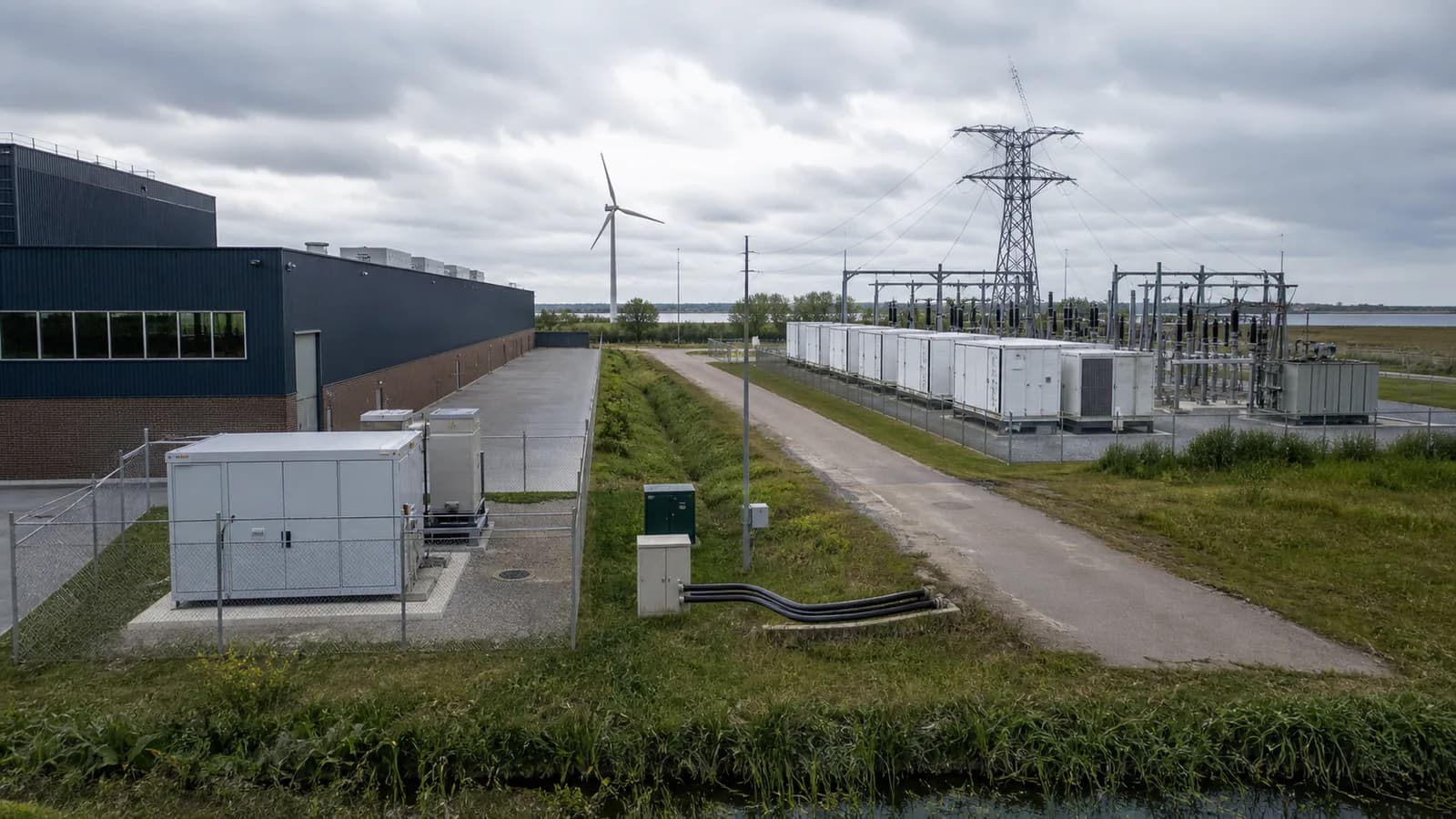
A battery can sit in two very different places in the energy system, and that shapes almost everything that follows. Picture a Dutch company with rooftop solar wanting to absorb its own midday peak, versus an investor placing a battery next to a substation to trade on the market. Both are called storage, but their purpose, rules and revenue model differ strongly. Anyone considering a battery therefore first chooses this position deliberately.
- Behind the meter the battery shares your own connection; the goal is optimising your own consumption, shaving peaks and lowering grid costs.
- In front of the meter the battery sits directly on the grid; the goal is trading on the electricity market and system services such as balancing.
- The distinction determines your market role, your connection, how transport tariffs apply and which revenue model is possible.
Insight
Traditional approach
Information is scattered across portals, documents, invoices or separate spreadsheets.
Modern approach
Data, context and interpretation are brought together into a clear decision picture.
Decision-making
Traditional approach
Choices are made based on averages, assumptions or occasional analyses.
Modern approach
Scenarios, KPIs and current measurement data make the trade-off more concrete and repeatable.
Follow-up
Traditional approach
Actions often stay non-committal or disappear into separate reports.
Modern approach
Follow-up actions, monitoring and reporting are linked to the same energy data.
What do behind the meter and in front of the meter mean?
Your meter marks the boundary between your own installation and the public grid. A battery behind the meter sits on your side of that boundary, behind your existing grid connection. To the grid that battery is invisible; it only shifts power within your own installation. You charge with your own generation or at cheap moments and use that power yourself later. A battery in front of the meter sits on the grid side and has its own connection to the electricity grid. That battery supplies and draws directly from the grid and behaves as an independent market party. The same device, but a different place and therefore a different role.
- The meter is the boundary between your own installation and the public grid.
- Behind the meter: on your side, behind your existing connection, aimed at your own consumption.
- In front of the meter: on the grid side, with its own connection, aimed at the market.
- The position determines your market role and which rules and tariffs apply.
Different goals and revenue models
Behind the meter it is about your own energy household. You raise the self-consumption of your solar power by storing surplus instead of feeding it back. You shave peaks in your consumption, so you can manage with a lower contracted capacity and arrange a cheaper contract. In an area with grid congestion, storage can help you expand without a heavier connection. In front of the meter it is about extracting value from the market. The battery buys power when it is cheap and supplies it back when demand is high, which is called arbitrage. It can also deliver system services, such as helping to balance supply and demand for the national grid operator. This creates two very different business cases.
- Behind the meter: higher self-consumption, peak shaving, lower contracted capacity, lower grid costs.
- In front of the meter: arbitrage, so charging at low prices and supplying at high demand.
- In front of the meter: system services such as balancing for the national grid operator.
- Behind the meter saves on your own costs; in front of the meter earns on the market.
What does a company weigh, and where are the limits?
The choice starts with your own profile. If you have a lot of own generation and sharp consumption peaks, storage behind the meter is the obvious fit: it optimises what you already have, behind your existing connection. If you mainly want to earn on price differences and system services, storage in front of the meter suits that, with its own connection and a market party doing the trading. The position works through into the rules: which connection and transport agreement you need, how transport tariffs apply and which market roles you must arrange. There are limits. In a congestion area transport capacity is scarce, so a new connection in front of the meter can mean a waiting list. And every form of storage loses energy when charging and discharging, so not every price difference is worthwhile.
- Start with your energy profile: much own generation and peaks point to behind the meter.
- Trading and system services as the main goal point to in front of the meter with its own connection.
- The position determines your connection and transport agreement, transport tariffs and market roles.
- Limits: scarce transport capacity in congestion areas and energy loss when charging and discharging.
Curious what this looks like with your own data?
In a no-obligation call, a specialist looks at your meters, sites and energy questions with you. Response within one business day.
Search the knowledge base
Find the answer to your question.
Search using your own words. Abbreviations and spelling variants are recognised, so EMS also finds the articles on energy management systems.
Topic