
Generation
Article 8 of 20 · Generation and storageElectrolysis explained for businesses
Direct answer
Electrolysis is the splitting of water into hydrogen and oxygen using electricity. If you use renewable power from sun or wind, this electrolysis produces green hydrogen. That way you convert renewable electricity into a gas you can store, transport and use where direct electrification is difficult.
- Clear definition
- Data-driven assessment
- Risks and opportunities visible
- Practical next steps
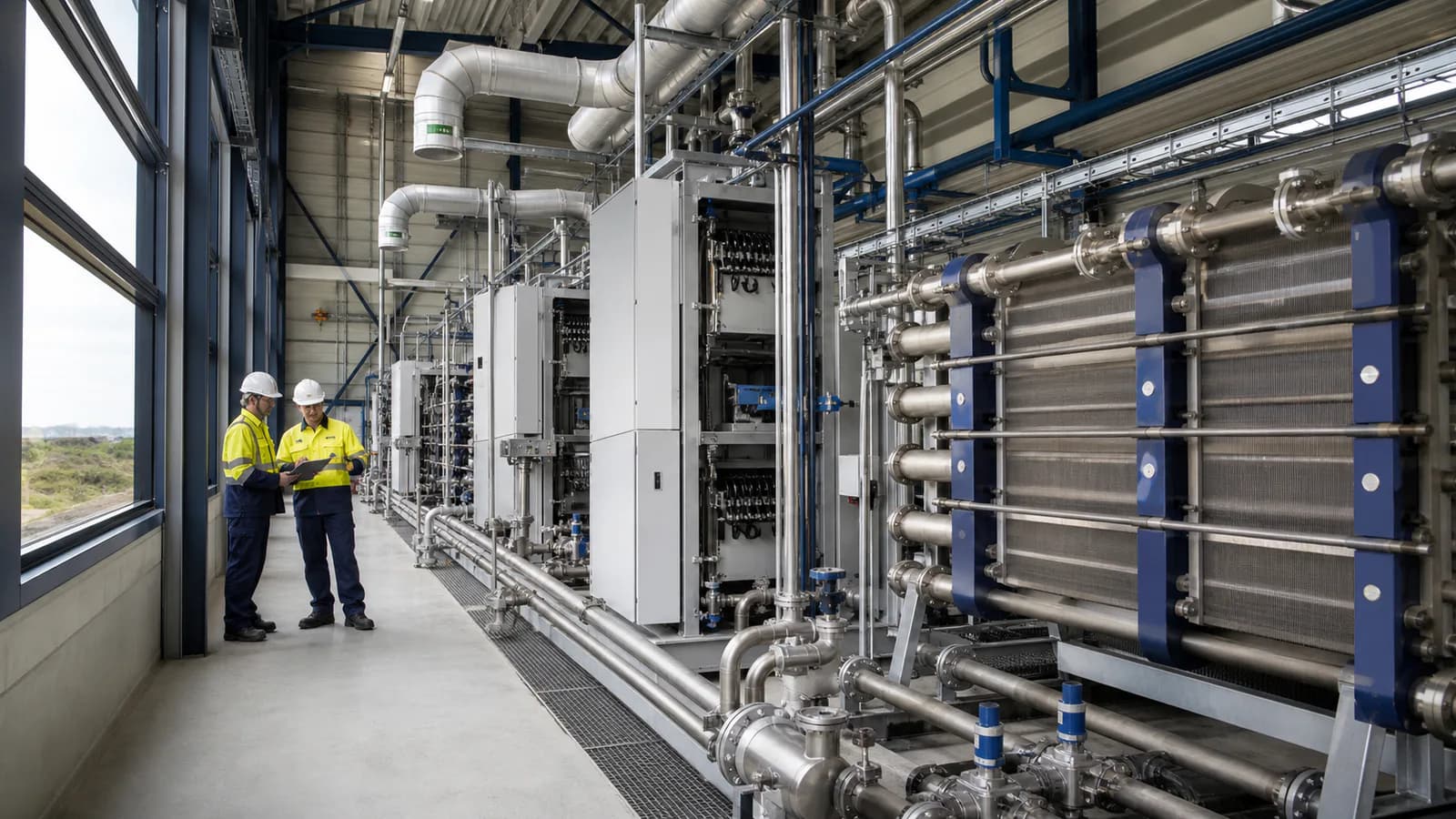
Electrolysis explained: scattered information versus Energy Intelligence
The Netherlands aims to be climate neutral by 2050. However, sun and wind do not always deliver power when you need it, and not every process can be electrified directly. Think of heavy industry or the production of raw materials. Electrolysis offers a route here: it converts power into hydrogen, a gas you can store and move. This matters mainly to industrial companies, energy developers and managers of sites with a lot of on-site generation.
- An electrolyser passes direct current through water and splits it into hydrogen and oxygen; with renewable power the result is called green hydrogen.
- There are three main technologies: alkaline, PEM (proton exchange membrane) and the emerging solid oxide or SOEC electrolysis at high temperature.
- Hydrogen is an energy carrier: you can store renewable power in it and use it for industry, transport and power-to-X fuels.
Insight
Traditional approach
Information is scattered across portals, documents, invoices or separate spreadsheets.
Modern approach
Data, context and interpretation are brought together into a clear decision picture.
Decision-making
Traditional approach
Choices are made based on averages, assumptions or occasional analyses.
Modern approach
Scenarios, KPIs and current measurement data make the trade-off more concrete and repeatable.
Follow-up
Traditional approach
Actions often stay non-committal or disappear into separate reports.
Modern approach
Follow-up actions, monitoring and reporting are linked to the same energy data.
How does electrolysis work?
In electrolysis a device, the electrolyser, passes electricity through water. That current splits the water molecule into two parts: hydrogen and oxygen. You capture the hydrogen as a gas, while the oxygen is released or finds its own use. When the power comes from sun or wind, this is called green or renewable hydrogen. What makes it special is that you fix electricity into a substance. Hydrogen is not an energy source but an energy carrier: it stores energy that you release later, through combustion or in a fuel cell. In this way electrolysis links the electricity system to gaseous energy and raw materials.
- Electricity splits water into hydrogen and oxygen.
- With renewable power this produces green hydrogen.
- Hydrogen is an energy carrier, not an energy source.
- The stored energy is released through combustion or in a fuel cell.
Which technologies exist?
There are three main types of electrolyser, each with its own trade-off. Alkaline electrolysis is the oldest and best-known technology and generally uses cheaper materials, but responds more slowly to a variable power supply. PEM electrolysis, with a proton exchange membrane, is more expensive because it uses precious metals, but responds quickly and pairs well with the variable output of sun and wind. Solid oxide electrolysis, also called SOEC, is the emerging third technology. It operates at high temperature and can therefore be efficient, especially where waste heat is available, but is less advanced in scaling up. Which technology fits depends on your power profile, the desired scale and the availability of heat.
- Alkaline: familiar technology, often cheaper materials, less flexible with a variable supply.
- PEM: more expensive due to precious metals, fast and suited to variable output.
- Solid oxide (SOEC): high temperature, emerging, can use waste heat.
- The choice depends on power profile, scale and available heat.
What is it for and what to watch?
Electrolysis makes green hydrogen for applications that are hard to electrify directly. In industry, hydrogen serves as a raw material or fuel, for example for steel or fertiliser. Through power-to-X you turn it into synthetic fuels or e-fuels for heavy transport. You can also convert and store surplus renewable power for later. Do watch the points of attention. Every conversion from power to hydrogen loses part of the energy as heat, so direct electrification remains more efficient where possible. In addition there are the costs of installations, the scaling up of the technology and the grid connection: an electrolyser demands a lot of capacity, which can be a bottleneck in areas with grid congestion.
- Green hydrogen for industry as a raw material or fuel.
- Power-to-X: synthetic fuels and e-fuels for heavy transport.
- Storage of surplus renewable power for later use.
- Points of attention: energy loss in conversion, cost, scaling up and grid connection.
Curious what this looks like with your own data?
In a no-obligation call, a specialist looks at your meters, sites and energy questions with you. Response within one business day.
Search the knowledge base
Find the answer to your question.
Search using your own words. Abbreviations and spelling variants are recognised, so EMS also finds the articles on energy management systems.
Topic