
Biomass as an energy source: a guide for businesses
Direct answer
Biomass as an energy source is organic material, such as wood and wood residues, pruning waste, manure and other residual streams, that is burned or fermented to produce heat, electricity or green gas. It formally counts as renewable, because harvested plants and trees grow back and reabsorb the CO2. In the Netherlands there is a lot of debate about how sustainable it really is.
- Clear definition
- Data-driven assessment
- Risks and opportunities visible
- Practical next steps
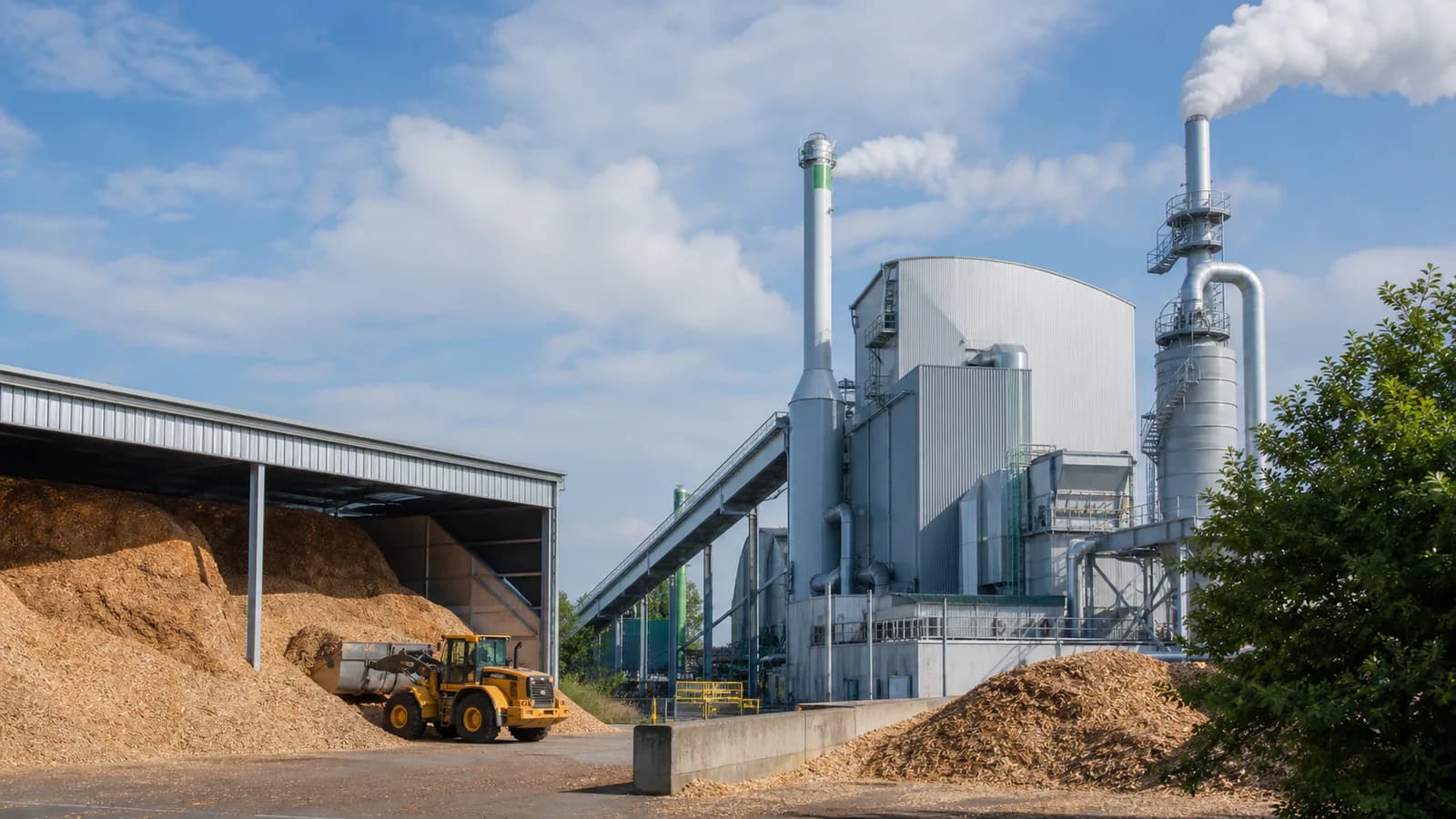
Biomass as an energy source: scattered information versus Energy Intelligence
The Netherlands is looking for sources that can replace natural gas and coal. Biomass is one of them, and it is still the country's most-used renewable energy source. Yet almost no other source is as contested. A horticultural business burning pruning wood, or a farmer with a manure digester, notices this directly: subsidy rules change, and the question of whether burning wood is truly sustainable keeps returning. This topic matters to anyone considering heat or gas from organic material.
- Dry, woody biomass is usually burned for heat or electricity; wet residual streams such as manure and sludge are fermented into biogas or green gas.
- Biomass is called renewable because the released CO2 is reabsorbed over time, but that delay (the carbon debt) and chain emissions fuel the debate.
- The guiding principle is cascading: use biomass at the highest possible value, for example as building material, and only burn it when no better use remains.
Insight
Traditional approach
Information is scattered across portals, documents, invoices or separate spreadsheets.
Modern approach
Data, context and interpretation are brought together into a clear decision picture.
Decision-making
Traditional approach
Choices are made based on averages, assumptions or occasional analyses.
Modern approach
Scenarios, KPIs and current measurement data make the trade-off more concrete and repeatable.
Follow-up
Traditional approach
Actions often stay non-committal or disappear into separate reports.
Modern approach
Follow-up actions, monitoring and reporting are linked to the same energy data.
What is biomass as an energy source?
Biomass is a collective term for material of plant or animal origin: wood and wood residues, agricultural crops, organic household waste, plant oil and manure. That same material can be a raw material for paper, furniture or food, but you can also extract energy from it. This happens in three ways. Burning dry, often woody biomass yields heat and sometimes electricity, for example in a biomass boiler or biomass plant. Fermenting wet residual streams, such as manure, sludge and waste, yields biogas. Upgraded biogas is called green gas and can replace natural gas in the grid. Gasification is a third route, but that technology is still in development.
- Dry, woody biomass usually takes the combustion route for heat or electricity.
- Wet residual streams such as manure and sludge are fermented into biogas.
- Upgraded biogas is called green gas and can enter the grid as a replacement for natural gas.
- Biomass is the most-used renewable energy source in the Netherlands, although that share is declining.
Why is it called renewable but remains contested?
Biomass counts as renewable because harvested plants and trees grow back and, over time, reabsorb the CO2 released during combustion. The debate centres on the time this takes: until the new planting has matured, the CO2 stays in the air. This is called the carbon debt. On top of that come chain emissions from harvesting and transport, and the risk of deforestation. Burning, especially of wood, also releases particulate matter and other substances that affect air quality. That is why strict requirements apply to the origin: power plants may only use wood that arises as an unavoidable by-product in forestry, not whole trees from natural forest.
- The carbon debt: the CO2 stays in the air until new planting has matured.
- Burning wood affects air quality with particulate matter and other emissions.
- Plants may only use wood from forestry side streams, not from natural forest.
- Pellet installations receiving SDE subsidy demonstrate the sustainability of their pellets with certification under the European Renewable Energy Directive (RED).
What does Dutch policy mean for your business?
Policy steers towards cascading: using biomass at the highest possible value. From a tree trunk you first make a table or a board, and only when reuse is no longer possible does the wood go into the combustion furnace. For businesses, this mainly changes the subsidy side. The government stopped granting new subsidies for low-value heat from woody biomass with immediate effect, meaning low-temperature heat for warming buildings and greenhouses. Attention is shifting towards using residual and waste streams, and towards applications for which no good alternative exists. If you are considering biomass, first check whether your residual stream could be used more valuably than by burning it.
- Cascading: burning is the last step, high-value use comes first.
- New subsidy for low-value heat from woody biomass has been stopped; applications for it are no longer granted.
- Policy focuses on residual and waste streams, not on wood grown specifically for energy.
- Test your own residual stream first for a higher-value destination than the combustion furnace.
Curious what this looks like with your own data?
In a no-obligation call, a specialist looks at your meters, sites and energy questions with you. Response within one business day.
Search the knowledge base
Find the answer to your question.
Search using your own words. Abbreviations and spelling variants are recognised, so EMS also finds the articles on energy management systems.
Topic