
Generation
Article 5 of 20 · Generation and storageOffshore wind energy: a guide for businesses
Direct answer
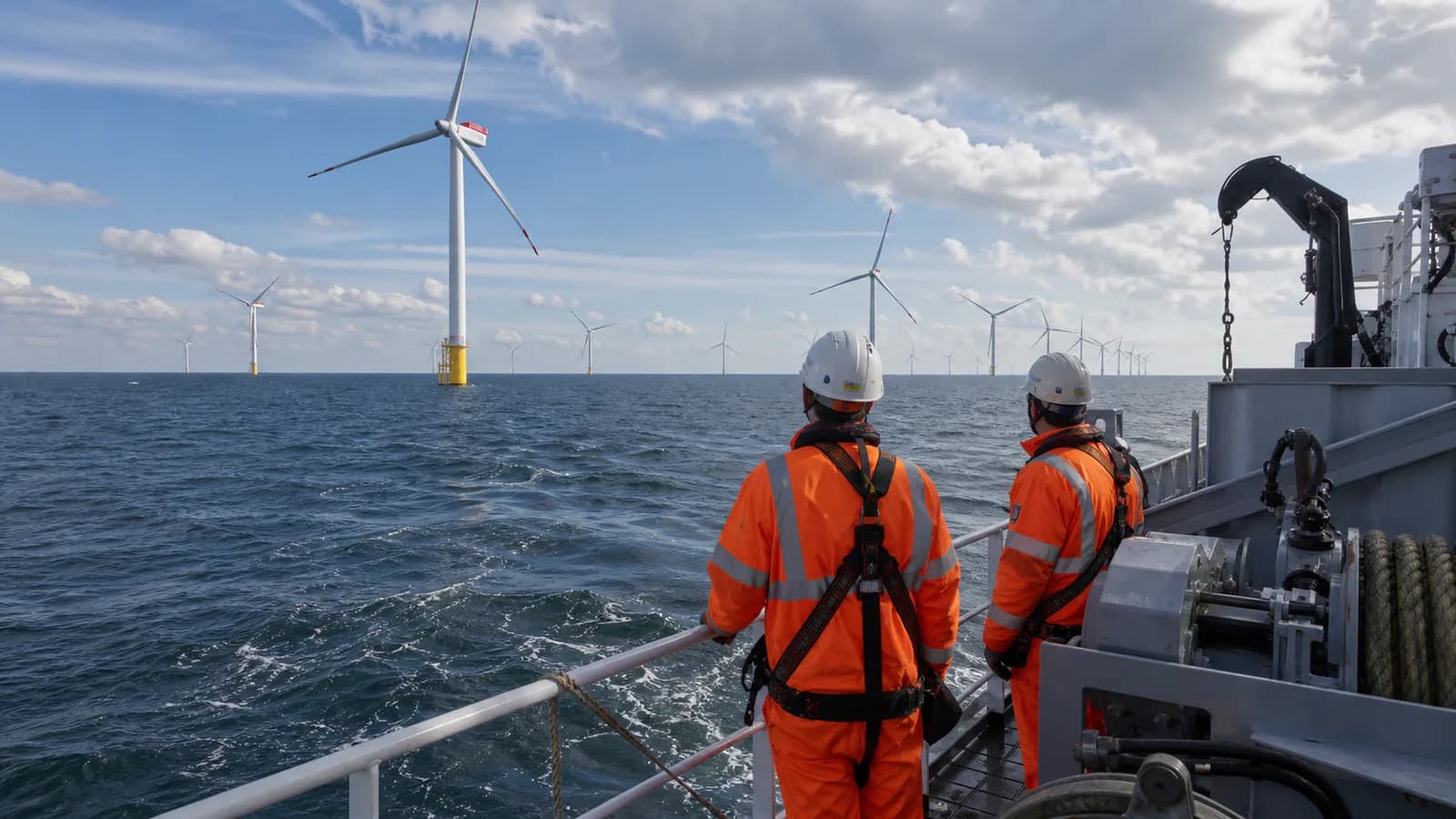
Offshore wind energy is electricity generated by wind turbines in the Dutch North Sea, connected to the national grid through the cables of grid operator TenneT. On designated wind energy zones, developers build large-scale wind farms, whose plots the Dutch government issues through tenders. Thanks to the strong, steady sea wind, offshore wind is set to become one of the largest Dutch energy sources under government plans.
- Clear definition
- Data-driven assessment
- Risks and opportunities visible
- Practical next steps
Offshore wind energy: scattered information versus Energy Intelligence
The North Sea is windy and shallow, and the Netherlands owns a large part of it. That makes the sea the logical place to generate renewable power at scale. Where space and public support are scarce on land, large wind farms stand far out at sea. This matters to anyone buying green power: from a producer that supplies it, to a business that wants to green its consumption. Under Dutch government plans, offshore wind is set to grow into one of the largest energy sources of the Netherlands.
- The Dutch government designates wind energy zones in the North Sea and issues the plots through tenders, in which developers compete for the construction permit.
- Grid operator TenneT builds the offshore grid: the platforms and cables that connect the wind farms to the electricity grid on land.
- Part of the power from sea can be turned into green hydrogen through electrolysis, so that molecules arrive on land alongside electrons.
Insight
Traditional approach
Information is scattered across portals, documents, invoices or separate spreadsheets.
Modern approach
Data, context and interpretation are brought together into a clear decision picture.
Decision-making
Traditional approach
Choices are made based on averages, assumptions or occasional analyses.
Modern approach
Scenarios, KPIs and current measurement data make the trade-off more concrete and repeatable.
Follow-up
Traditional approach
Actions often stay non-committal or disappear into separate reports.
Modern approach
Follow-up actions, monitoring and reporting are linked to the same energy data.
How does offshore wind energy work?
In the North Sea, the Dutch government designates wind energy zones: areas suitable for large wind farms. Within such a zone, the government divides the water into plots and studies the seabed, the wind and the water depth in advance. It issues those plots through tenders, in which developers compete for the permit to build and operate. The turbines on a plot generate electricity together. Grid operator TenneT provides the offshore grid: platforms at sea bundle the power and cables carry it to a connection point on land. From there the energy enters the national high-voltage grid, towards households and businesses.
- The government designates wind energy zones and divides them into plots.
- Each plot is studied in advance for seabed, wind and water depth.
- The permit to build and operate is awarded through a tender.
- TenneT connects the farms to the onshore grid via platforms and cables.
Why is offshore wind so important for the power transition?
The Netherlands wants to make its electricity supply sustainable, and on land this runs into a lack of space and limited public support. At sea it can happen at scale: the wind is stronger and steadier, and farms stand far from the coast. As a result, turbines at sea run more hours and deliver more power. Wind farms in the North Sea already supply renewable electricity, and under government plans that share is set to grow strongly in the coming years. Besides electricity, there is a second route: part of the power can be converted into green hydrogen through electrolysis. That way both electrons and molecules come from sea, which is especially valuable for industry.
- Stronger, steadier sea wind means more running hours and more output per turbine.
- Large farms far from the coast avoid the shortage of space on land.
- Its share of the electricity supply is set to grow under government plans.
- Electrolysis turns part of the power into green hydrogen for industry.
What should you watch out for?
Offshore wind is not without points of attention. Building farms and cables requires major investment, and construction and connection take years, so the offshore grid must keep pace with the farms. If it falls behind, generated power cannot be fully evacuated. Nature counts too: farms affect birds, bats and marine life, and the government therefore sets requirements to limit those effects. The farms also share the sea with shipping and fishing. For your business this means the supply of green power grows, but delivery depends on the wind. If you want to secure green power, a long-term supply contract, a power purchase agreement, can offer a way forward.
- The high costs and long build time call for careful planning.
- The offshore grid must keep pace with the construction of the farms.
- Farms affect nature and share the sea with shipping and fishing.
- Wind is variable; a long-term supply contract can secure green power.
Curious what this looks like with your own data?
In a no-obligation call, a specialist looks at your meters, sites and energy questions with you. Response within one business day.
Search the knowledge base
Find the answer to your question.
Search using your own words. Abbreviations and spelling variants are recognised, so EMS also finds the articles on energy management systems.
Topic