
Generation
Article 4 of 20 · Generation and storageOnshore wind energy: a guide for businesses
Direct answer
Onshore wind energy is electricity that wind turbines on Dutch soil generate from the force of the wind. It is one of the largest sources of renewable power in the Netherlands. Where the turbines may go is fixed spatially through the Regional Energy Strategy and provincial policy, so that generation and surroundings fit together.
- Clear definition
- Data-driven assessment
- Risks and opportunities visible
- Practical next steps
Onshore wind energy: scattered information versus Energy Intelligence
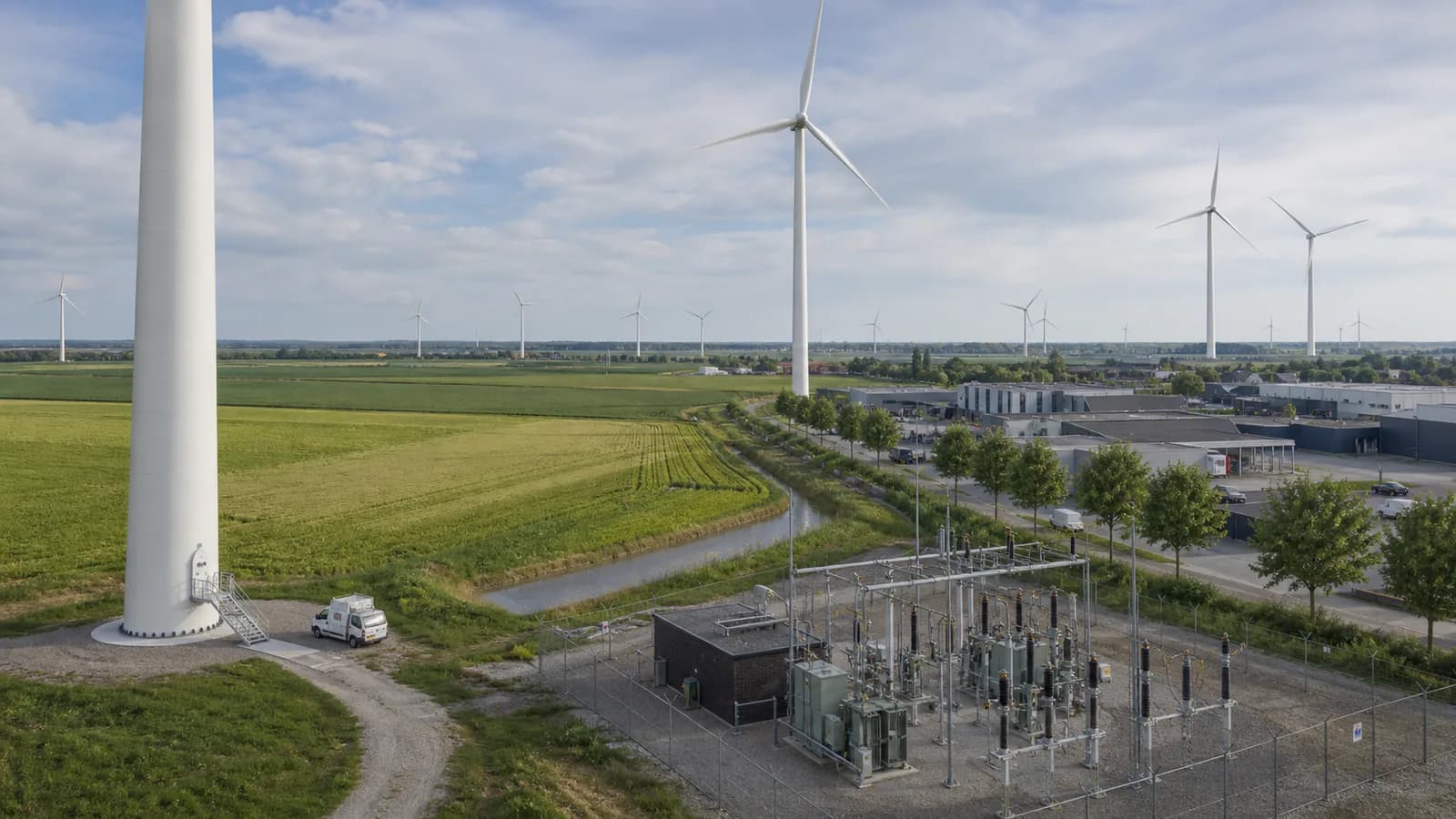
The Netherlands wants to sharply increase its own generation of clean power. Onshore wind energy supplies a large share of that, because the wind here blows almost year-round, including at night and in winter when solar panels yield little. At the same time, turbines stand in the landscape and close to people. That makes it a topic where technology, spatial planning and public support come together. You encounter it as an entrepreneur with land, as a buyer of green power, or as a resident near a planned wind farm.
- A wind turbine converts wind into electricity; the annual yield depends mainly on the wind available at the location and the hub height of the mast.
- In the Regional Energy Strategy, municipalities, provinces and water authorities jointly set out where large-scale wind and solar generation on land may be built.
- For a business there are several routes: an own turbine, taking a financial stake through a cooperative or participation scheme, or buying power under a long-term supply contract.
Insight
Traditional approach
Information is scattered across portals, documents, invoices or separate spreadsheets.
Modern approach
Data, context and interpretation are brought together into a clear decision picture.
Decision-making
Traditional approach
Choices are made based on averages, assumptions or occasional analyses.
Modern approach
Scenarios, KPIs and current measurement data make the trade-off more concrete and repeatable.
Follow-up
Traditional approach
Actions often stay non-committal or disappear into separate reports.
Modern approach
Follow-up actions, monitoring and reporting are linked to the same energy data.
How does onshore wind energy work?
A wind turbine catches the wind with its rotor blades. They set a shaft in motion, and a generator converts that motion into electricity. How much power a turbine generates in a year depends mainly on the wind available at the location: the harder and steadier it blows, the higher the yield. Hub height matters greatly, because higher above the ground the wind blows harder and more evenly. The length of the rotor blades and the capacity of the turbine also determine the yield. Wind and solar complement each other well: it often blows precisely when the sun does not shine. Together they provide a more even supply of renewable power across the year.
- The rotor blades drive a generator through a shaft, which produces electricity.
- The wind available at the location is the main factor for the annual yield.
- A taller mast catches harder, steadier wind and therefore produces more power.
- Wind and solar complement each other and make the supply across the year more stable.
Where may turbines go, and which rules apply?
Where onshore wind energy may be built is not open. In the Regional Energy Strategy, known as the RES, municipalities, provinces and water authorities agree per region where they place large-scale wind and solar generation. The Netherlands is divided into thirty RES regions for this, with the shared goal to generate at least 35 terawatt-hours of large-scale renewable electricity on land by 2030. This approach is anchored in the Climate Agreement. Provinces can fix search areas legally in their policy. For an actual wind farm you then need a permit. Environmental and distance standards apply that limit noise, shadow flicker and safety for local residents. Public support and participation of the surroundings play a large role in the decision-making.
- The RES sets the search areas for large-scale wind and solar on land per region.
- Thirty regions jointly target at least 35 terawatt-hours of large-scale renewable electricity on land by 2030.
- A wind farm requires a permit; environmental and distance standards limit noise, shadow flicker and safety.
- Public support and participation of local residents weigh in the decision.
What does onshore wind energy mean for your business?
For a business there are several ways to become involved in onshore wind energy. You can have a turbine or wind farm developed yourself, for example on your own company land. You can also take part financially without building yourself, through a local energy cooperative or another form of participation, where part of the yield flows back to the participants. A third route is buying power from an existing wind farm under a long-term supply contract, commonly called a PPA in the market. With every path, take the grid connection into account. In areas with grid congestion the electricity grid is full, so a new or heavier connection can involve waiting. Involve the grid operator early in your plans.
- An own turbine or wind farm, for example on your own company land.
- Taking part financially through an energy cooperative or participation scheme, with part of the yield returning.
- Buying power from a wind farm under a long-term supply contract, often called a PPA.
- Check the grid connection early; in areas with grid congestion capacity is scarce.
Curious what this looks like with your own data?
In a no-obligation call, a specialist looks at your meters, sites and energy questions with you. Response within one business day.
Search the knowledge base
Find the answer to your question.
Search using your own words. Abbreviations and spelling variants are recognised, so EMS also finds the articles on energy management systems.
Topic