
Waiting list for a large-consumer connection: a guide for businesses
Direct answer
The waiting list for a large-consumer connection is the queue of applications for a new or heavier grid connection, or for additional transport capacity, in an area where the Dutch electricity grid is full. Grid operators generally handle requests in order of arrival. Projects that reduce congestion or serve a public function can gain priority under the ACM prioritisation framework.
- Clear definition
- Data-driven assessment
- Risks and opportunities visible
- Practical next steps
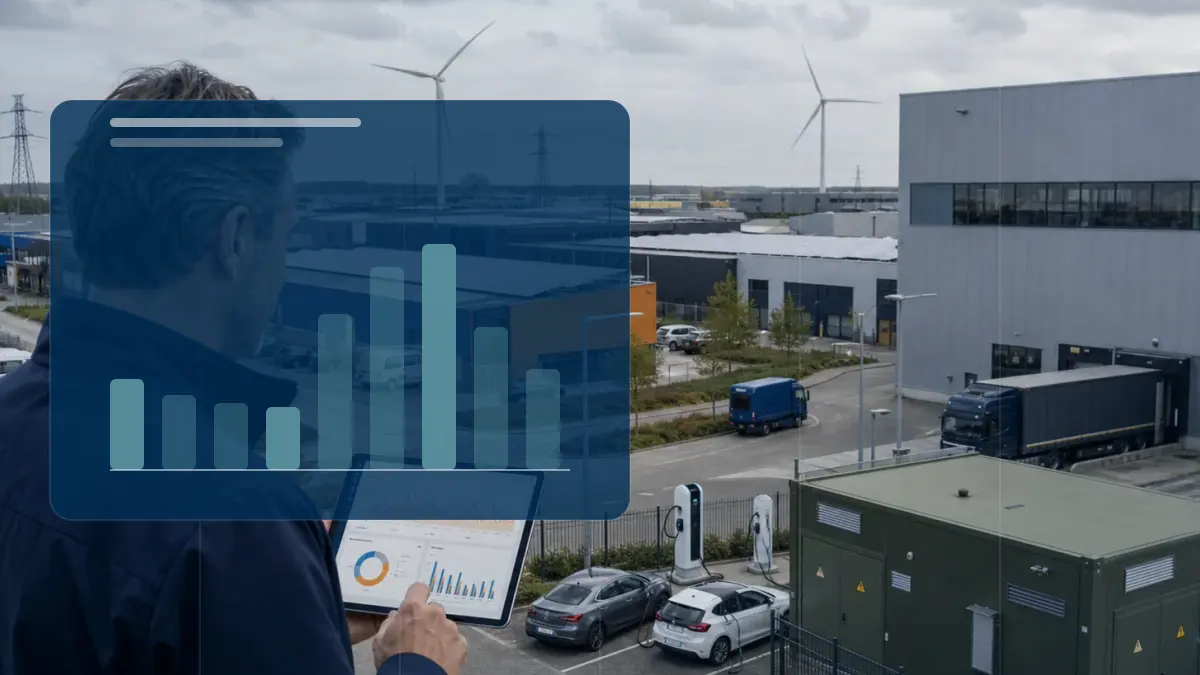
Waiting list for a large-consumer connection: scattered information versus Energy Intelligence
In many parts of the Netherlands, businesses request more electricity than the grid can transport. Grid operators first have to expand the network before they can commit to new transport capacity. A company that wants to electrify a warehouse, expand a production line or install charging infrastructure therefore regularly hears that its request joins the queue. This article explains how the waiting list works, how the order is determined and what steps you can take while you wait.
- You only hold an official place on the waiting list once your application is complete; several grid operators confirm the place only after you sign the quotation.
- There is no national waiting list: each grid operator keeps a separate list per congestion area, split between consumption and feed-in.
- Since 1 October 2024, congestion relievers, safety services and basic needs such as drinking water and education can request priority under the ACM prioritisation framework.
Insight
Traditional approach
Information is scattered across portals, documents, invoices or separate spreadsheets.
Modern approach
Data, context and interpretation are brought together into a clear decision picture.
Decision-making
Traditional approach
Choices are made based on averages, assumptions or occasional analyses.
Modern approach
Scenarios, KPIs and current measurement data make the trade-off more concrete and repeatable.
Follow-up
Traditional approach
Actions often stay non-committal or disappear into separate reports.
Modern approach
Follow-up actions, monitoring and reporting are linked to the same energy data.
How does the waiting list work?
If you apply for a new large-consumer connection, an upgrade or additional contracted transport capacity in an area where the grid is full, the grid operator places your request on the waiting list for that congestion area. There is no national list: each region has its own overview. The main rule is first come, first served. The date on which your application is complete determines your position. You only keep that position if you sign the quotation within the signing period. When capacity becomes available, through grid expansion or smarter use of the existing network, the grid operator allocates it in the order of the list.
- Requests for new connections, upgrades and additional transport capacity all go on the same regional waiting list.
- Without a signed quotation, some grid operators only register you on an interest list, without an official position.
- Separate waiting lists exist for electricity consumption and for feed-in.
- Since 1 July 2026 the waiting list system also applies to small consumers, such as households and small businesses.
Who gets priority on the waiting list?
Since 1 October 2024, grid operators in congestion areas may deviate from the order of arrival. They do so under the societal prioritisation framework set by the Dutch regulator ACM. The framework has three categories. Congestion relievers rank highest: customers whose project actually reduces grid congestion. Next comes the safety category, such as fire services, police and hospitals. The third category covers basic needs, including drinking water, education and housing. To obtain priority, you submit supporting evidence to your grid operator. Within each category, the original application date remains decisive. An important caveat: prioritisation does not add capacity to the grid. It only redistributes the capacity that becomes available among the parties already waiting.
- Category 1: congestion relievers, projects that reduce grid congestion.
- Category 2: safety, such as fire services, police and acute healthcare.
- Category 3: basic needs, such as drinking water, education and housing.
- You request priority by submitting evidence to your own grid operator; within a category the application date still counts.
What can you do while you wait?
Waiting does not have to be passive. First, sign the quotation on time, otherwise you lose your place on the list. The physical connection can often be built while you wait for transport capacity. Keep in mind that connection charges then continue, even if no electricity flows yet. Also explore flexible solutions. Companies that use capacity flexibly or offer flexibility to the grid operator through congestion management sometimes gain access sooner. Such a project may also qualify as a congestion reliever and request priority. Finally, follow your application actively: grid operators send status updates, provide access through their business customer portals and regularly publish up-to-date waiting list overviews per area.
- Sign the quotation within the signing period to keep your place on the waiting list.
- Discuss flexible contract forms and congestion management with your grid operator; congestion relievers can obtain priority.
- The connection itself can often already be built; drawing power only becomes possible once grid capacity is available.
- Waiting times vary strongly per region and can reach around ten years in heavily loaded areas.
Curious what this looks like with your own data?
In a no-obligation call, a specialist looks at your meters, sites and energy questions with you. Response within one business day.
Search the knowledge base
Find the answer to your question.
Search using your own words. Abbreviations and spelling variants are recognised, so EMS also finds the articles on energy management systems.
Topic