
Grid reinforcement and lead times: a guide for businesses
Direct answer
Grid reinforcement is the expansion of the electricity grid with heavier cables, transformers and substations so it can transport more power. In the Netherlands, lead times for grid reinforcement differ sharply by situation: where grid capacity is available, statutory connection deadlines of 18 to 40 weeks apply. Where the grid is full, your application joins a waiting list and waiting times can reach ten years in some regions.
- Clear definition
- Data-driven assessment
- Risks and opportunities visible
- Practical next steps
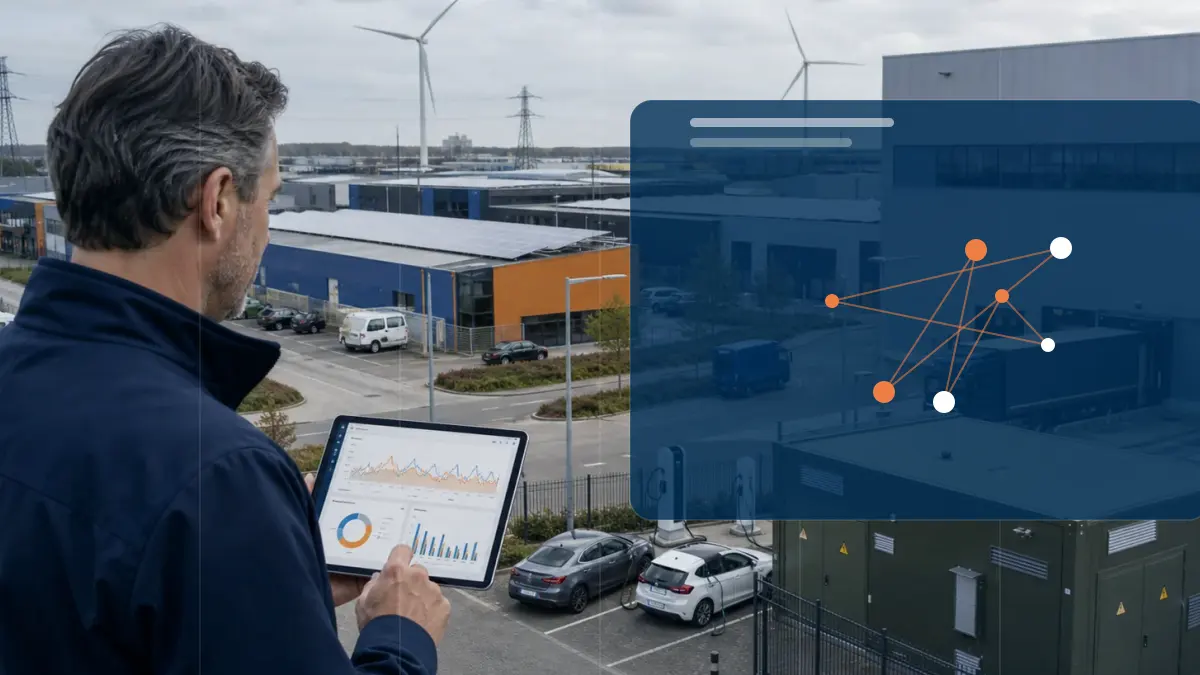
Grid reinforcement and lead times: scattered information versus Energy Intelligence
More and more Dutch businesses and households cook, drive and heat electrically. As a result, the electricity grid is full in many places, and grid operators must first lay cables or build substations before new capacity becomes available. For your business this means a heavier connection or extra contracted capacity is not automatically arranged quickly. Anyone electrifying an industrial building or installing charging points should plan the grid connection as early as the construction itself.
- The Dutch regulator ACM has set maximum connection deadlines: 18 weeks for small consumers and 40 weeks for large consumers up to 10 MVA, provided sufficient transport capacity is available.
- If the grid is full, the grid operator places your application on a local waiting list per congestion area. Waiting times vary strongly by region and can reach ten years.
- Permit procedures, land acquisition and shortages of technical staff determine how long grid expansions take. The Dutch government is taking measures to shorten procedures.
Insight
Traditional approach
Information is scattered across portals, documents, invoices or separate spreadsheets.
Modern approach
Data, context and interpretation are brought together into a clear decision picture.
Decision-making
Traditional approach
Choices are made based on averages, assumptions or occasional analyses.
Modern approach
Scenarios, KPIs and current measurement data make the trade-off more concrete and repeatable.
Follow-up
Traditional approach
Actions often stay non-committal or disappear into separate reports.
Modern approach
Follow-up actions, monitoring and reporting are linked to the same energy data.
Why does grid reinforcement take so long?
Grid reinforcement is physical work: heavier cables in the ground, larger transformers and sometimes an entirely new high voltage substation. Before construction can start, grid operators go through planning, permit procedures and land acquisition. Only then does the building work follow. Netbeheer Nederland and the regional grid operators also point to shortages of technical staff and materials, which means not all work can happen at once. Municipal digging permits, soil surveys and consent from landowners can add further time. The Dutch government has taken measures to shorten procedures, such as central coordination of the most urgent projects and faster appeal procedures. TenneT expects to shorten lead times by more than a year by running steps in parallel and standardising more.
- Planning, permits and land acquisition precede the actual construction
- Shortages of technical staff and materials limit the pace of work
- Digging permits, soil surveys and landowners can cause extra delays
- Government measures and standardisation aim to shorten procedures
When will you face these lead times?
You face these lead times when requesting a new connection, upgrading an existing connection or increasing your contracted capacity. If sufficient transport capacity is available, maximum connection deadlines set by the regulator ACM apply: 18 weeks for a new small-consumer connection, 40 weeks for large consumers up to 10 MVA and 12 weeks for upgrading an existing in-home connection, for example for a charging point or heat pump. If the grid is full, the grid operator places your application on a waiting list per congestion area. There, applications are handled in order of submission, with priority for functions of societal importance under the ACM framework. Since July 2026 the waiting list also applies to small consumers. Waiting times vary strongly by region and can reach ten years.
- Connection deadlines only apply when transport capacity is available
- Waiting lists are local: per congestion area, not national
- Order on the list: societal priority first, then date of application
- The same request can be served years earlier in one region than in another
What can you do to limit delays?
Applying early is the most important step. Grid operators advise submitting your application well before the desired date, because your place on any waiting list depends on the submission date. Check the situation at your location in advance: grid operators such as Enexis offer online tools that estimate the lead time per address. Keep in mind that such an estimate is an expectation: the definitive timeline only follows after the formal application. Also consider whether you can stay within your existing capacity by spreading consumption over the day. According to Netbeheer Nederland, smarter grid use creates room on the grid and can sometimes avoid waiting for reinforcement. Involve your grid operator early in construction or expansion plans.
- Submit your application as early as possible: the submission date determines your place in the queue
- Check the expected lead time per address with your grid operator in advance
- An online estimate is indicative, the definitive timeline follows after the formal application
- Spreading consumption can sometimes postpone or avoid a reinforcement
Curious what this looks like with your own data?
In a no-obligation call, a specialist looks at your meters, sites and energy questions with you. Response within one business day.
Search the knowledge base
Find the answer to your question.
Search using your own words. Abbreviations and spelling variants are recognised, so EMS also finds the articles on energy management systems.
Topic