
Generation
Article 3 of 20 · Generation and storagePhase-out of the net metering scheme: a guide for businesses
Direct answer
The phase-out of the Dutch net metering scheme (salderingsregeling) means you will soon no longer offset fed-back solar power against the power you draw from the grid at other times. For small consumers the scheme ends in one go on 1 January 2027, not in steps. Up to and including 31 December 2026 you can still fully net meter. After that you receive a reasonable feed-in payment, which is usually lower.
- Clear definition
- Data-driven assessment
- Risks and opportunities visible
- Practical next steps
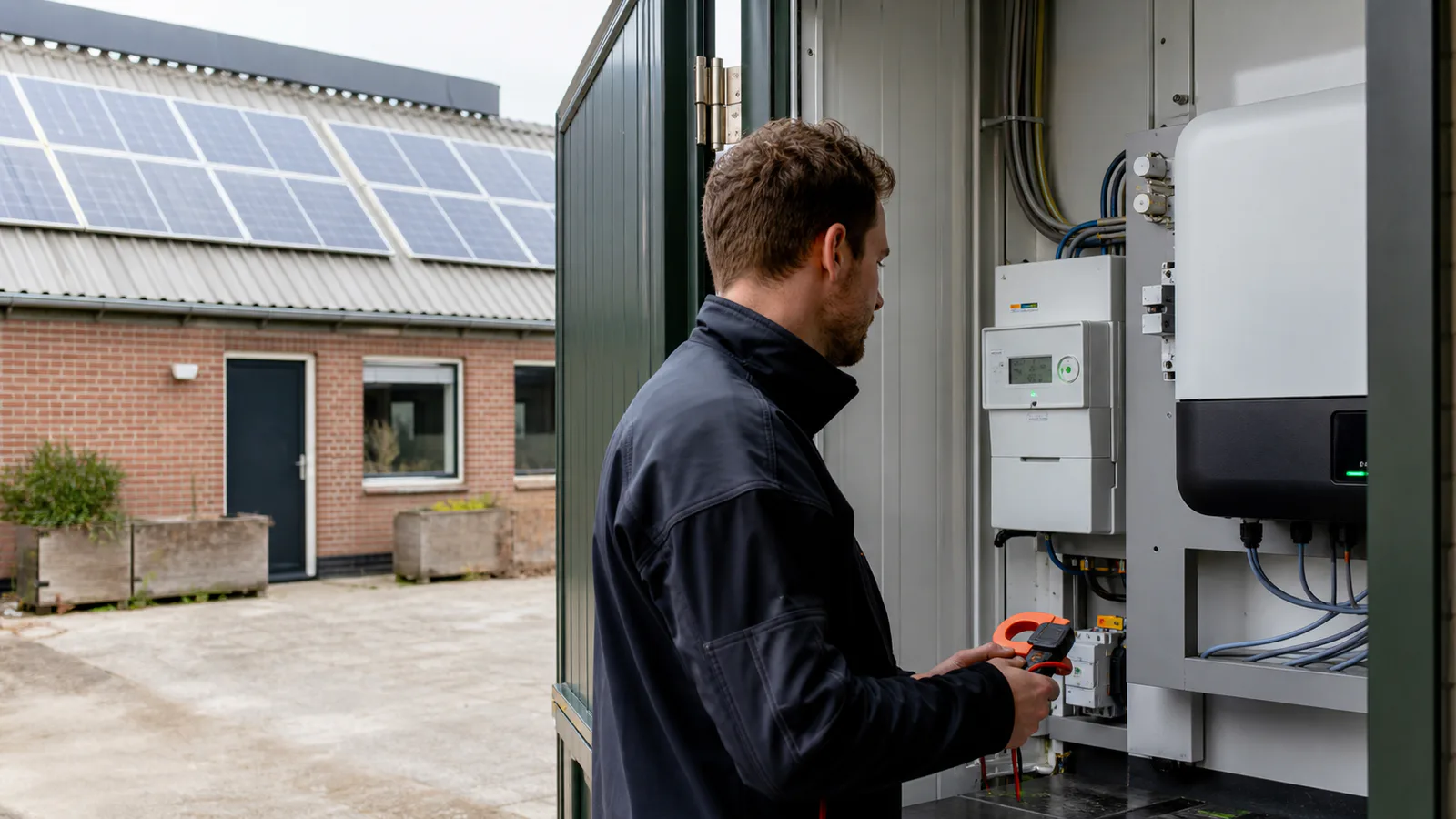
Phase-out of the net metering scheme: scattered information versus Energy Intelligence
Many solar panel owners generate more during the day than they use at that moment. That surplus now goes to the grid and, through the net metering scheme, is offset against consumption at other times. That scheme is ending. For anyone generating solar power, or thinking about generation and storage, the calculation shifts: the value will lie in the power you use yourself, not in the power you feed back. This page explains what changes and how you prepare.
- Net metering means offsetting fed-back solar power against your own consumption, including energy tax; that offsetting ends on 1 January 2027.
- From 2027 fed-back power is worth much less, so the power you use immediately yourself becomes the most valuable.
- Preparing means shifting consumption to daytime, considering smart control or storage, and weighing the feed-in charges in your contract.
Insight
Traditional approach
Information is scattered across portals, documents, invoices or separate spreadsheets.
Modern approach
Data, context and interpretation are brought together into a clear decision picture.
Decision-making
Traditional approach
Choices are made based on averages, assumptions or occasional analyses.
Modern approach
Scenarios, KPIs and current measurement data make the trade-off more concrete and repeatable.
Follow-up
Traditional approach
Actions often stay non-committal or disappear into separate reports.
Modern approach
Follow-up actions, monitoring and reporting are linked to the same energy data.
What was net metering and what changes?
Net metering means offsetting the power you generate and feed back against the power you draw from the grid. You then pay only on the difference, including energy tax and VAT. On 17 December 2024 the Dutch Senate adopted the act ending the net metering scheme. This stops the scheme for small consumers on 1 January 2027, in one go and not in steps. An earlier proposal to phase it out gradually was rejected in February 2024; the term phase-out stuck, but in practice there is a hard end date. Up to and including 31 December 2026 you can still fully net meter. After that, the value of your solar power depends on the moment you use it.
- Net metering offsets fed-back power against your consumption, including energy tax and VAT.
- The scheme ends on 1 January 2027, in one go and not in steps.
- Up to and including 31 December 2026 you can still fully net meter.
- On power you generate and use directly, you still pay no energy tax after 2027.
What does this mean for the value of your solar power?
From 1 January 2027 your supplier no longer offsets the power you use against the power you feed back. For fed-back power you receive a reasonable feed-in payment, but this is usually lower than the rate you pay for power yourself. The value therefore shifts: power you consume yourself at the moment of generation is worth more than power you feed back. Weigh the feed-in charges too. More and more suppliers charge costs for fed-back power, and these can sometimes exceed the payment you receive for that feed-in. That is exactly why self-consumption and steering your consumption become more important than the volume you feed back.
- Offsetting consumption against feed-in ends on 1 January 2027.
- A reasonable feed-in payment is usually lower than your own power rate.
- Feed-in charges can sometimes exceed the payment for fed-back power.
- Power you use immediately keeps its value; fed-back power is worth less.
How do you prepare?
Start with insight: when do you generate and when do you consume. Of the solar power generated, a household or small business on average uses only part of it directly, and you can increase that share. Shift consumption to daylight hours, when the sun shines: run a water heater, washing machine, heat pump or charging point during the day. This way you use more of your own power and feed back less at a lower payment. Also consider smart control or storage. A home battery or smart control can hold a surplus for later use, though this requires an investment you weigh against your own situation. Finally, check your contract: which feed-in charges and which feed-in payment apply, and does your contract run across the 2027 year boundary.
- Map out when you generate and when you consume.
- Shift consumption to daytime to use more of your own solar power.
- Consider smart control or a home battery to hold a surplus for later.
- Weigh the feed-in charges and feed-in payment in your contract, including around the 2027 year boundary.
Curious what this looks like with your own data?
In a no-obligation call, a specialist looks at your meters, sites and energy questions with you. Response within one business day.
Search the knowledge base
Find the answer to your question.
Search using your own words. Abbreviations and spelling variants are recognised, so EMS also finds the articles on energy management systems.
Topic