
Community energy
Article 2 of 7 · Energy cooperatives and community energyPostcode rose scheme: history and successor: a guide for businesses
Direct answer
The postcoderoosregeling was a Dutch energy tax scheme giving members of an energy cooperative or owners' association a discount on energy tax for electricity from a shared installation in their postcode area. It closed to new projects on 1 April 2021; existing projects keep the right for up to fifteen years. Its successor, the Cooperative Energy Generation Subsidy Scheme (SCE), pays the cooperative a subsidy per kilowatt hour generated.
- Clear definition
- Data-driven assessment
- Risks and opportunities visible
- Practical next steps
Postcode rose scheme: history and successor: scattered information versus Energy Intelligence
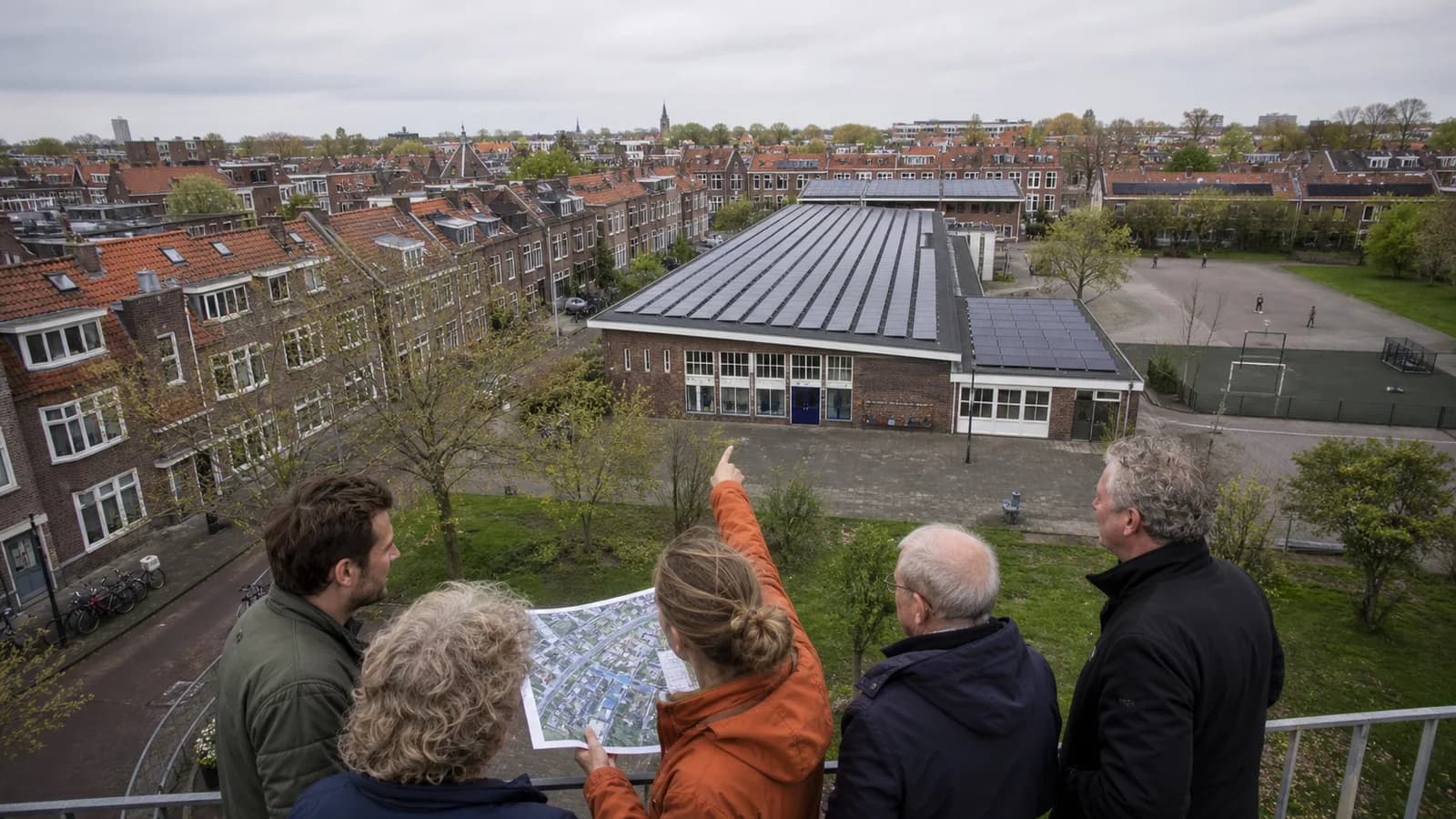
Many businesses and residents want to take part in local energy projects, for example solar panels on the roof of a nearby sports hall or warehouse. The Dutch government has encouraged this collective generation with a dedicated scheme since 2014. Anyone reading up on a cooperative today therefore encounters two names: the old postcoderoosregeling and the newer SCE. Knowing both is useful, because running projects remain under the old regime for years while new projects follow the subsidy route.
- The old scheme is officially called the Regeling Verlaagd Tarief and closed to new projects on 1 April 2021.
- Existing postcode rose projects keep the tax benefit for up to fifteen years after the cooperative was designated.
- The successor SCE pays a fifteen-year operating subsidy per kilowatt hour to the cooperative or owners' association itself, not to individual members.
Insight
Traditional approach
Information is scattered across portals, documents, invoices or separate spreadsheets.
Modern approach
Data, context and interpretation are brought together into a clear decision picture.
Decision-making
Traditional approach
Choices are made based on averages, assumptions or occasional analyses.
Modern approach
Scenarios, KPIs and current measurement data make the trade-off more concrete and repeatable.
Follow-up
Traditional approach
Actions often stay non-committal or disappear into separate reports.
Modern approach
Follow-up actions, monitoring and reporting are linked to the same energy data.
How did the old postcoderoosregeling work?
The Regeling Verlaagd Tarief, known in practice as the postcoderoosregeling or postcode rose scheme, gave members of a designated cooperative or owners' association a discount on energy tax. The installation had to stand within a defined area of adjoining four-digit postcodes, the so-called postcode rose. Members settled the discount through their own energy bill, up to their own consumption and a statutory yearly cap. The cooperative also sold the generated electricity and earned income from it. The benefit therefore ran through each member's individual energy bill. That link to individual consumption made the administration burdensome. Partly for that reason, the government chose a direct subsidy to the collective for the successor scheme.
- Discount on energy tax for members, settled through their own energy bill
- Installation and members within the same postcode rose area
- Started in 2014, closed to new projects on 1 April 2021
- Administratively heavy due to the link to individual consumption
What still applies to existing projects?
Existing postcode rose projects have not stopped. Members who took part in a designated cooperative on 31 March 2021 keep the right to the reduced tariff, for up to fifteen years after that cooperative was designated. The transitional rules were later widened. A member who moves away or steps out can transfer their participation to a new member, who then continues the tax benefit. The condition remains that participants live or are established within the postcode rose area. This means you may still encounter the old scheme for years, for example when taking over premises or joining a running neighbourhood project. Always check the cooperative's designation date in that case, because it determines the remaining term.
- Transitional right: reduced tariff for up to fifteen years after the cooperative was designated
- Participations are transferable to new members within the postcode area
- No new projects possible under the old scheme
- The designation date determines how long the benefit still runs
How does the successor SCE work?
The Cooperative Energy Generation Subsidy Scheme, known by its Dutch abbreviation SCE, has been the successor since 1 April 2021. It works fundamentally differently. The subsidy goes directly to the energy cooperative or owners' association, not to individual members. It is an operating subsidy: the cooperative receives a payment per kilowatt hour generated for fifteen years, with the level moving along with the market value of electricity. Members must still live or be established in or directly around the installation's postcode area. The scheme currently covers solar and wind projects and has yearly application rounds with a fixed budget; the Netherlands Enterprise Agency (RVO) runs it. If you want to take part with your business or owners' association, watch the yearly opening and the current conditions on rvo.nl.
- Subsidy per kilowatt hour generated, for fifteen years
- Paid to the cooperative or owners' association, not to individual members
- The postcode rose area remains the basis for who may take part
- Currently applies to solar and wind projects only
- Yearly application round via RVO with a fixed budget
Curious what this looks like with your own data?
In a no-obligation call, a specialist looks at your meters, sites and energy questions with you. Response within one business day.
Search the knowledge base
Find the answer to your question.
Search using your own words. Abbreviations and spelling variants are recognised, so EMS also finds the articles on energy management systems.
Topic