
Nuclear energy in the Netherlands: a guide for businesses
Direct answer
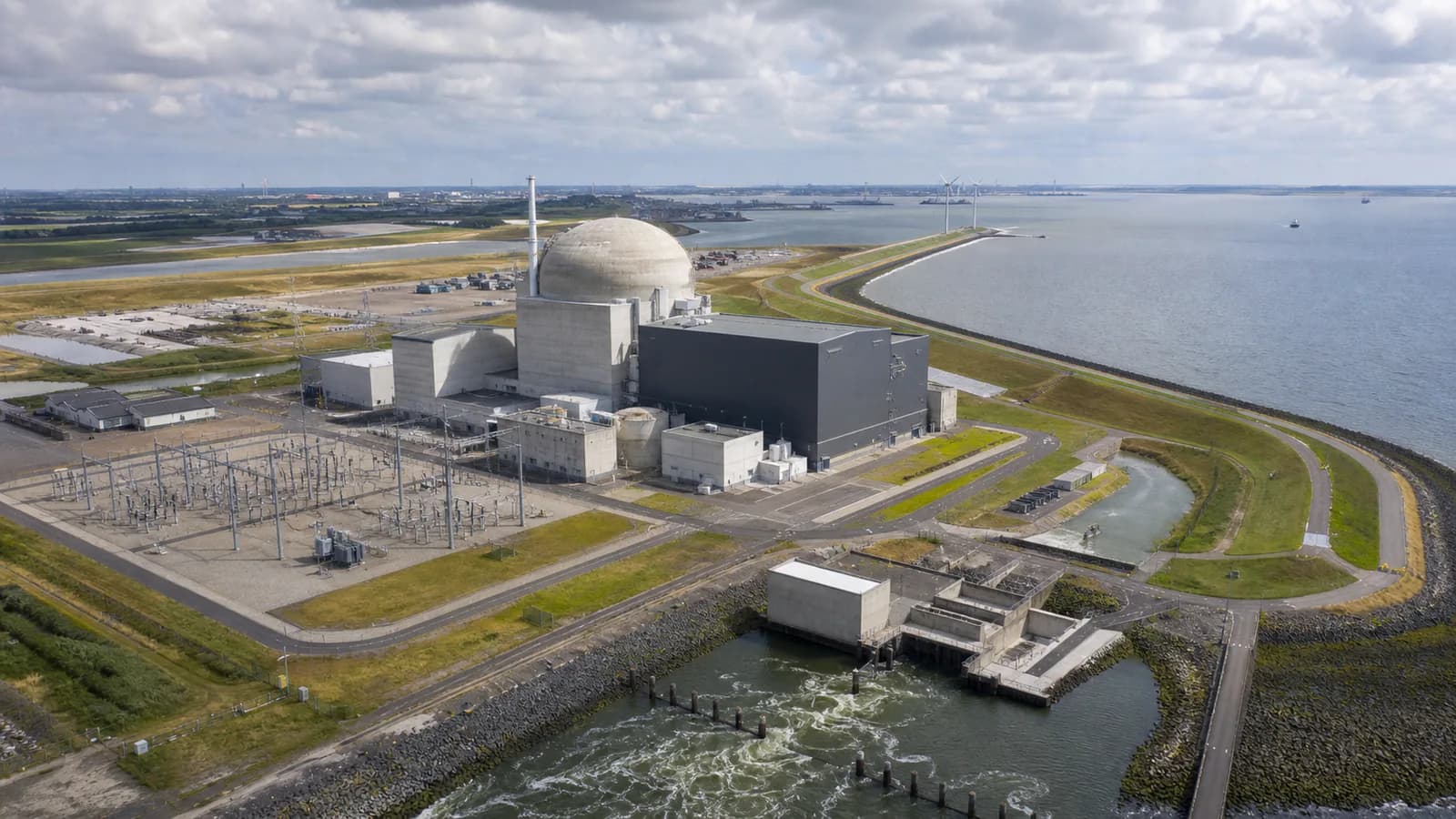
Nuclear energy is electricity released by splitting uranium atoms in a reactor. Nuclear energy in the Netherlands currently comes from one operating nuclear power plant, at Borssele, which supplies stable, low-carbon power this way. The government is preparing to expand with new plants, as a complement to solar and wind, aiming for security of supply and a CO2-free energy system.
- Clear definition
- Data-driven assessment
- Risks and opportunities visible
- Practical next steps
Nuclear energy in the Netherlands: scattered information versus Energy Intelligence
Solar and wind supply more and more electricity, but not always when you need it. How to keep a reliable and CO2-free system standing is therefore high on the political agenda. In that discussion, nuclear energy returns as a source that can supply power day and night. For businesses seeking certainty about their future electricity, it helps to understand the role nuclear energy plays in the Netherlands and which plans and concerns are on the table.
- The Netherlands currently has one operating commercial nuclear power plant, at Borssele in the province of Zeeland, able to supply power day and night.
- The government is preparing to build new nuclear plants as a firm base alongside the variable output of solar and wind.
- Oversight of nuclear safety and radiation lies with the ANVS, which grants licences under the Nuclear Energy Act and carries out inspections.
Insight
Traditional approach
Information is scattered across portals, documents, invoices or separate spreadsheets.
Modern approach
Data, context and interpretation are brought together into a clear decision picture.
Decision-making
Traditional approach
Choices are made based on averages, assumptions or occasional analyses.
Modern approach
Scenarios, KPIs and current measurement data make the trade-off more concrete and repeatable.
Follow-up
Traditional approach
Actions often stay non-committal or disappear into separate reports.
Modern approach
Follow-up actions, monitoring and reporting are linked to the same energy data.
What role does nuclear energy play now in the Netherlands?
The Netherlands currently has one operating commercial nuclear power plant, at Borssele in the province of Zeeland. That plant has been in operation since the 1970s and supplies a relatively small but constant share of Dutch electricity. What is special about nuclear energy is that a plant can supply large amounts of power without emitting CO2 during production, and does so largely independent of weather and season. In that way nuclear fills a different gap than solar and wind, which vary with the weather. An older research reactor at Petten is used mainly for medical isotopes and research, not for the grid.
- One operating commercial nuclear power plant, at Borssele in Zeeland.
- Supplies a relatively small but constant share of Dutch electricity.
- Produces electricity without CO2 emissions during generation.
- Can supply power regardless of weather and season, unlike solar and wind.
What are the government's plans?
The national government sees nuclear energy as a complement to solar and wind, not as a replacement for them. The aim is an energy system that is CO2-free towards 2050 and at the same time secure of supply, even when there is no wind or sun. For that reason the government is preparing to build new nuclear plants and is working to keep Borssele open for longer. New plants are meant to provide a firm base under the grid, so that solar and wind can grow on top of it. The exact numbers, locations and timelines are not fixed and shift with decisions by successive governments. What is settled is the direction: nuclear energy is given a larger role in the plans than it has now.
- Nuclear energy counts as a complement to solar and wind, not a replacement.
- The aim is a CO2-free and secure system towards 2050.
- The government is preparing new plants and wants to keep Borssele open longer.
- Numbers, locations and timelines are not fixed and can shift per government.
Which concerns and debates are at play?
There is a firm public debate around nuclear energy, with arguments on several sides. Points of attention are the high investment costs and the long construction time of a new plant. Radioactive waste also demands attention: high-level waste stays dangerous for a very long time. In the Netherlands that waste is currently stored above ground at COVRA in Zeeland, for a long period of many decades, while research continues into final disposal deep underground. There are also questions about safety and about the supply of nuclear fuel, because uranium comes from a limited number of countries. Oversight of safety and radiation lies with the ANVS.
- High investment costs and a long construction time for a new plant.
- High-level waste stays dangerous for a very long time and needs careful management.
- Waste is now stored above ground at COVRA; final disposal is still under research.
- Uranium supply comes from a limited number of countries; the ANVS oversees safety.
Curious what this looks like with your own data?
In a no-obligation call, a specialist looks at your meters, sites and energy questions with you. Response within one business day.
Search the knowledge base
Find the answer to your question.
Search using your own words. Abbreviations and spelling variants are recognised, so EMS also finds the articles on energy management systems.
Topic