
GOPACS explained for businesses
Direct answer
GOPACS is the joint platform of all Dutch grid operators used to resolve grid congestion with flexibility from the market. The name stands for Grid Operators Platform for Congestion Solutions. In places where the grid risks becoming full, TenneT and the regional grid operators use GOPACS to request flexible capacity, after which market parties bid to shift consumption or generation.
- Clear definition
- Data-driven assessment
- Risks and opportunities visible
- Practical next steps
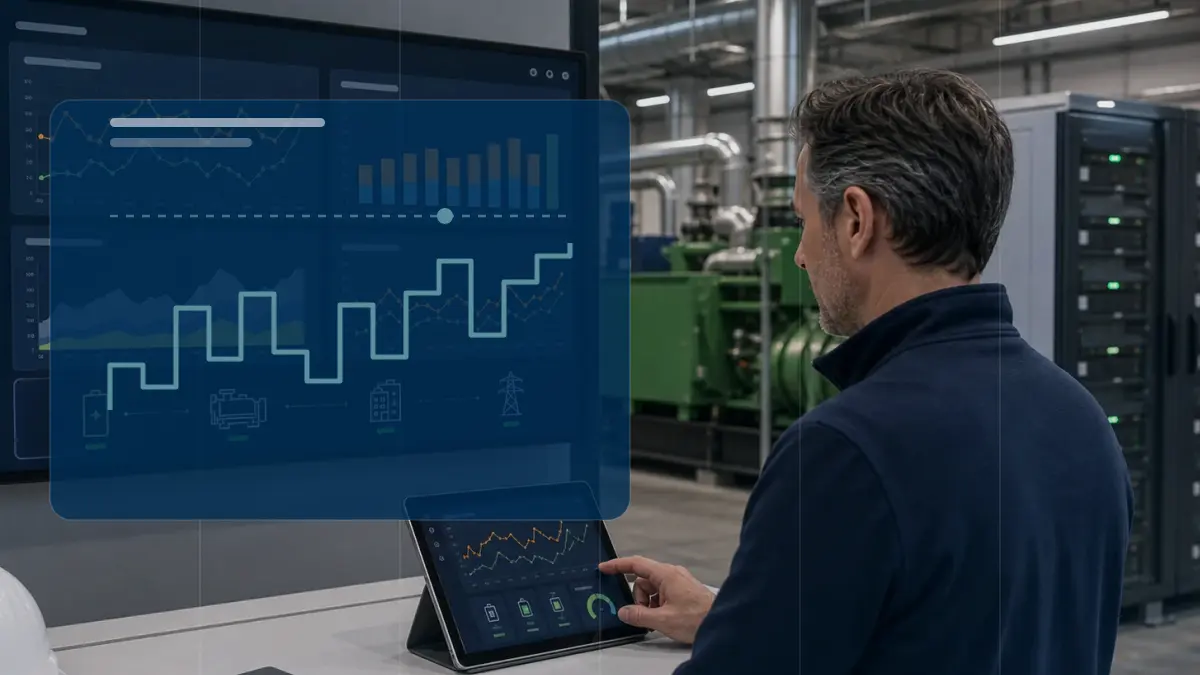
GOPACS explained: scattered information versus Energy Intelligence
More and more parts of the Dutch electricity grid become temporarily full. At peak moments a cable or substation risks overloading, while expanding the grid takes years. Grid operators therefore need a way to intervene quickly at such moments without immediately reinforcing the grid. GOPACS is where they do this together. It matters to large consumers, generators and companies with controllable capacity that can shift their electricity use at the right times.
- GOPACS is a collaboration of all Dutch grid operators, so TenneT plus the regional grid operators, who address a bottleneck together.
- A grid operator requests flexibility in a congestion area; market parties bid to shift their consumption or generation and so ease the bottleneck.
- So that a shift in one place does not cause a shortage elsewhere, it is compensated with counter-trade, keeping the national balance intact.
Insight
Traditional approach
Information is scattered across portals, documents, invoices or separate spreadsheets.
Modern approach
Data, context and interpretation are brought together into a clear decision picture.
Decision-making
Traditional approach
Choices are made based on averages, assumptions or occasional analyses.
Modern approach
Scenarios, KPIs and current measurement data make the trade-off more concrete and repeatable.
Follow-up
Traditional approach
Actions often stay non-committal or disappear into separate reports.
Modern approach
Follow-up actions, monitoring and reporting are linked to the same energy data.
What is GOPACS?
GOPACS is the joint platform through which the Dutch grid operators resolve grid congestion with flexibility from the market. The abbreviation stands for Grid Operators Platform for Congestion Solutions. All grid operators take part: the national grid of TenneT and the regional grid operators such as Liander, Stedin, Enexis, Westland, Coteq and Rendo. Instead of each intervening separately, they manage congestion through one platform. GOPACS coordinates the solutions, uses up-to-date data to show where congestion is looming and what flexibility is needed, and encourages flexible use of electricity. This keeps the grid reliable while the demand for transport keeps growing.
- A collaboration of all Dutch grid operators, national and regional.
- The name means Grid Operators Platform for Congestion Solutions.
- The aim is to resolve congestion with flexibility, not with new network.
- GOPACS shares transparent data on where and when flexibility is needed.
How does GOPACS work?
When the grid in an area risks becoming full, the grid operator involved requests flexibility through GOPACS. Market parties then place a bid: they offer to consume less, consume more or adjust their generation at that moment. Part of these bids run through redispatch on the intraday market, where a bid to shift within the bottleneck area is matched with an opposite bid elsewhere. That counter-trade is essential: the shift in the congestion area eases the bottleneck, while the compensation elsewhere keeps the national balance of supply and demand intact. This creates room on the grid without causing a new problem in another place.
- The grid operator requests flexibility specifically in a congestion area.
- Market parties bid to shift consumption or generation.
- Shifting within the bottleneck is compensated with counter-trade elsewhere.
- The national balance of supply and demand therefore stays in equilibrium.
Who takes part and what is it for?
GOPACS deploys flexible capacity from market parties and large business users, exactly where congestion occurs and only when it is needed. Large consumers with controllable capacity can take part directly. Smaller parties usually bundle their flexibility through a trader or aggregator, who bids on behalf of several connected parties. Whoever takes part decides for themselves when and how much capacity is offered. The platform serves to address congestion in a targeted and collaborative way, so the grid stays reliable and affordable and room is created for growth and decarbonisation. GOPACS does not replace grid reinforcement, but bridges the period in which the grid has not yet been expanded.
- Large consumers with controllable capacity can take part directly.
- Smaller parties often bid through a trader or aggregator.
- The participant decides when and how much flexibility is offered.
- The platform bridges the time until the grid is reinforced, and does not replace that reinforcement.
Curious what this looks like with your own data?
In a no-obligation call, a specialist looks at your meters, sites and energy questions with you. Response within one business day.
Search the knowledge base
Find the answer to your question.
Search using your own words. Abbreviations and spelling variants are recognised, so EMS also finds the articles on energy management systems.
Topic