
Real estate
Article 12 of 16 · Buildings and real estateATES in real estate: a guide for businesses
Direct answer
WKO in real estate is the use of aquifer thermal energy storage, the Dutch WKO system, as the sustainable heating and cooling installation of a building. It mainly suits larger properties with both a heating and a cooling demand, such as offices, healthcare buildings, apartment complexes and campuses. Performance depends heavily on the building itself and on proper management throughout operation.
- Clear definition
- Data-driven assessment
- Risks and opportunities visible
- Practical next steps
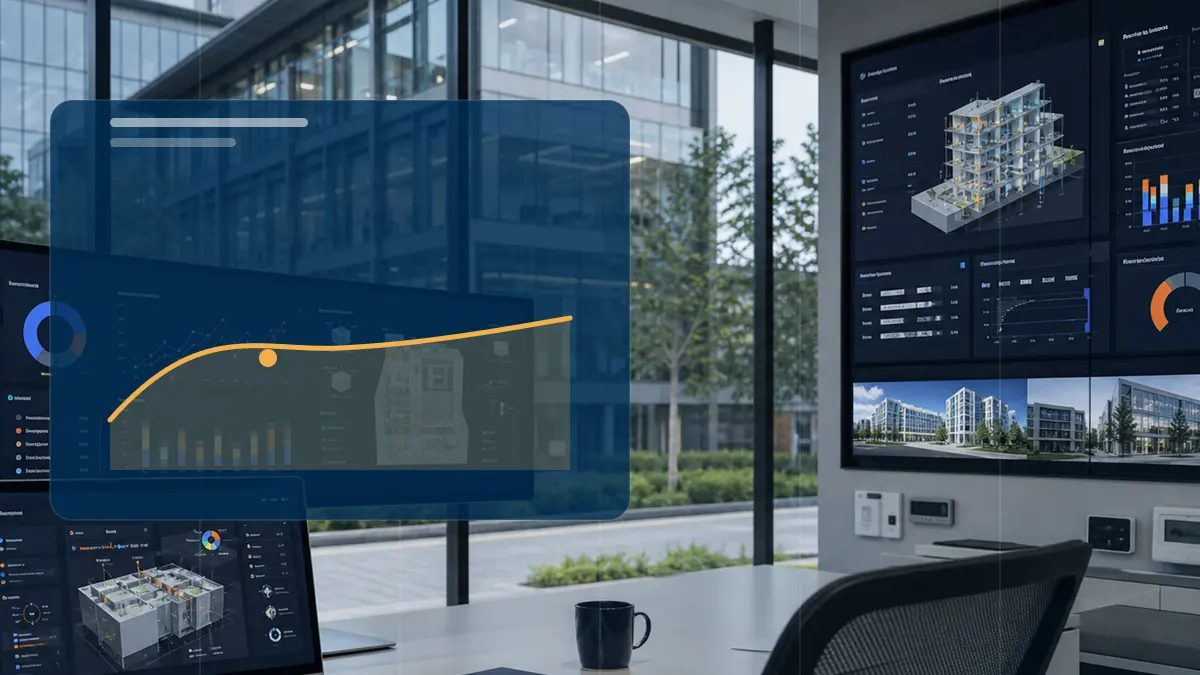
ATES in real estate: scattered information versus Energy Intelligence
More and more property owners want to move away from natural gas and are looking for an alternative to the traditional boiler and chiller. Picture an office owner who replaces the complete installation during a major renovation and wants to use the ground under the plot as an energy source. This page is written for that situation: when is ground energy a logical choice for your building, what does it demand from the property and from you as owner, and where does it go wrong in practice.
- WKO fits best in new construction or major renovation, because the building needs low temperature heat delivery, such as underfloor heating or climate ceilings.
- An open WKO system requires a permit in the Netherlands; it almost always contains conditions on the thermal balance in the subsurface, and guarding that balance also determines performance.
- Management and monitoring are part of operation; many owners outsource this to a specialised operator or energy service company.
Insight
Traditional approach
Information is scattered across portals, documents, invoices or separate spreadsheets.
Modern approach
Data, context and interpretation are brought together into a clear decision picture.
Decision-making
Traditional approach
Choices are made based on averages, assumptions or occasional analyses.
Modern approach
Scenarios, KPIs and current measurement data make the trade-off more concrete and repeatable.
Follow-up
Traditional approach
Actions often stay non-committal or disappear into separate reports.
Modern approach
Follow-up actions, monitoring and reporting are linked to the same energy data.
When does WKO suit your property?
WKO works with low temperatures and delivers cooling as well as heating. The system therefore performs best in buildings that need both throughout the year: larger offices, healthcare buildings, apartment complexes and campuses. New construction or a major renovation is the most favourable moment, because you can then design the heat delivery system for low temperatures right away, with underfloor heating, climate ceilings or low temperature radiators. A heat pump raises the heat from the source to the required temperature; cooling can often largely be done directly with the cold groundwater. The location also has to cooperate: a suitable aquifer in the subsurface is needed, plus space for the wells on or around the plot. Not every subsurface and not every area is suitable.
- Suitable for larger properties with both a heating and a cooling demand, such as offices, healthcare, apartments and campuses.
- Low temperature heat delivery is a precondition, for example underfloor heating or climate ceilings.
- New construction and major renovation are the natural entry moments.
- The subsurface must contain a suitable aquifer and there must be space for the wells.
What does WKO demand during operation?
A WKO system is not an installation you switch on and forget. An open system requires an environmental permit in the Netherlands; the province is usually the competent authority. That permit almost always contains conditions on the thermal balance: the amounts of heat and cold you load into the subsurface must remain in balance over a period of years. You must measure and report on this. In addition, design, construction and management may only be carried out by recognised, certified companies. Many owners therefore outsource operation to a specialised operator or energy service company, an ESCo. In rented property, the split between owner and tenants is added to this: record who manages the installation, who supplies the heat and cold, and how the costs are divided.
- Open ground energy systems require a permit; the province is usually the competent authority.
- Guarding the thermal balance in the subsurface is a permit condition and also determines performance.
- Design, construction and management may only be carried out by recognised companies.
- Operation can be outsourced to an operator or ESCo.
- In rented property: record management, supply and cost allocation between owner and tenants.
Where does it go wrong in practice?
The most common complaint is a WKO that performs below its design promise. The cause rarely lies in the subsurface and usually in the controls: wells, heat pump and building installation are not properly tuned to each other, or the thermal balance drifts year after year. Structural monitoring of temperatures, pumped volumes and the behaviour of the building is therefore indispensable. Also take the surroundings into account: a new system may not disturb existing ground energy systems nearby, and Dutch municipalities can designate busy areas as interference areas with additional rules. Finally, know the limits. WKO does not deliver high temperatures, is not allowed in every area and is often not the logical choice for small buildings; a closed loop ground system or another solution fits better there.
- Poor tuning and commissioning is the most common cause of disappointing performance.
- Monitor temperatures, water volumes and the thermal balance structurally.
- New wells may not disturb neighbouring systems; check whether your location lies in an interference area.
- WKO delivers low temperatures and is not feasible in every subsurface or area.
Curious what this looks like with your own data?
In a no-obligation call, a specialist looks at your meters, sites and energy questions with you. Response within one business day.
Search the knowledge base
Find the answer to your question.
Search using your own words. Abbreviations and spelling variants are recognised, so EMS also finds the articles on energy management systems.
Topic