
Real estate
Article 13 of 16 · Buildings and real estateGreen roofs and energy: a guide for businesses
Direct answer
Green roofs are roofs covered with a layer of vegetation, usually sedum on a thin substrate layer or a full roof garden. For energy, the cooling effect matters most: the roof heats up less in summer, keeping the building cooler and potentially reducing cooling demand. Green roofs also retain rainwater and protect the roof covering underneath.
- Clear definition
- Data-driven assessment
- Risks and opportunities visible
- Practical next steps
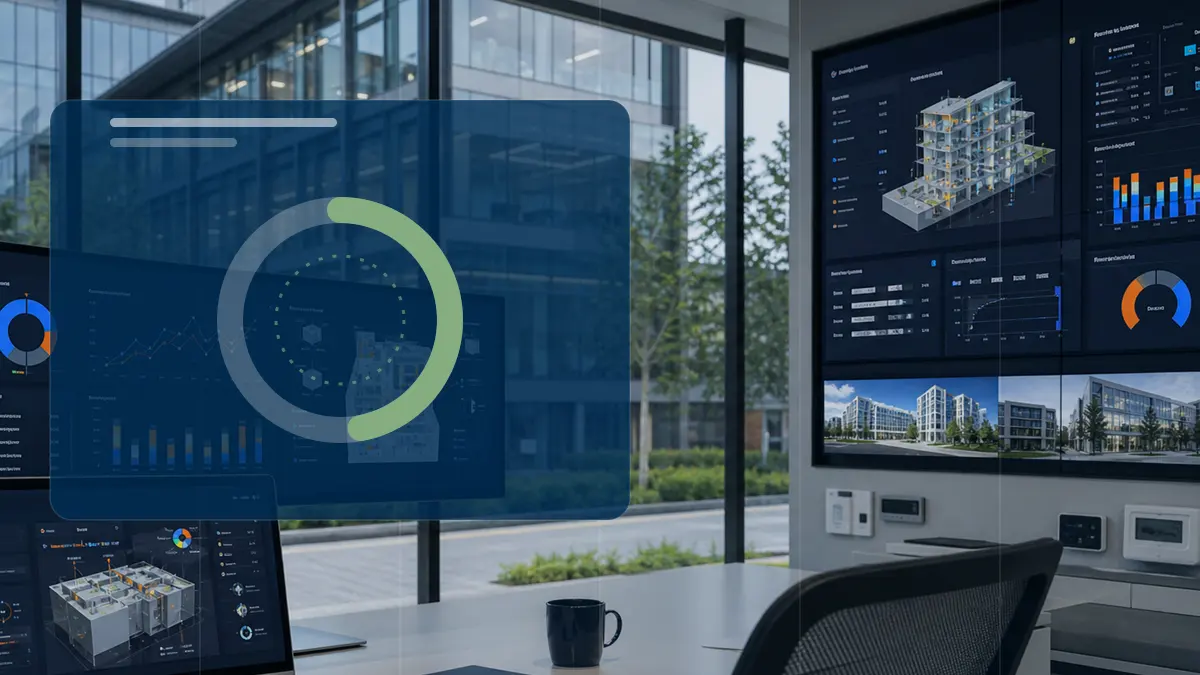
Green roofs and energy: scattered information versus Energy Intelligence
Dutch cities and business parks largely consist of stone and bitumen. On a warm day, the temperature on a bare flat roof rises sharply, and after a heavy shower all the rainwater flows into the sewer at once. Dutch municipalities therefore encourage vegetated roofs, often with a subsidy scheme. For building owners and facility managers, the subject usually comes up at a natural moment: when the roof covering is renovated or when solar panels are being planned. That is the time to seriously consider a vegetated roof.
- An extensive green roof with sedum is light and low-maintenance; an intensive green roof is a true roof garden and requires a much stronger roof structure.
- The vegetation cools the roof in summer through shade and evaporation; the building heats up less and solar panels on a cooler roof can perform slightly better.
- Energy savings are not the main reason for a green roof: water retention, less heat stress and a longer lifespan of the roof covering usually weigh more heavily.
Insight
Traditional approach
Information is scattered across portals, documents, invoices or separate spreadsheets.
Modern approach
Data, context and interpretation are brought together into a clear decision picture.
Decision-making
Traditional approach
Choices are made based on averages, assumptions or occasional analyses.
Modern approach
Scenarios, KPIs and current measurement data make the trade-off more concrete and repeatable.
Follow-up
Traditional approach
Actions often stay non-committal or disappear into separate reports.
Modern approach
Follow-up actions, monitoring and reporting are linked to the same energy data.
What does a green roof do for your energy use?
The biggest effect occurs in summer. The vegetation and the substrate layer block sunlight and evaporate moisture, keeping the roof surface noticeably cooler on hot days than bare, dark bitumen. The rooms directly under the roof therefore heat up less. Buildings with air conditioning need less cooling; buildings without cooling stay comfortable for longer. In winter the effect is modest. The layer of substrate and vegetation is thin and often moist, so it does not replace roof insulation. Do not count on a noticeably lower heating bill. There is, however, an indirect financial benefit: the vegetation protects the roof covering against UV radiation and large temperature swings. The underlying roof layer lasts longer as a result, postponing roof replacement.
- In summer the roof surface stays noticeably cooler than bare bitumen, thanks to shade and evaporation.
- Less heating up means a lower cooling demand in the rooms directly under the roof.
- In winter the effect is small: a green roof does not replace roof insulation.
- The vegetation protects the roof covering, which lasts longer as a result.
How do you combine a green roof with solar panels?
Green roofs and solar panels are not mutually exclusive. In the Netherlands the combination is often called a yellow-green roof, or a blue-green roof when water storage sits underneath the vegetation. Solar panels produce less as they get hotter. Above a vegetated roof, the air on warm days is cooler than above dark bitumen, so the panels can perform slightly better. For this, the panels are mounted on raised frames, so that light and rainwater keep reaching the vegetation underneath. The substrate can also serve as ballast for those frames, so the roof covering does not need to be pierced. Keep in mind that the combination weighs more than panels alone. Have the roof structure assessed in advance and choose vegetation that tolerates partial shade.
- A cooler roof can slightly increase solar panel yield; panels perform less well in heat.
- Mount panels on raised frames, so light and water reach the vegetation.
- The substrate can serve as ballast, so the roof covering does not need to be pierced.
- The combination is heavier than panels alone: have the structure assessed in advance.
What should you check before you start?
Start with the load-bearing capacity. An extensive sedum roof is relatively light, but saturated with rainwater it still weighs tens of kilograms per square metre. An intensive roof garden with a thick soil layer and space for people requires a much stronger structure. Have a structural engineer assess what your roof can handle. Also be realistic about the returns: energy savings are usually not the reason to install a green roof. The main gains are water retention during heavy showers, less heat stress in the immediate surroundings and a longer lifespan of the roof covering. Maintenance remains necessary, even with sedum: check the drains a few times a year and remove unwanted plants. Many Dutch municipalities encourage green roofs with a subsidy scheme; ask your municipality about the current conditions.
- Have a structural engineer assess the load-bearing capacity of the roof before you choose.
- Extensive sedum is light and low-maintenance; an intensive roof garden requires a heavy structure.
- Treat energy savings as a bonus; water retention and roof lifespan are the main reasons.
- Check the drains a few times a year and remove unwanted plants.
- Many Dutch municipalities have a subsidy scheme for green roofs; conditions differ per municipality.
Curious what this looks like with your own data?
In a no-obligation call, a specialist looks at your meters, sites and energy questions with you. Response within one business day.
Search the knowledge base
Find the answer to your question.
Search using your own words. Abbreviations and spelling variants are recognised, so EMS also finds the articles on energy management systems.
Topic