
What is renewable energy?
Direct answer
Sustainable energy is energy from sources that do not run out and that emit little or no CO2 when generated. Think of sun, wind, water, geothermal heat and biomass. It is also called renewable energy, because the source keeps replenishing itself. That is the difference with fossil energy from coal, oil and gas, which is finite and releases CO2 and pollution when burned.
- Clear definition
- Data-driven assessment
- Risks and opportunities visible
- Practical next steps
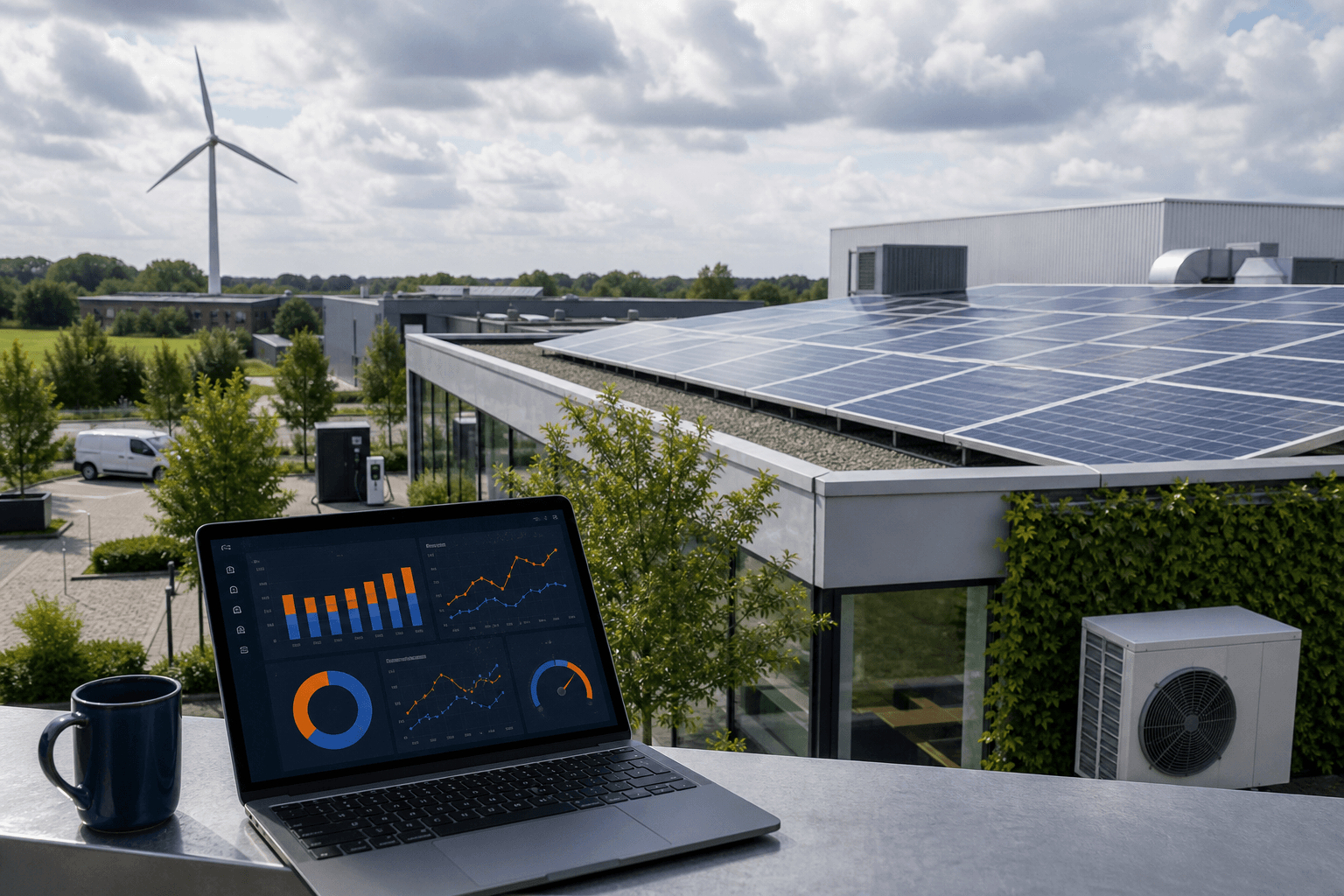
What is renewable energy: scattered information versus Energy Intelligence
Almost every business deals with sustainable energy: through the energy bill, climate targets, tenders or customer questions about the CO2 footprint. Yet the term is elastic. A roof full of solar panels qualifies, but so does a green electricity contract under which you generate nothing yourself. To make the right choices, you need to know which sources are genuinely sustainable and where the difference lies between generating and buying.
- The main sustainable sources are sun, wind, water, geothermal heat and biomass; they do not run out and emit little CO2 when generated.
- Generating your own power with, for example, solar panels differs from buying green electricity backed by guarantees of origin.
- The Dutch government aims for 27 percent renewable energy by 2030 and an almost fully sustainable energy supply by 2050.
Insight
Traditional approach
Information is scattered across portals, documents, invoices or separate spreadsheets.
Modern approach
Data, context and interpretation are brought together into a clear decision picture.
Decision-making
Traditional approach
Choices are made based on averages, assumptions or occasional analyses.
Modern approach
Scenarios, KPIs and current measurement data make the trade-off more concrete and repeatable.
Follow-up
Traditional approach
Actions often stay non-committal or disappear into separate reports.
Modern approach
Follow-up actions, monitoring and reporting are linked to the same energy data.
Which sources are sustainable?
Sustainable energy comes from sources that replenish themselves and do not run out. Sun and wind are the best known: solar panels and collectors use sunlight, wind turbines use the wind. Water provides energy through flowing or falling water, though hydropower plays a small role in the flat Netherlands. Geothermal heat draws warmth from the deep subsurface for heating or electricity. Biomass is material from plants and organic waste that is burned, fermented or gasified. Biomass is renewable, but how sustainable its use is remains debated, especially for wood. Fossil sources such as coal, oil and natural gas do not belong here: they are finite and emit CO2 when burned.
- Sun: solar panels generate electricity, solar collectors provide heat.
- Wind: onshore and offshore turbines convert wind into electricity.
- Geothermal: heat from the deep subsurface for heating or electricity.
- Water and biomass: hydropower is small in the Netherlands, biomass is contested.
- Fossil is excluded: coal, oil and gas run out and emit CO2.
Generate your own or buy green electricity?
Acting sustainably can be done in two ways, which are often confused. Generating your own means installing your own equipment, for example solar panels on your roof or a wind turbine on your site. You use the power yourself or feed it back into the grid. Buying means signing a green electricity contract. The supplier then buys guarantees of origin, certificates proving that an equal amount of sustainable power was generated somewhere. Physically, the same mix comes out of your socket as at your neighbour's. Not all green electricity contributes equally: power from Dutch wind, sun or waste biomass greens production more strongly than loose foreign certificates.
- Self-generation: your own solar panels or wind turbine, power used or fed back.
- Buying: a green electricity contract backed by guarantees of origin.
- A guarantee of origin proves sustainable power was generated elsewhere.
- Origin matters: Dutch wind, sun or waste biomass greens production most.
Where does your business encounter it?
Sustainable energy affects your business through costs, obligations and reputation. The Dutch government is driving the energy transition: the share of renewable energy must grow to 27 percent by 2030, and the supply should be almost fully sustainable by 2050. This translates into policy, subsidies and reporting duties. For your procurement the choice is concrete: generate your own, buy green electricity, or both. Customers and tenders increasingly ask about your CO2 footprint, in which the origin of your electricity counts. Generating your own power also reduces dependence on the grid, which matters in areas where the grid is full.
- Policy: the government targets 27 percent by 2030 and near-full sustainability by 2050.
- Procurement choice: generate your own, buy green electricity, or combine both.
- Reporting: customers and tenders ask about your CO2 footprint.
- Self-generation reduces dependence on the electricity grid.
Curious what this looks like with your own data?
In a no-obligation call, a specialist looks at your meters, sites and energy questions with you. Response within one business day.
Search the knowledge base
Find the answer to your question.
Search using your own words. Abbreviations and spelling variants are recognised, so EMS also finds the articles on energy management systems.
Topic