
What is the energy transition?
Direct answer
The energy transition is the shift from fossil fuels, such as natural gas, oil and coal, to renewable energy and electrification, in order to cut CO2 emissions. At present around eighty per cent of the energy used in the Netherlands still comes from fossil sources. The aim is for the Netherlands to emit virtually no greenhouse gases by 2050.
- Clear definition
- Data-driven assessment
- Risks and opportunities visible
- Practical next steps
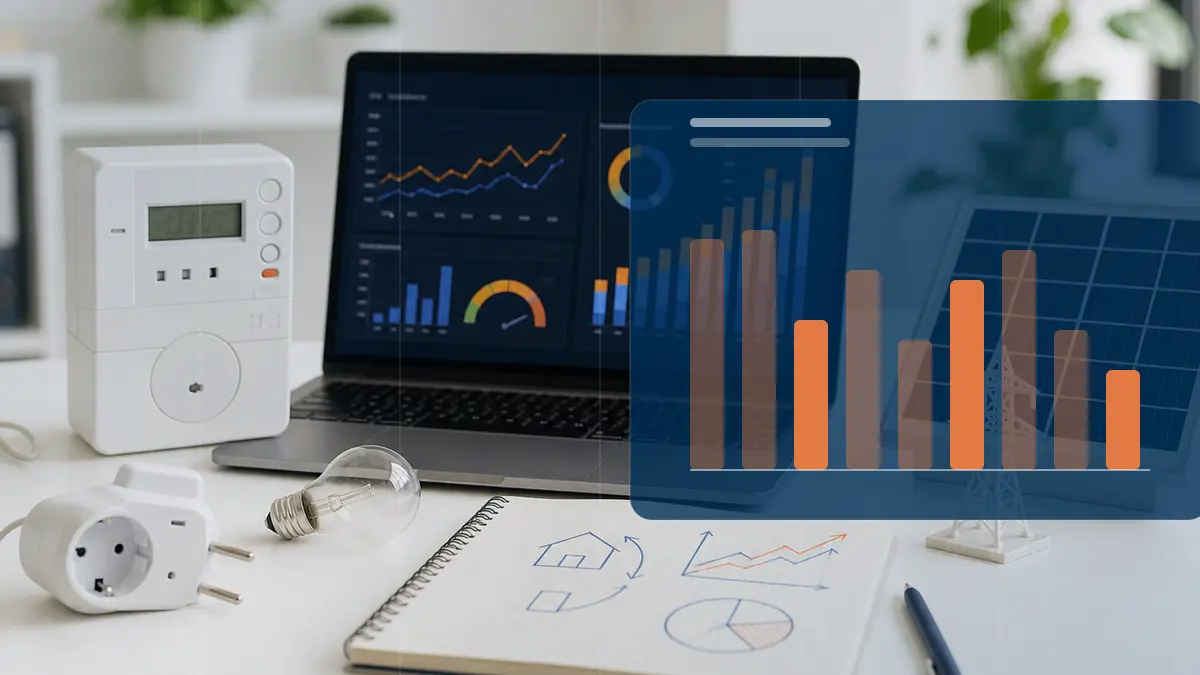
What is the energy transition: scattered information versus Energy Intelligence
The Netherlands has run on natural gas, oil and coal for more than a century. Those fuels heat buildings, power factories and move cars, but they emit CO2 and warm the climate. To stop that, the country is rebuilding its energy supply around sources without emissions. For a business owner this becomes tangible the moment a building has to come off gas, a heat pump or charging points demand power, or a grid connection is kept waiting.
- The transition runs along five tracks: renewable generation from sun and wind, taking buildings off natural gas, electrifying heating and transport, saving energy, and hydrogen for what cannot run on electricity.
- Dutch climate law sets two firm targets: at least 55 per cent fewer greenhouse gases in 2030 than in 1990, and climate neutrality by 2050.
- For businesses the energy transition means dealing in practice with grid congestion, with sustainability obligations, and with shifting energy costs.
Insight
Traditional approach
Information is scattered across portals, documents, invoices or separate spreadsheets.
Modern approach
Data, context and interpretation are brought together into a clear decision picture.
Decision-making
Traditional approach
Choices are made based on averages, assumptions or occasional analyses.
Modern approach
Scenarios, KPIs and current measurement data make the trade-off more concrete and repeatable.
Follow-up
Traditional approach
Actions often stay non-committal or disappear into separate reports.
Modern approach
Follow-up actions, monitoring and reporting are linked to the same energy data.
Why is the energy transition happening now?
The energy transition is accelerating because climate policy is now set in law. Dutch climate law contains two targets: at least 55 per cent fewer greenhouse gases in 2030 than in 1990, and climate neutrality by 2050. Climate neutral means the Netherlands emits virtually no greenhouse gases by 2050. These targets stem from the Paris Agreement, in which almost every country agreed to limit global warming. At present the Netherlands still depends on fossil fuels for around eighty per cent of its energy. That share has to fall to zero within a few decades. This pace makes the transition felt in almost every sector.
- Dutch climate law requires 55 per cent fewer emissions in 2030, measured against 1990.
- By 2050 the Netherlands must be climate neutral: net virtually no greenhouse gas emissions.
- The targets stem from the international Paris Agreement on climate change.
- Around eighty per cent of Dutch energy still comes from fossil sources today.
Which tracks does the transition follow?
The transition follows several tracks that reinforce one another. The first is renewable generation: electricity from sun, wind and geothermal heat, which emits no CO2. The second is coming off natural gas: buildings are heated with a heat pump or a heat network instead of a gas boiler. The third is electrification: heating, transport and industrial processes switch from fuel to electricity. The fourth is energy saving, because the cleanest energy is the energy you do not use. The fifth is hydrogen, made with renewable electricity, for uses that are hard to electrify, such as heavy industry and long-distance transport.
- Renewable generation: electricity from sun, wind and geothermal heat without CO2 emissions.
- Off natural gas: heating with a heat pump or heat network instead of gas.
- Electrification: heating, transport and processes run on electricity instead of fuel.
- Saving and hydrogen: lower use, plus hydrogen for what cannot run on electricity.
What does the energy transition mean for your business?
For businesses the energy transition is not an abstraction but a series of concrete consequences. Because everyone electrifies at the same time, the electricity grid fills up: grid congestion can delay a new or heavier connection by years. At the same time sustainability obligations apply. Offices must meet an energy label standard, and large energy users are legally required to take energy-saving measures that pay back within a few years. Costs shift too: the price of fossil energy is sensitive to levies and the market, while on-site generation and smart use open up new options. Those who plan in time avoid a full connection or a tightened standard hitting the business unexpectedly.
- Grid congestion can seriously delay a new or heavier grid connection.
- Offices and large energy users face mandatory sustainability measures.
- Energy costs shift: fossil becomes more sensitive, on-site generation and flexibility pay off.
- Planning early prevents delay from a full connection or a tightened standard.
Curious what this looks like with your own data?
In a no-obligation call, a specialist looks at your meters, sites and energy questions with you. Response within one business day.
Search the knowledge base
Find the answer to your question.
Search using your own words. Abbreviations and spelling variants are recognised, so EMS also finds the articles on energy management systems.
Topic