
Air, ground and water source heat pumps explained for businesses
Direct answer
A heat pump extracts heat from outdoor air, the ground or water; that source choice defines the type. Air-to-water is the easiest to install, but delivers less efficiency in freezing weather. Ground-source systems use a ground loop with a stable source temperature and therefore achieve the highest efficiency, though they require drilling. Water-source systems use groundwater or surface water and mainly suit larger buildings.
- Clear definition
- Data-driven assessment
- Risks and opportunities visible
- Practical next steps
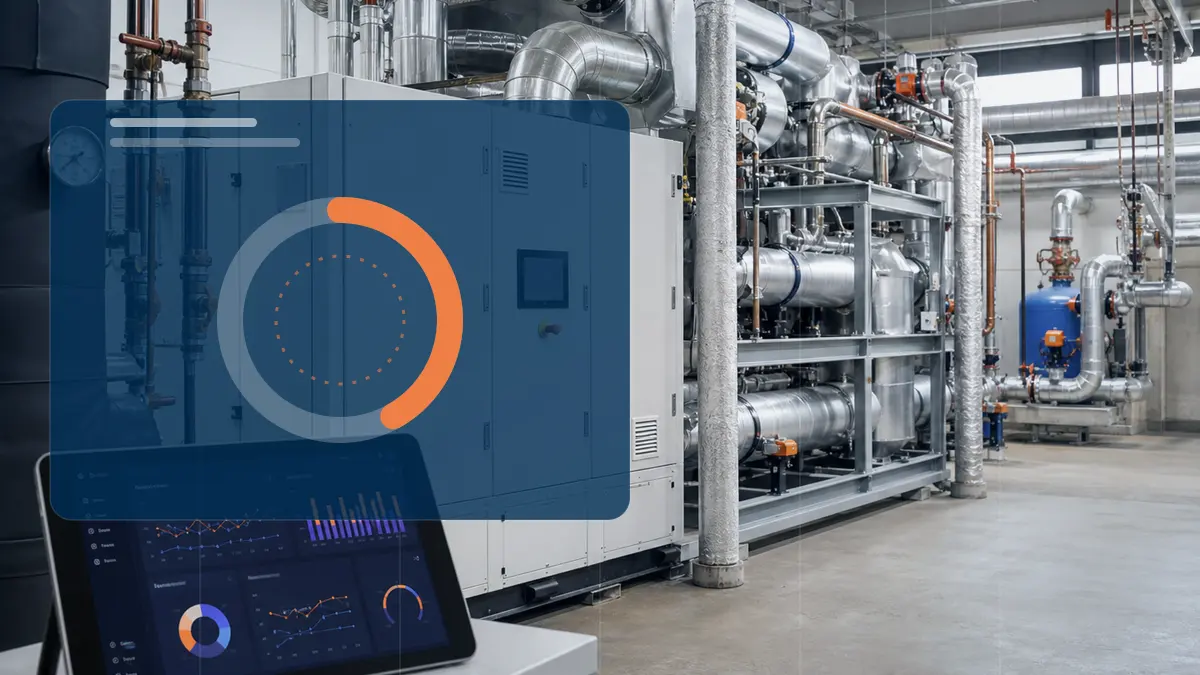
Air, ground and water source heat pumps explained: scattered information versus Energy Intelligence
More and more Dutch businesses and households are switching from natural gas to electric heating. Anyone requesting quotes soon faces different types: air-to-water, ground-source or water-to-water. These names refer to the source the device extracts heat from and the medium it delivers heat to. The source choice determines the installation, the efficiency and the rules you will encounter. Think of the facility manager choosing between an outdoor unit on the roof or a borehole on the premises.
- An air-to-water heat pump uses outdoor air as its source, needs no drilling and is therefore the quickest to install; Dutch noise rules apply to the outdoor unit.
- A ground-source heat pump extracts heat from a ground loop with a stable temperature; this gives the highest efficiency, but requires drilling and at least a notification.
- A water-to-water heat pump uses groundwater or surface water as its source and is mainly applied in large buildings, often combined with aquifer thermal energy storage (ATES).
Insight
Traditional approach
Information is scattered across portals, documents, invoices or separate spreadsheets.
Modern approach
Data, context and interpretation are brought together into a clear decision picture.
Decision-making
Traditional approach
Choices are made based on averages, assumptions or occasional analyses.
Modern approach
Scenarios, KPIs and current measurement data make the trade-off more concrete and repeatable.
Follow-up
Traditional approach
Actions often stay non-committal or disappear into separate reports.
Modern approach
Follow-up actions, monitoring and reporting are linked to the same energy data.
Which sources can a heat pump use?
An air-to-water heat pump uses an outdoor unit to extract heat from the outdoor air and delivers it to the central heating water. This type can be installed almost anywhere and needs no drilling. A ground-source heat pump uses a closed loop in the ground, installed via one or more deep boreholes. The ground temperature is almost constant year round, so this type also runs efficiently in winter. A water-to-water heat pump extracts heat from groundwater or surface water. This variant is mainly applied in larger buildings, often combined with aquifer thermal energy storage (ATES): summer heat and winter cold are then stored in the ground. Finally there is the air-to-air heat pump, comparable to an air conditioner. It heats the indoor air directly and provides no hot tap water.
- Air-to-water: outdoor air as the source, delivery to the heating water, no drilling needed.
- Ground-source: a closed ground loop with a stable source temperature all year round.
- Water-to-water: groundwater or surface water as the source, often linked to ATES.
- Air-to-air: heats the indoor air directly, without heating water and without hot tap water.
How do you choose between air, ground and water?
Start with your location. Air-to-water only needs a spot for the outdoor unit, for example on the roof or next to the facade. Ground-source requires space for drilling and suitable soil conditions. Water-to-water needs a usable water source and therefore mainly suits larger buildings and commercial property. Then look at your building and heat demand: the larger and more constant the demand, the sooner a ground or water system pays off. Next, weigh the investment: an air system is the simplest to install, while drilling makes a ground system considerably more expensive to buy, with higher efficiency in return. Finally, check the rules: ground energy requires at least a notification, and noise limits apply to the outdoor unit.
- Location: a spot for an outdoor unit, space for drilling, or a suitable water source.
- Heat demand: a large, constant demand makes a ground or water system a better fit.
- Investment: air-to-water has the lowest entry point, ground-source the highest efficiency.
- Rules: notification or permit for ground energy, noise limits for the outdoor unit.
What are the limits of each type?
Every type has limitations. An air-to-water heat pump delivers less efficiency in freezing weather: the outdoor air then contains less heat and the unit must defrost regularly. In severe cold an electric heating element often kicks in, which consumes considerably more electricity. In addition, a legal noise limit applies to newly placed outdoor units in the Netherlands: a maximum of 40 decibels at the neighbours' property line in the evening and at night. A ground loop cannot simply go into the ground everywhere: at least a notification is required, and in designated interference areas a permit, so that systems do not disturb each other. Open systems that pump up groundwater need a permit from the province. Finally, use realistic efficiency figures: 300 to 500 percent for space heating, with lower values for hot tap water.
- Air-to-water efficiency drops in freezing weather; an electric backup heater then kicks in.
- Outdoor units must meet the Dutch noise limit: a maximum of 40 decibels at the property line in the evening and at night.
- Closed ground systems: at least a notification, and a permit in designated areas.
- Open systems using groundwater require a permit from the province.
- The 300 to 500 percent efficiency applies to heating; tap water scores lower.
Curious what this looks like with your own data?
In a no-obligation call, a specialist looks at your meters, sites and energy questions with you. Response within one business day.
Search the knowledge base
Find the answer to your question.
Search using your own words. Abbreviations and spelling variants are recognised, so EMS also finds the articles on energy management systems.
Topic