
Electrification of industry: a guide for businesses
Direct answer
Industrial electrification is the replacement of fossil fuels, such as natural gas, with electricity in industrial processes. Companies use e-boilers, industrial heat pumps, electric furnaces or electrolysis to cut CO2 emissions and reduce their dependence on natural gas. In the Netherlands the main precondition is sufficient grid capacity, and grid congestion makes exactly that scarce in many regions.
- Clear definition
- Data-driven assessment
- Risks and opportunities visible
- Practical next steps
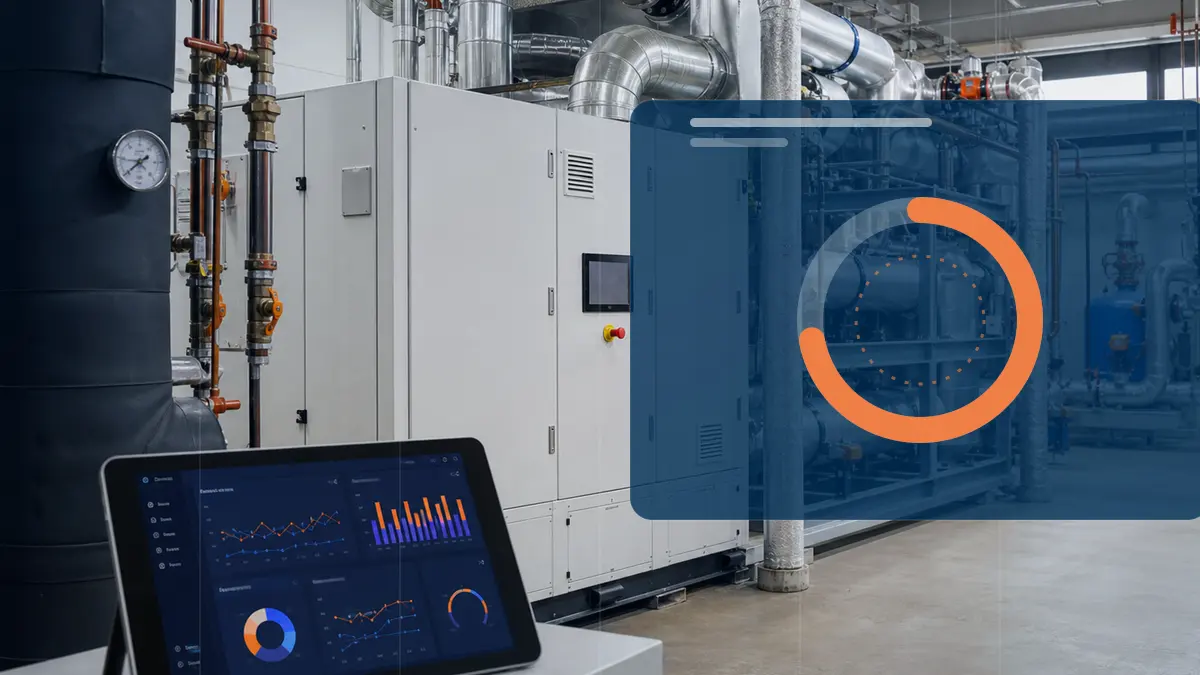
Electrification of industry: scattered information versus Energy Intelligence
Dutch industry consumes large amounts of natural gas: steam in the food industry, drying processes in the paper industry, furnaces in metals and chemicals. Climate targets and a price on CO2 emissions are forcing alternatives. At the same time, more and more renewable electricity from wind and solar is becoming available. For anyone responsible for energy, engineering or finance in a plant, the question is therefore not whether electrification will play a role, but at what pace and for which processes.
- E-boilers and industrial heat pumps electrify steam and process heat; electric furnaces, induction heating and electrolysis are options for higher temperatures and for hydrogen as a feedstock.
- The business case is driven by the European emissions trading system EU ETS, the Dutch national carbon levy for industry and the wish to depend less on natural gas.
- Grid capacity is the biggest bottleneck: due to grid congestion a heavier connection can take a long time, which is why many companies choose a hybrid, step-by-step approach.
Insight
Traditional approach
Information is scattered across portals, documents, invoices or separate spreadsheets.
Modern approach
Data, context and interpretation are brought together into a clear decision picture.
Decision-making
Traditional approach
Choices are made based on averages, assumptions or occasional analyses.
Modern approach
Scenarios, KPIs and current measurement data make the trade-off more concrete and repeatable.
Follow-up
Traditional approach
Actions often stay non-committal or disappear into separate reports.
Modern approach
Follow-up actions, monitoring and reporting are linked to the same energy data.
Which technologies replace natural gas with electricity?
For steam and hot water, the e-boiler is the most direct step: an electric boiler that ramps quickly and can therefore respond well to the supply of renewable power. The industrial heat pump uses electricity to upgrade residual heat into usable process heat and is mainly suited to lower temperature levels, for example in the food and paper industries. For higher temperatures there are electric furnaces and induction heating, which heat materials such as metal and glass directly with electricity. Electrolysis is a separate route: it converts electricity and water into hydrogen, which can serve as a feedstock or fuel in refining and chemicals, among others. Which technology fits depends on the temperature level, the required capacity and the process itself.
- E-boiler: an electric steam and hot water boiler that ramps quickly.
- Industrial heat pump: upgrades residual heat, mainly for lower temperatures.
- Electric furnaces and induction heating: direct electric heating for higher temperatures.
- Electrolysis: produces hydrogen from electricity and water, usable as feedstock and fuel.
Why are industrial companies making the switch?
CO2 reduction is the main reason. Large industrial emitters fall under the European emissions trading system EU ETS and, in the Netherlands, additionally pay the national carbon levy for industry, administered by the Dutch Emissions Authority. Emissions therefore carry a price, and that price shifts the balance between natural gas and electricity. Companies also want to depend less on natural gas, whose price can fluctuate sharply. Electrification also fits an electricity system with a growing share of wind and solar power: electric installations that can run flexibly make use of the hours with abundant renewable supply. Finally, the Dutch government offers support schemes for CO2-reducing technologies, through RVO among others. A sound business case remains bespoke: the balance between the electricity price, the gas price and carbon costs determines the tipping point.
- The EU ETS and the Dutch national carbon levy put a price on industrial emissions.
- Less natural gas means less exposure to fluctuating gas prices.
- Flexible electric installations make use of hours with abundant wind and solar power.
- Support schemes for CO2-reducing technologies are available through RVO, among others.
How do you approach electrification, and where are the limits?
Most companies electrify step by step. They start with processes at lower temperatures, where e-boilers and heat pumps are proven technology, and save heavier steps for later. A hybrid setup, for example an e-boiler next to the existing gas boiler, reduces the risk: you run on electricity during hours of cheap, renewable power and switch back to gas when the grid is full or electricity is expensive. The installation then also becomes a source of flexibility for the power system. The limits are real. Processes with very high temperatures or fossil feedstocks are hard to electrify. A heavier grid connection is not immediately available in many Dutch regions due to grid congestion; TenneT and the regional grid operators work with waiting lists and congestion management. And without affordable renewable electricity, the business case remains fragile.
- Start with lower temperature processes and proven technology.
- Hybrid installations switch between electricity and gas based on price and grid capacity.
- Apply for grid capacity early: connection upgrades face waiting times in congestion areas.
- Very high temperatures and fossil feedstocks remain hard to electrify for now.
Curious what this looks like with your own data?
In a no-obligation call, a specialist looks at your meters, sites and energy questions with you. Response within one business day.
Search the knowledge base
Find the answer to your question.
Search using your own words. Abbreviations and spelling variants are recognised, so EMS also finds the articles on energy management systems.
Topic