
Electrifying steam: a guide for businesses
Direct answer
Electrifying steam means producing industrial steam with electricity instead of natural gas. This can be done with an e-boiler, which generates steam directly from electricity, or with a high-temperature heat pump that upgrades waste heat. Many Dutch companies choose a hybrid setup: an e-boiler next to the existing gas boiler, so they can switch at any moment based on electricity price and grid capacity.
- Clear definition
- Data-driven assessment
- Risks and opportunities visible
- Practical next steps
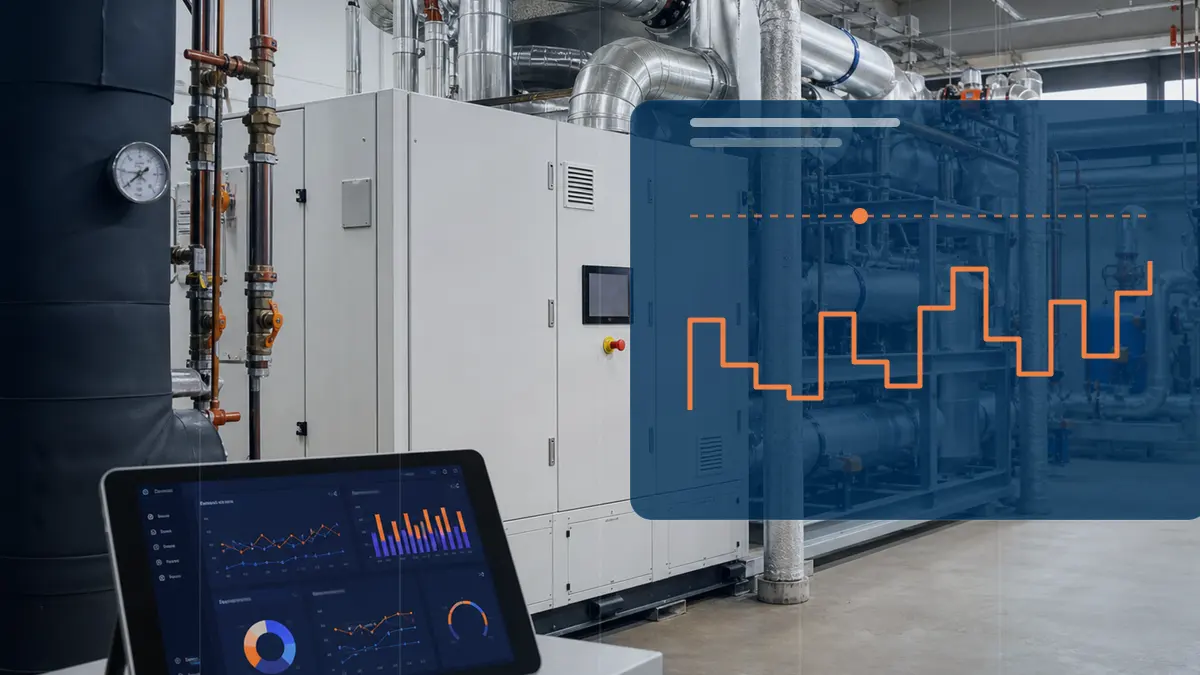
Electrifying steam: scattered information versus Energy Intelligence
In almost every factory, steam is the workhorse: it heats reactors, dries paper, sterilises food products and keeps processes at temperature. Today that steam comes mainly from gas-fired boilers and combined heat and power installations. Anyone wanting to cut gas consumption and CO2 emissions therefore ends up at the steam supply. This topic matters to manufacturers with a continuous heat demand, from food to paper and chemicals, and to anyone preparing an investment decision on a new steam boiler.
- An e-boiler converts electricity almost entirely into heat and ramps up and down quickly; electrode boilers suit large capacities, resistance boilers smaller ones.
- High-temperature heat pumps upgrade waste heat and deliver more heat per kilowatt-hour than an e-boiler; variants producing lower-pressure steam are in development and running in first projects.
- Producing steam electrically requires substantial connection capacity: check early with your grid operator whether the grid can deliver that power, especially in congested areas.
Insight
Traditional approach
Information is scattered across portals, documents, invoices or separate spreadsheets.
Modern approach
Data, context and interpretation are brought together into a clear decision picture.
Decision-making
Traditional approach
Choices are made based on averages, assumptions or occasional analyses.
Modern approach
Scenarios, KPIs and current measurement data make the trade-off more concrete and repeatable.
Follow-up
Traditional approach
Actions often stay non-committal or disappear into separate reports.
Modern approach
Follow-up actions, monitoring and reporting are linked to the same energy data.
Why does decarbonisation often start with steam?
Because heat makes up the largest share of industrial energy use, and much of it moves through the factory as steam. Steam transports heat reliably and at a constant temperature, and is currently produced mainly in gas-fired boilers and combined heat and power installations. As long as that remains the case, gas consumption stays high. Meanwhile, the electricity supply is becoming more sustainable through the growth of solar and wind energy. The Dutch roadmap for electrification in industry therefore lists e-boilers, electric drives and heat pumps as technologies companies can deploy today. Electrifying steam production also tackles the source without rebuilding the whole process: the existing steam network in the factory remains usable, only the generation changes.
- Many processes use steam for heating, drying or sterilising.
- Most steam currently comes from gas-fired boilers and combined heat and power installations.
- The electricity supply is becoming more sustainable through the growth of solar and wind.
- With electrification the factory's steam network stays in place; only the source changes.
Which technologies can electrify steam?
There are two types of e-boilers. Electrode boilers pass the current directly through the water and suit large capacities. Resistance boilers heat with electric elements, comparable to a kettle, and fit smaller capacities. Both convert electricity almost entirely into heat and ramp up and down quickly. In addition, high-temperature heat pumps are emerging. They upgrade waste heat and deliver more heat per kilowatt-hour than an e-boiler. Variants with steam compression, producing lower-pressure steam, are in development and running in first projects. Finally, many companies choose a hybrid setup: an e-boiler next to the existing gas boiler. This lets you switch hour by hour based on electricity price and available grid capacity, while steam supply simply continues.
- Electrode boilers suit large capacities, resistance boilers smaller installations.
- An e-boiler ramps up and down quickly and therefore follows the production process well.
- High-temperature heat pumps deliver more heat per kilowatt-hour, but are limited in pressure and temperature.
- Hybrid setups combine an e-boiler with a gas boiler and switch based on price and grid capacity.
What should you consider when electrifying steam?
Start with your grid connection. Producing steam electrically requires substantial power, often more than the current connection delivers. In areas with grid congestion, extra transport capacity can involve long waiting times, so apply early with your grid operator. Then look at the steam profile: what pressure and temperature does the process need, and for how many hours per year. A heat pump fits lower pressures and an available waste heat source; an e-boiler also covers higher pressures, but uses more electricity per unit of heat. Weigh security of supply: processes that cannot stop require a backup, for example the existing gas boiler. Finally, factor in the price profile: an e-boiler that mainly runs during hours with abundant solar and wind uses market and grid most intelligently.
- Check early with your grid operator whether the connection can handle the required power.
- Map the pressure, temperature and running hours of your steam demand.
- Keep a backup available for processes that cannot be interrupted.
- Very high process temperatures and directly fired processes are harder to electrify.
Curious what this looks like with your own data?
In a no-obligation call, a specialist looks at your meters, sites and energy questions with you. Response within one business day.
Search the knowledge base
Find the answer to your question.
Search using your own words. Abbreviations and spelling variants are recognised, so EMS also finds the articles on energy management systems.
Topic