
Sectoral industry roadmaps: a guide for businesses
Direct answer
Sectoral roadmaps describe, for each industrial sector in the Netherlands, how that sector moves towards climate neutrality by 2050: which technologies are suitable, at what pace, and which preconditions are needed. Industry associations draw up the roadmaps together with knowledge institutes and the government. This shows companies, governments and grid operators which infrastructure is needed, and when.
- Clear definition
- Data-driven assessment
- Risks and opportunities visible
- Practical next steps
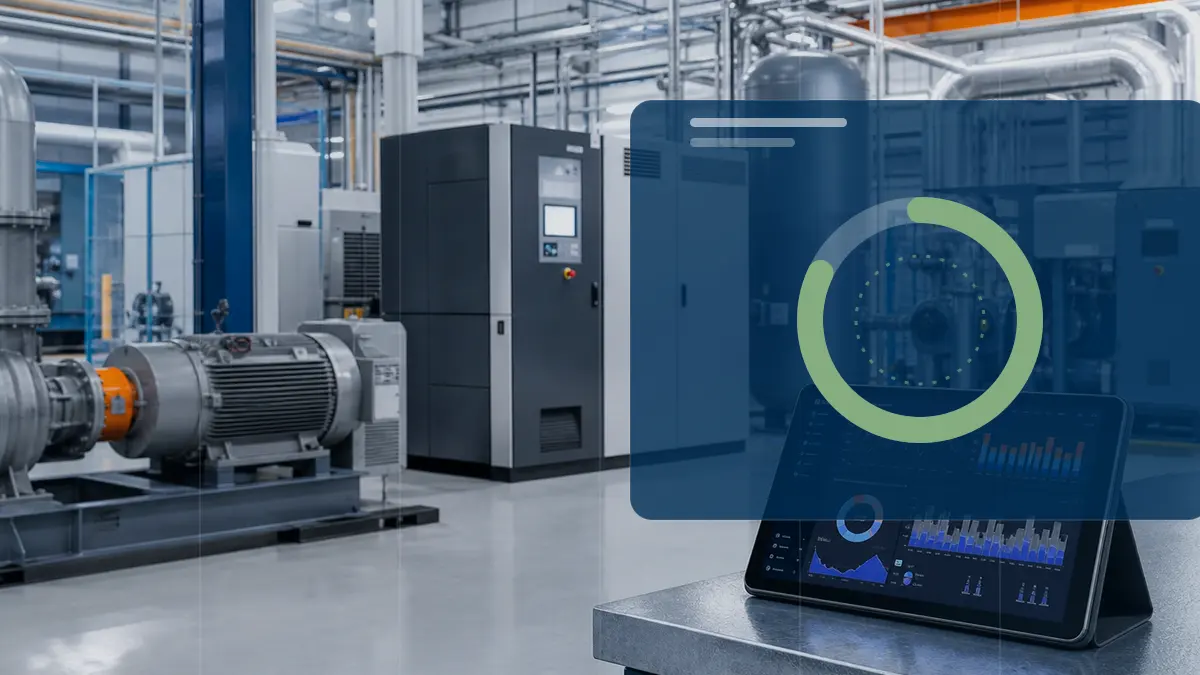
Sectoral industry roadmaps: scattered information versus Energy Intelligence
Dutch industry must produce climate neutrally by 2050. That cannot be achieved through isolated projects per factory: a company that wants to electrify its gas-fired furnaces, for example, needs a heavier grid connection that does not yet exist. Sectoral roadmaps were created to make those dependencies visible. They matter to everyone working in or around industry: from process industry and food manufacturers to the governments and grid operators that must plan the accompanying infrastructure.
- A roadmap describes the technology options per sector, such as electrification, hydrogen, carbon capture and process efficiency, and the timeline towards them.
- Industry associations draw up the roadmaps together with knowledge institutes and the government; the industrial clusters additionally prepare Cluster Energy Strategies (CES).
- Governments and grid operators use roadmaps and CES documents to substantiate infrastructure investments, such as grid reinforcement, hydrogen pipelines and CO2 storage.
Insight
Traditional approach
Information is scattered across portals, documents, invoices or separate spreadsheets.
Modern approach
Data, context and interpretation are brought together into a clear decision picture.
Decision-making
Traditional approach
Choices are made based on averages, assumptions or occasional analyses.
Modern approach
Scenarios, KPIs and current measurement data make the trade-off more concrete and repeatable.
Follow-up
Traditional approach
Actions often stay non-committal or disappear into separate reports.
Modern approach
Follow-up actions, monitoring and reporting are linked to the same energy data.
What does a sectoral roadmap contain?
A sectoral roadmap maps out, per industrial sector, how production can become climate neutral step by step. At its core is an overview of technology options that fit the processes of that sector: electrification of heat, green hydrogen, carbon capture and storage, process efficiency, use of residual heat and circular raw materials. The roadmap also describes the timeline: which technology can be applied today and which still requires development. Equally important are the preconditions: sufficient grid capacity, hydrogen supply, permits and skilled workers. Industry associations draw up the roadmaps with their members, knowledge institutes and the government, as part of the agreements on decarbonising industry in the Dutch Climate Agreement.
- Technology options per sector, from electrification and hydrogen to carbon capture and circular raw materials.
- A timeline: what is possible now, and what still requires development or scale-up.
- Preconditions such as grid capacity, hydrogen supply, permits and skilled workers.
- Drawn up by industry associations, together with knowledge institutes and the government.
How do roadmaps relate to the cluster approach?
Alongside the sectoral roadmaps, the Netherlands works with a cluster approach. Large industry is grouped into six clusters: five regional ones, including Rotterdam-Moerdijk, the North Sea Canal area and Chemelot, plus a sixth cluster for companies spread across the country. Each cluster draws up a Cluster Energy Strategy (CES). Where a roadmap describes the technology of one sector, a CES maps the joint energy infrastructure needs of a cluster: how much electricity, hydrogen and CO2 transport is needed, where and when. These CES documents feed the national planning of energy infrastructure, so that grid reinforcement, hydrogen pipelines and CO2 storage can be prepared in time. Roadmaps and CES documents therefore complement each other: one reasons from the sector, the other from the region.
- Six industrial clusters: five regional ones and a sixth for dispersed industry.
- A CES bundles the infrastructure needs of an entire cluster.
- CES documents feed the national planning of energy infrastructure.
- Roadmap and CES complement each other: sector logic alongside regional logic.
What does a roadmap offer your company?
For an individual company, the roadmap of its own sector works as a mirror. You see which technologies your industry considers promising, in what order, and which preconditions come with them. That helps with your own investment decisions: if electrification is the main route in your sector, you can apply for grid capacity early and prepare your installations accordingly. If your company is located in or near an industrial cluster, it pays to know the CES of that cluster: it partly determines when infrastructure such as hydrogen supply or CO2 transport becomes available. Be realistic about the limits. A roadmap is a plan, not a guarantee. Timelines shift when infrastructure, permits or market conditions disappoint. Use the roadmap as direction and regularly test your own planning against it.
- The roadmap shows which technologies your industry considers promising, and in what order.
- Early insight into preconditions helps you apply for grid capacity in time.
- The CES of a nearby cluster partly determines when infrastructure becomes available.
- A roadmap is a plan, not a guarantee: timelines can shift.
Curious what this looks like with your own data?
In a no-obligation call, a specialist looks at your meters, sites and energy questions with you. Response within one business day.
Search the knowledge base
Find the answer to your question.
Search using your own words. Abbreviations and spelling variants are recognised, so EMS also finds the articles on energy management systems.
Topic