
Making energy-intensive industry more sustainable: a guide for businesses
Direct answer
Decarbonising energy-intensive industry means reducing the emissions and energy use of sectors that use much energy per unit of product, such as chemicals, steel production, refineries and the paper and glass industries. It follows five routes: energy efficiency first, then electrification, hydrogen, carbon capture and storage, and circular feedstocks. European and Dutch climate policy, including the EU ETS and the national carbon levy, increases the pressure to start now.
- Clear definition
- Data-driven assessment
- Risks and opportunities visible
- Practical next steps
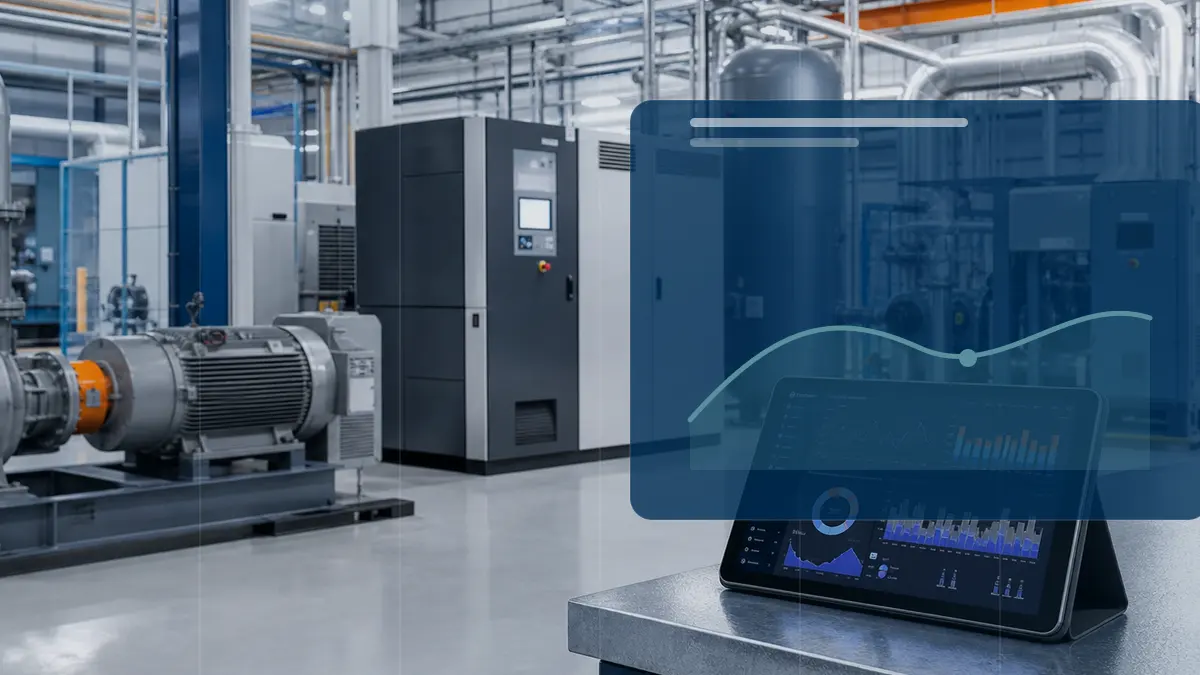
Making energy-intensive industry more sustainable: scattered information versus Energy Intelligence
A large share of Dutch energy consumption sits with a relatively small group of plants: refineries, chemical installations and steel, paper and glass factories. Think of a glass furnace running day and night at more than a thousand degrees, which cannot simply be switched off. These companies must cut their CO2 emissions sharply, while their installations last for decades and a conversion takes years to prepare. This article sets out the decarbonisation routes, the main regulations and the practical preconditions.
- There are five main routes: process efficiency and heat recovery first, then electrification, hydrogen, carbon capture and storage (CCS) and circular feedstocks; almost every company combines several.
- Policy pressure comes from several directions at once: the EU ETS, the Dutch national carbon levy administered by the NEa, tailor-made agreements with the largest emitters, and the energy savings and audit obligations.
- Grid capacity and infrastructure for hydrogen and CO2 transport are hard preconditions: in practice they set the pace of the transition.
Insight
Traditional approach
Information is scattered across portals, documents, invoices or separate spreadsheets.
Modern approach
Data, context and interpretation are brought together into a clear decision picture.
Decision-making
Traditional approach
Choices are made based on averages, assumptions or occasional analyses.
Modern approach
Scenarios, KPIs and current measurement data make the trade-off more concrete and repeatable.
Follow-up
Traditional approach
Actions often stay non-committal or disappear into separate reports.
Modern approach
Follow-up actions, monitoring and reporting are linked to the same energy data.
Which routes are there to decarbonise?
Saving energy always comes first: process optimisation, better insulation and recovering waste heat reduce consumption without changing the process itself. After that, the major routes come into play. Electrification replaces gas-fired techniques with electric ones, mainly at low and medium temperatures. Hydrogen can replace natural gas at very high temperatures and also serves as a feedstock in the chemical industry. Carbon capture and storage (CCS) captures emissions that cannot be avoided, such as process emissions that come from the raw material itself. Circular feedstocks, such as recyclate and bio-based materials, finally reduce the emissions that arise in the supply chain. In practice, almost every company combines several routes: the temperature level and the type of process determine what fits.
- Efficiency and heat recovery first: lower consumption makes every next step smaller.
- Electrification mainly fits processes with low and medium temperatures.
- Hydrogen serves as a fuel for very high temperatures and as a feedstock in chemicals.
- CCS captures emissions that no other route can prevent.
- Circular feedstocks reduce the emissions that arise in the supply chain.
Which rules are increasing the pressure?
Dutch energy-intensive industry falls almost entirely under the European emissions trading system EU ETS: for every tonne of CO2 a company must surrender an allowance, and the total number of allowances falls every year. On top of that, the Netherlands has a national carbon levy for industry, administered by the Dutch Emissions Authority (NEa). Companies receive dispensation rights for an exempted amount of emissions that decreases annually; they pay the levy on emissions above it. The national government also concludes tailor-made agreements with the largest industrial emitters: reciprocal agreements on additional CO2 reduction, with the government supporting preconditions such as infrastructure and permitting. Finally, the energy savings obligation applies, including an audit obligation for sites using from 10 million kilowatt hours of electricity or 170,000 cubic metres of natural gas equivalent per year; they periodically report which measures are feasible.
- EU ETS: surrender an allowance per tonne of CO2, while the overall cap falls every year.
- The national carbon levy of the NEa taxes emissions above a decreasing exempted amount.
- Tailor-made agreements: reciprocal deals between the Dutch government and the largest emitters on extra reduction.
- The energy savings obligation requires measures that pay back within five years; from 10 million kilowatt hours or 170,000 cubic metres of natural gas equivalent per year an audit obligation also applies.
What sets the pace in practice?
The routes exist on paper, but the pace is set by preconditions. Electrification requires a heavier grid connection, and that is exactly where it pinches: in large parts of the Netherlands, transport capacity on the electricity grid is scarce. Hydrogen and CCS require infrastructure that is partly still being built, such as pipelines and storage locations under the North Sea. In addition, industrial installations last for decades: conversions usually happen at natural maintenance and replacement moments, not in between. What you can always do is start with insight. Companies that know per process where energy is used and emissions arise can see which savings are possible today and which major route fits their site. That insight is also the basis for the reports required by the audit obligation and the tailor-made negotiations.
- Grid capacity is a hard precondition: no large-scale electrification without a heavier connection.
- Hydrogen and CO2 infrastructure is partly still under construction and not available at every site.
- Installations last for decades; conversion usually follows natural maintenance and replacement moments.
- Insight into your own energy flows and emissions is the first step for every route.
Curious what this looks like with your own data?
In a no-obligation call, a specialist looks at your meters, sites and energy questions with you. Response within one business day.
Search the knowledge base
Find the answer to your question.
Search using your own words. Abbreviations and spelling variants are recognised, so EMS also finds the articles on energy management systems.
Topic