
Power-to-heat: a guide for businesses
Direct answer
Power-to-heat is the conversion of electricity into heat, using an electric boiler, an electrode boiler, resistance heating or a heat pump, often combined with heat storage. This power-to-heat approach uses cheap or green surplus electricity and thereby replaces natural gas. In this way it links the electricity system to the heat system and provides flexibility on a congested grid.
- Clear definition
- Data-driven assessment
- Risks and opportunities visible
- Practical next steps
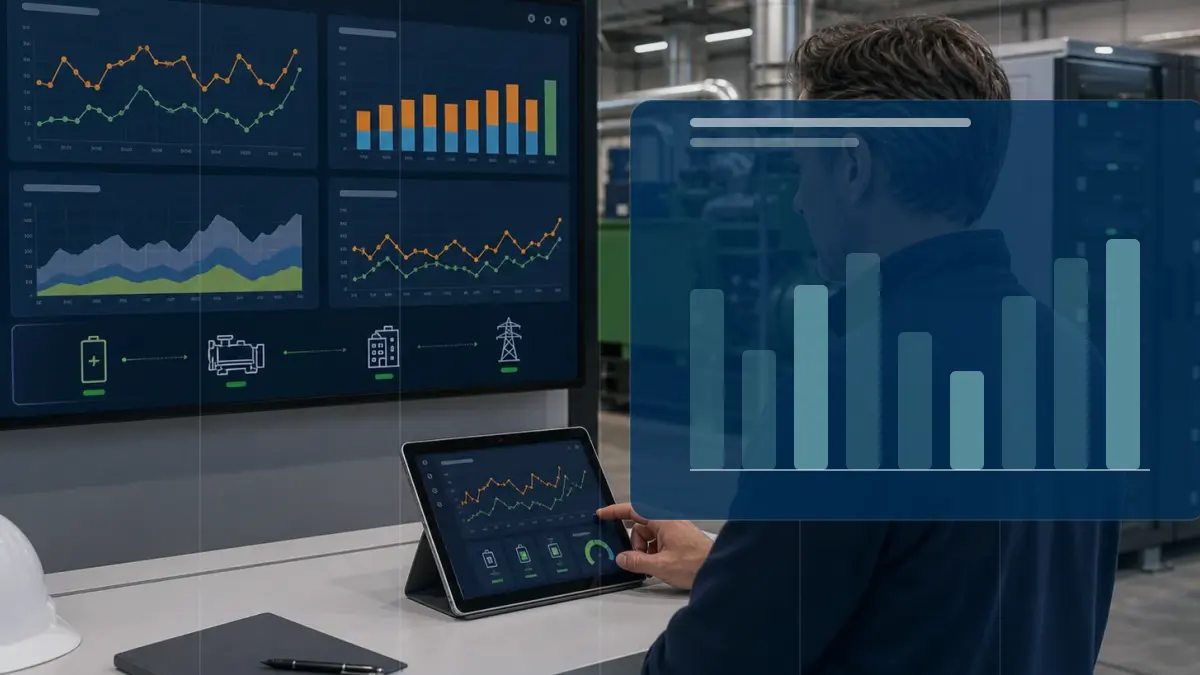
Power-to-heat: scattered information versus Energy Intelligence
More and more businesses and heat networks want to move away from natural gas and at the same time follow the electricity supply better. Solar and wind do not deliver constantly: sometimes there is a surplus, sometimes too little. A factory that needs heat, or a heat network that warms homes, can absorb those surpluses. Power-to-heat was devised to convert electricity into heat at the right moments. It matters in industry, in heat networks and in greenhouse horticulture, especially in areas where the grid is full.
- Power-to-heat uses electricity for heat through resistance or electrode boilers, or through a heat pump that draws heat from its surroundings.
- An electric boiler converts about one kilowatt-hour of electricity into one kilowatt-hour of heat; a heat pump often delivers two to five times as much heat from that same kilowatt-hour.
- With a heat buffer you heat precisely when there is plenty of cheap or green electricity and use that heat later.
Insight
Traditional approach
Information is scattered across portals, documents, invoices or separate spreadsheets.
Modern approach
Data, context and interpretation are brought together into a clear decision picture.
Decision-making
Traditional approach
Choices are made based on averages, assumptions or occasional analyses.
Modern approach
Scenarios, KPIs and current measurement data make the trade-off more concrete and repeatable.
Follow-up
Traditional approach
Actions often stay non-committal or disappear into separate reports.
Modern approach
Follow-up actions, monitoring and reporting are linked to the same energy data.
How does power-to-heat work?
Power-to-heat converts electricity into heat. This can be done in two ways. The first is direct heating: a resistance boiler or electrode boiler heats water or makes steam, much like an immersion heater. About one kilowatt-hour of electricity then yields one kilowatt-hour of heat. The second way is a heat pump. It moves heat from the ground, water, air or waste heat, and delivers two to five times as much heat from a kilowatt-hour of electricity. The choice depends on the required temperature and capacity. Electrode boilers suit higher capacities, resistance boilers lower ones. A heat buffer is often added, so you make heat when electricity is cheap and use it later.
- Direct heating: resistance or electrode boiler, about one kilowatt-hour of electricity per kilowatt-hour of heat.
- Heat pump: draws heat from the surroundings and therefore delivers more heat per kilowatt-hour of electricity.
- Electrode boilers suit higher capacities, resistance boilers lower capacities.
- A heat buffer decouples the moment of generation from the moment of use.
Why is it a flexibility and decarbonisation route?
Power-to-heat replaces natural gas with electricity and so links the electricity and heat systems. That is decarbonisation when the electricity is green. It is also flexibility, because an electric boiler can be ramped up and down quickly. At moments with plenty of sun or wind, electricity is often cheap or even in surplus. An electric boiler or heat pump can use those moments and store the heat in a buffer. This shifts the heat demand towards the supply, instead of the other way around. It relieves the grid and creates value on flexibility and balancing markets. In a heat network, power-to-heat complements other sources, for example alongside geothermal or waste heat, and covers peaks.
- Replaces natural gas: with green electricity the carbon emissions of the heat fall.
- Fast ramping makes the installation usable on flexibility and balancing markets.
- Uses cheap or green surplus electricity and thereby relieves the electricity grid.
- In a heat network a complement to other sources that absorbs peaks.
Where does it fit and where are the limits?
Power-to-heat fits where heat is needed and the electricity system moves along. In industry, an electric boiler or heat pump replaces a gas boiler or a combined heat and power unit. In heat networks, power-to-heat delivers heat and covers peaks. In greenhouse horticulture, locally generated electricity can be converted into heat and stored temporarily. There are limits, though. Direct heating has a lower efficiency than a heat pump, so a lot of electricity for little temperature gain. A heat pump reaches high temperatures less easily. In addition, the installation requires extra connection capacity, which is scarce in a congestion area. And real flexibility only works with a heat buffer and a process that can handle the fluctuation.
- Industry: an electric boiler or heat pump instead of a gas boiler or combined heat and power unit.
- Heat networks and greenhouse horticulture: deliver heat, cover peaks and store locally.
- Direct heating has a lower efficiency than a heat pump.
- Extra connection capacity and a heat buffer are often needed; capacity is scarce in congestion areas.
Curious what this looks like with your own data?
In a no-obligation call, a specialist looks at your meters, sites and energy questions with you. Response within one business day.
Search the knowledge base
Find the answer to your question.
Search using your own words. Abbreviations and spelling variants are recognised, so EMS also finds the articles on energy management systems.
Topic