
Real estate
Article 10 of 16 · Buildings and real estateLED lighting business case: a guide for businesses
Direct answer
The business case for LED lighting is the calculation that shows what switching to LED delivers compared with existing incandescent, halogen or fluorescent lighting. LED uses far less electricity for the same light level, lasts much longer and is easy to control. That makes the switch one of the strongest sustainability measures for buildings, and lighting measures appear on the Dutch Recognised Measures List (EML).
- Clear definition
- Data-driven assessment
- Risks and opportunities visible
- Practical next steps
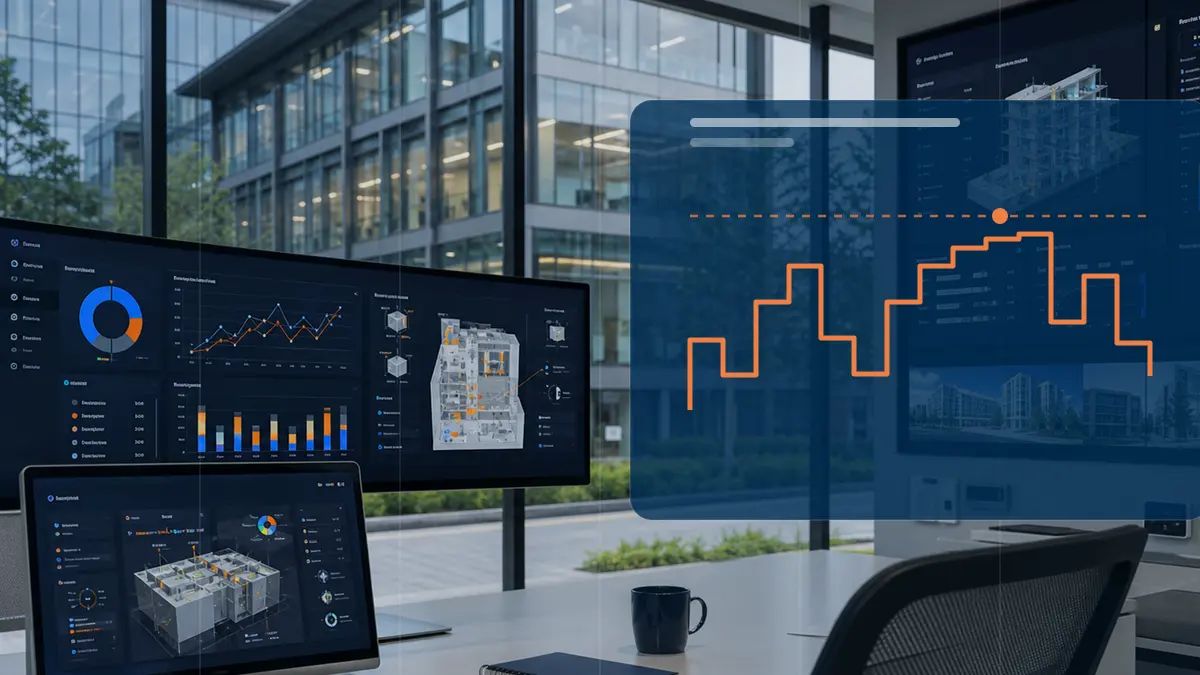
LED lighting business case: scattered information versus Energy Intelligence
Many commercial buildings still carry outdated lighting: fluorescent tubes in the warehouse, halogen spots in the open plan office, fixtures burning day and night. Lighting is a silent cost item that returns every year. At the same time, it is one of the easiest parts of a building to improve. This topic matters to building owners, facility managers and entrepreneurs in the Netherlands who want to decarbonise or must comply with the Dutch energy saving obligation, and who want to know when the switch pays off.
- LED uses far less electricity than incandescent lamps, halogen lamps and fluorescent tubes and lasts many times longer, so you also save on maintenance and replacement.
- The business case revolves around operating hours: map per room which lighting is installed and how long it burns, and work out the difference in consumption and maintenance.
- Lighting measures appear on the Dutch Recognised Measures List (EML): if your site falls under the Dutch energy saving obligation, you must take measures that pay for themselves within five years.
Insight
Traditional approach
Information is scattered across portals, documents, invoices or separate spreadsheets.
Modern approach
Data, context and interpretation are brought together into a clear decision picture.
Decision-making
Traditional approach
Choices are made based on averages, assumptions or occasional analyses.
Modern approach
Scenarios, KPIs and current measurement data make the trade-off more concrete and repeatable.
Follow-up
Traditional approach
Actions often stay non-committal or disappear into separate reports.
Modern approach
Follow-up actions, monitoring and reporting are linked to the same energy data.
Why is LED such a strong measure?
LED converts electricity into light far more efficiently than an incandescent lamp, halogen lamp or fluorescent tube. The same light level therefore costs far less power. In addition, an LED lamp lasts considerably longer than conventional lamps. That saves not only purchases but above all labour: in high halls or above production lines, replacing lamps is expensive and disruptive. LED also gives full light instantly, without warm-up time, and dims well. This makes LED an excellent match for occupancy sensors and daylight control, which automatically dim or switch off the light when it is not needed. Finally, LED produces less heat. In cooled rooms the cooling installation therefore has to work less hard, which delivers a second saving.
- Far lower electricity consumption at the same light level.
- Long lifespan: fewer lamp replacements, lower maintenance costs and less disruption.
- Instant full light and good dimming, so suitable for sensors and daylight control.
- Less heat output, an advantage in cooled rooms.
How do you build the business case?
Start with an inventory: which lamp types are installed per room, at what wattage, and how many hours per year do they burn. Operating hours are the engine of the calculation. A warehouse lit day and night produces a very different outcome than a meeting room used occasionally. Then put the consumption of the current lighting next to that of an LED alternative with the same light level, and include the avoided maintenance and replacement costs. Next, calculate a variant with occupancy sensors and daylight control; these reduce the operating hours themselves and strengthen the saving. Finally, choose a natural moment, such as a renovation, a refurbishment or the end of life of the current fixtures. At that point you are paying for the labour and the lift platform anyway.
- Take stock per room: lamp type, wattage, quantity and operating hours per year.
- Compare consumption with an LED alternative at the same light level and include maintenance.
- Calculate a variant with sensors and daylight control; fewer operating hours strengthens the saving.
- Plan the switch at a natural replacement moment, such as renovation or end of life.
When are you obliged, and what should you watch?
Many Dutch businesses are already obliged to switch to LED. The Dutch energy saving obligation currently applies to sites using more than 50,000 kilowatt hours of electricity or 25,000 cubic metres of natural gas equivalent per year. They must take all energy saving measures that pay for themselves within five years. The Recognised Measures List (EML) supports this and contains several lighting measures, including applying LED lighting and installing switching and control technology. During implementation, pay attention to light quality: a lighting plan ensures that illuminance, colour rendering and glare suit the work being done. Choose deliberately between retrofit, where only the lamp or tube is replaced, and complete new fixtures. Retrofit is faster and cheaper, but not every fixture is suitable for it; new fixtures use LED and lighting control to the full.
- The Dutch energy saving obligation applies above 50,000 kilowatt hours of electricity or 25,000 cubic metres of natural gas equivalent per year.
- Measures with a payback time of five years or less are then mandatory; LED lighting is on the EML.
- Have a lighting plan drawn up so that illuminance, colour rendering and glare stay in order.
- Weigh retrofit against new fixtures and have existing fixtures assessed for suitability.
Curious what this looks like with your own data?
In a no-obligation call, a specialist looks at your meters, sites and energy questions with you. Response within one business day.
Search the knowledge base
Find the answer to your question.
Search using your own words. Abbreviations and spelling variants are recognised, so EMS also finds the articles on energy management systems.
Topic