
Greenhouse horticulture
Article 8 of 20 · Sector-specific softwareHow do I optimise energy in greenhouse horticulture or my greenhouse?
Direct answer
Optimising energy in greenhouse horticulture requires coherence between heat, electricity, CO2, lighting, screening, CHP and market prices. A dashboard alone is not enough; the value lies in steering production conditions and energy costs simultaneously.
- Combine heat and electricity
- Analyse lighting and screening
- CHP and market prices
- Safeguard cultivation conditions
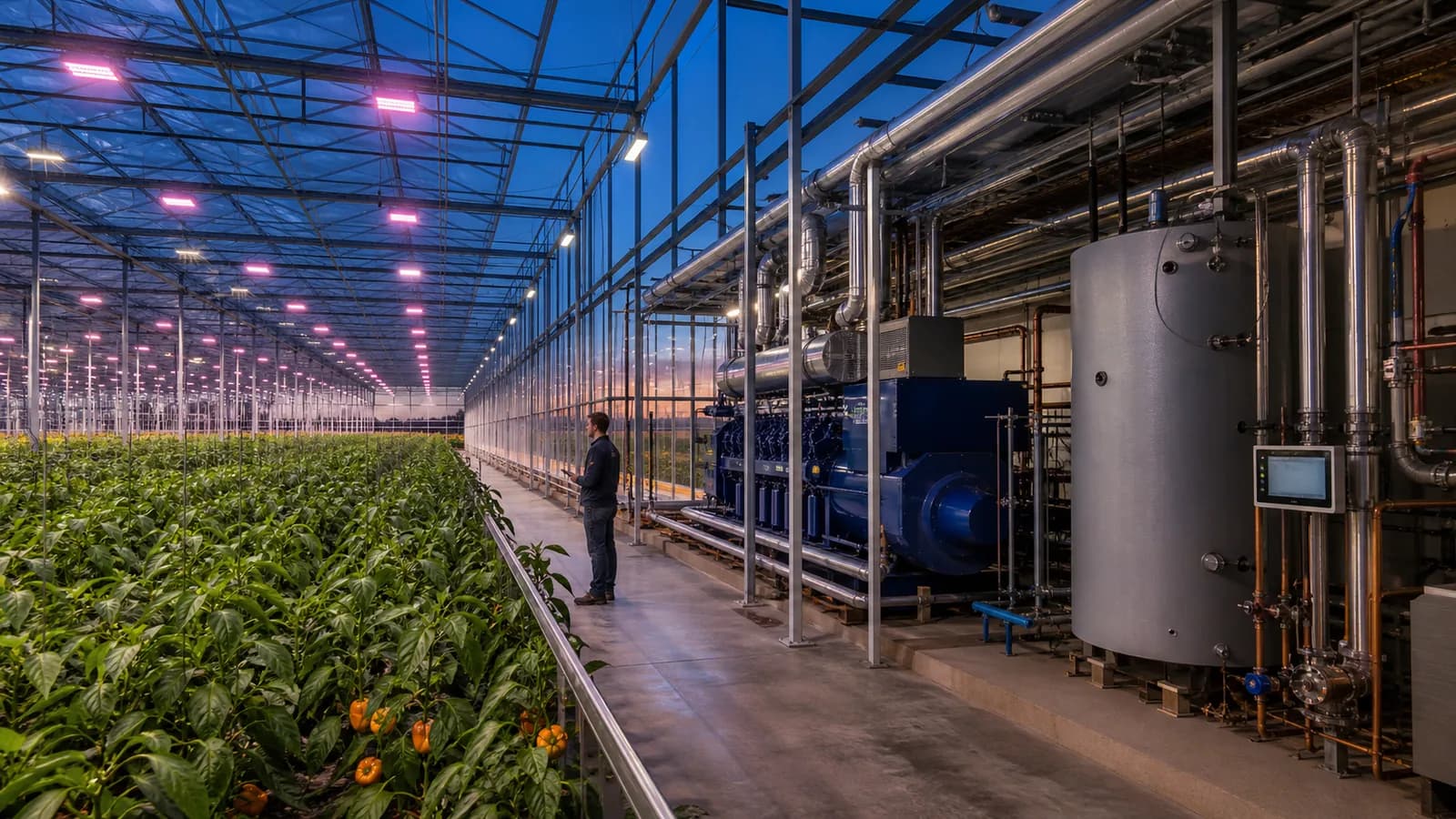
Energy overview versus cultivation-focused optimisation
In greenhouse horticulture, energy is part of the production process. Saving must not come at the expense of cultivation conditions. Energy management must therefore not only show consumption but also help weigh climate, production, market price and flexibility.
- View heat, electricity, CO2 and lighting in coherence.
- Link energy profiles to cultivation strategy and market prices.
- Use scenarios for CHP, procurement, feed-in and flexibility.
Balance
Traditional approach
View electricity and heat separately.
Modern approach
Assess energy, climate and cultivation strategy combined.
Steering
Traditional approach
Reactive to costs or consumption.
Modern approach
Scenarios for lighting, CHP and market prices.
Saving
Traditional approach
General reduction without context.
Modern approach
Optimisation within production and comfort limits.
Which energy flows are decisive?
Heat demand, electricity demand, lighting, CHP, CO2 and screening influence each other. You therefore optimise not a meter, but an energy system.
- Heat profiles and buffer capacity.
- Lighting and electricity peaks.
- CHP production and feed-in.
- Market prices and contract agreements.
How do you avoid suboptimal choices?
A low electricity price, high heat demand or favourable feed-in can change the optimal choice. This requires scenarios and clear steering rules.
- Look ahead at price and weather forecasts.
- Safeguard cultivation conditions.
- Capture choices in steering rules.
- Measure effect on costs and consumption.
Curious what this looks like with your own data?
In a no-obligation call, a specialist looks at your meters, sites and energy questions with you. Response within one business day.
Search the knowledge base
Find the answer to your question.
Search using your own words. Abbreviations and spelling variants are recognised, so EMS also finds the articles on energy management systems.
Topic