
Sector: Hospitality
Article 10 of 20 · Sector-specific softwareCutting energy costs in hospitality: control per venue, from refrigeration to the closing round
Direct answer
You cut energy costs in hospitality by laying each venue's consumption alongside its opening hours. Refrigeration and freezer rooms rightly run day and night, but extraction, kitchen equipment and lighting belong off after the closing round. COMCAM shows per venue what keeps running outside opening hours, where service peaks arise and which site is out of step, so you intervene precisely without guests noticing a thing.
- Night-time use after the closing round
- Refrigeration and kitchen visible separately
- Venues compared per trading hour
- Acting without touching the guest
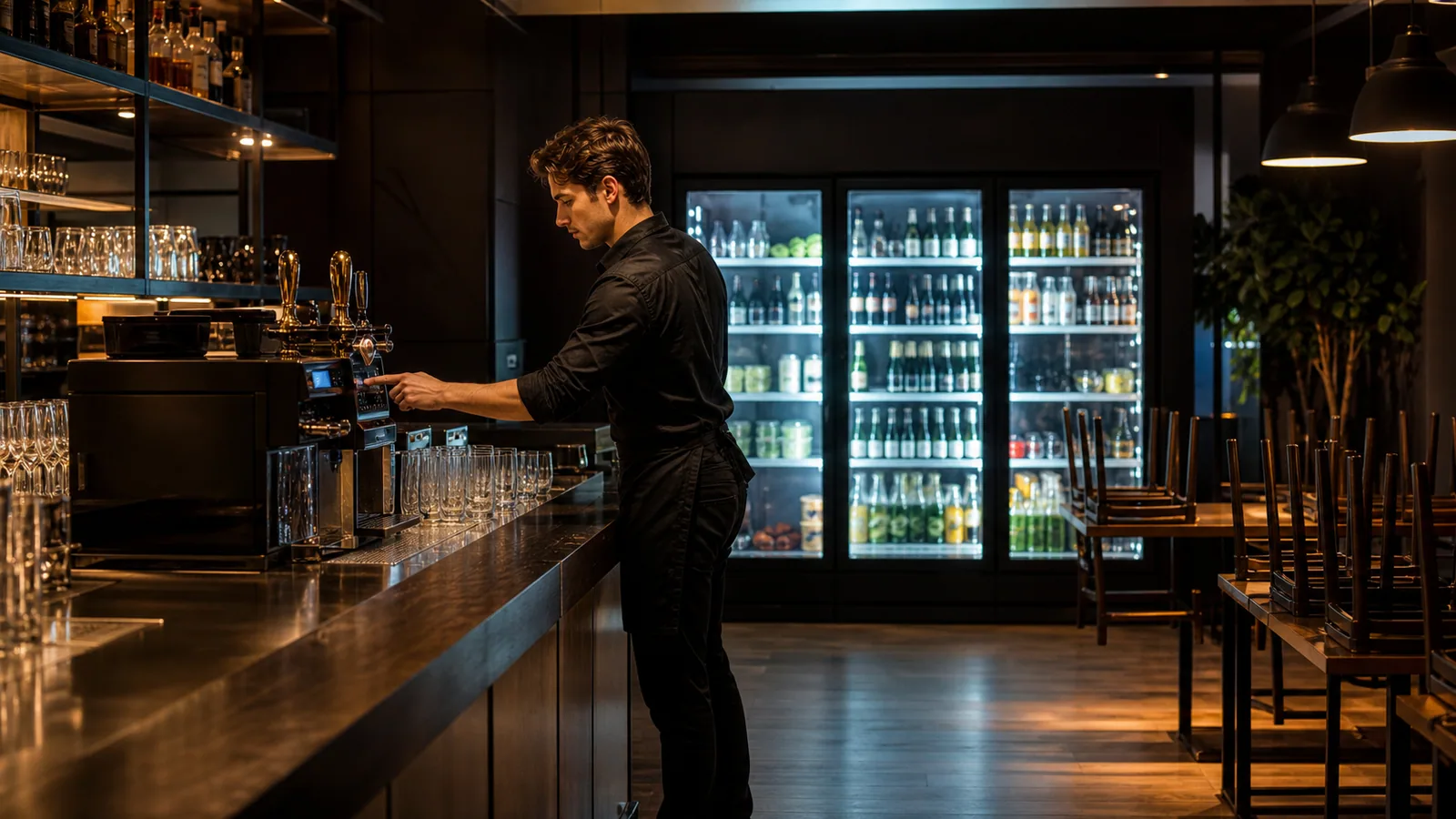
Steering on the annual bill versus steering per venue and daypart
Anyone running a venue knows their margins: purchasing is weighed, the rota made to fit, the menu costed. Energy, meanwhile, quietly grows as a cost line, because the meter knows no menu engineering. Refrigeration and freezer rooms should run day and night, but the extraction hood still blowing after the last service, the patio heater on an empty afternoon and the boiler holding temperature all night never pay for themselves. COMCAM lays each venue's quarter-hourly data alongside your opening hours, so you can see the kitchen peak around mise en place and service, and what is actually still switched on after the closing round. The energy bill becomes as open to discussion as the food cost percentage, per venue and per part of the day, without a single guest noticing.
- Lay quarter-hourly data alongside opening hours and see what keeps running after the closing round.
- Separate legitimate continuous load from refrigeration and freezers from avoidable night-time use.
- Compare venues on consumption per trading hour, so a packed Saturday never masks waste.
- Act behind the scenes: comfort, kitchen pace and the guest experience stay completely untouched.
Signal
Traditional approach
The energy bill disappoints once a year.
Modern approach
Abnormal night or weekend use stands out within days.
Refrigeration
Traditional approach
Cooling disappears invisibly into the total.
Modern approach
The night window shows the cooling load separately, every night.
Venues
Traditional approach
Every venue explains its own bill.
Modern approach
Venues sit side by side, compared fairly per trading hour.
Action
Traditional approach
Saving feels like skimping on the experience.
Modern approach
Intervention happens behind the scenes, outside the guest area.
Where does energy leak away in a hospitality venue?
The honest answer: usually when nobody is there. The night window between closing and the first baker at the door should show almost nothing but refrigeration. If that window fills up with extraction, lighting, boilers or equipment on standby, you are paying for an empty venue. A gradually rising night-time base load is also a signal: worn door seals, fouled condensers or a freezer room fighting itself. By tracking and comparing night-time consumption per venue, you spot these leaks without anyone walking through the kitchen with a clipboard.
- Compare the night window: what runs between closing and opening?
- Recognise creeping cooling load as a sign of wear or fouling.
- Extraction, lighting and boilers that survive the closing round.
- Patio heating and outdoor lighting at times without guests.
- Standby consumption of kitchen equipment outside service hours.
Steering to the rhythm of your venue
A hospitality venue has a recognisable rhythm: start-up and mise en place, the lunch peak, an afternoon lull, evening service and the closing round. Energy use should follow that rhythm. By viewing consumption per trading hour, you compare a quiet Monday fairly with a packed Saturday, and terrace season with winter. That tells you whether an expensive month came from revenue or from waste. The same data makes the closing-round checklist verifiable: not to police the team, but to confirm the routine works, including at the venue you rarely visit yourself.
- Consumption per trading hour as a fair yardstick between venues.
- Quiet and busy days, seasons and terrace periods side by side.
- Spot service peaks and plan start-up routines more cleverly.
- Underpin the closing round with data instead of debate.
- See venues drifting early, before the annual bill arrives.
Starting modularly with COMCAM
You start with the meter data your venues already have; expensive sensors or a rebuilt kitchen are not needed. The model is modular with a fixed price per meter per month, finalised once the scope is set, so costs scale with the number of venues. Begin with consumption insight per site and extend with financial analysis or capacity analysis once that adds value. In a no-obligation call you discuss what your own data can show: what keeps running outside opening hours and which venue is out of step.
- Start on existing quarter-hourly data, with no installation in the kitchen.
- Fixed price per meter per month, modularly extendable.
- Final price once the scope is set.
- No-obligation call: discuss night-time use and anomalies in your own data.
Curious what this looks like with your own data?
In a no-obligation call, a specialist looks at your meters, sites and energy questions with you. Response within one business day.
Search the knowledge base
Find the answer to your question.
Search using your own words. Abbreviations and spelling variants are recognised, so EMS also finds the articles on energy management systems.
Topic