
Technology
Article 3 of 13 · Technology and AIDigital twin for energy: a guide for businesses
Direct answer
A digital twin for energy is a virtual model of a building, installation or process that tracks reality through live measurement data. The model does not only show what is happening now, it also calculates scenarios. This lets you test control strategies and substantiate design choices without intervening in the real installation.
- Clear definition
- Data-driven assessment
- Risks and opportunities visible
- Practical next steps
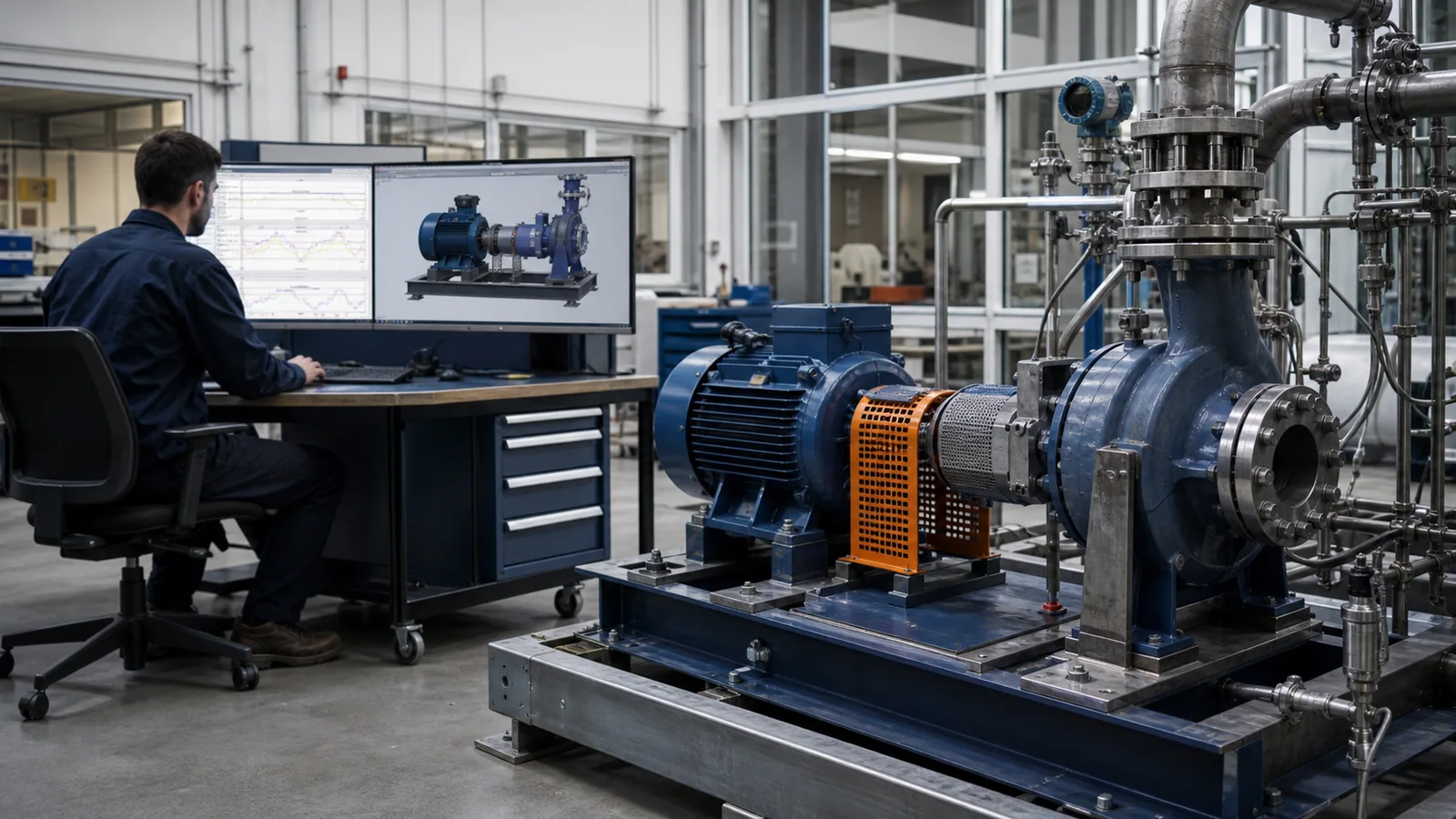
Digital twin for energy: scattered information versus Energy Intelligence
Buildings and installations are becoming more complex: heat pumps, solar panels, batteries and charging points interact with each other. A change in the control of one system can have unexpected consequences elsewhere. Testing in practice is expensive and sometimes risky. Think of a facility manager who wants to know whether the cooling can switch off an hour earlier without complaints. A digital twin makes such questions answerable in advance. Hence the growing interest among owners of offices, factories and heat networks.
- A digital twin combines a computational model with live measurements, for example from a building management system or energy management system.
- You experiment safely: you replay a control strategy or fault in the model, not in the real installation.
- The difference with a dashboard: a dashboard only shows measurements, a digital twin also predicts what happens when you change something.
Insight
Traditional approach
Information is scattered across portals, documents, invoices or separate spreadsheets.
Modern approach
Data, context and interpretation are brought together into a clear decision picture.
Decision-making
Traditional approach
Choices are made based on averages, assumptions or occasional analyses.
Modern approach
Scenarios, KPIs and current measurement data make the trade-off more concrete and repeatable.
Follow-up
Traditional approach
Actions often stay non-committal or disappear into separate reports.
Modern approach
Follow-up actions, monitoring and reporting are linked to the same energy data.
How does a digital twin work?
A digital twin consists of three layers: measurements, a model and a link between them. Sensors and meters supply live data, for example temperatures, power levels and valve positions. The model describes how the building or installation physically behaves. The link continuously adjusts the model based on the measurements. This is where a digital twin differs from a classic simulation: a simulation calculates once with assumptions and then stands still. It also differs from a dashboard: a dashboard shows measurements but contains no model that can predict behaviour. A full digital twin does both: it follows reality and calculates ahead.
- Measurements: sensors and energy meters supply the current state
- Model: a physical or data-driven description of the behaviour
- Link: the model is continuously adjusted with live data
- A simulation calculates once; a digital twin moves along with reality
What does it deliver for energy management?
You mainly use a digital twin to answer questions in advance. If you want to know whether a different heating curve causes comfort complaints, you first test it in the model. If you are considering a heat pump, battery or a larger grid connection, you calculate design variants before you invest. Faults can also be replayed: the model shows which chain of events led to a peak or an outage. International research, including within the IEA programme for energy in buildings, sees such data-driven applications as a way to run buildings more efficiently and respond more flexibly to the electricity grid.
- Test control strategies without risk to comfort or production
- Substantiate design choices before you invest in new installations
- Replay faults and consumption peaks to find the cause
- Explore flexibility: what your building can offer the electricity grid
What does it require and where are the limits?
A digital twin starts with reliable measurements. Without sufficient sensors and a link to the building management system or energy management system, the model keeps guessing. You also need a model that fits the question: a simple heat balance is sometimes enough, while a detailed installation model is sometimes unavoidable. Keep the limits in mind. A model must be validated against measured behaviour, otherwise it creates false certainty. It requires maintenance: if the installation or its use changes, the model must change with it. Building and managing it costs time and money. Researchers therefore advise starting small: one clear question, one well-defined system, and expanding only once the twin proves itself.
- Measurements: sufficient sensors and meters in the right places
- Integration: a link with the BMS or EMS for live data
- Validation: testing the model against actually measured behaviour
- Maintenance: updating the model after every change to the building or installation
- Start small: one question and one well-defined system
Curious what this looks like with your own data?
In a no-obligation call, a specialist looks at your meters, sites and energy questions with you. Response within one business day.
Search the knowledge base
Find the answer to your question.
Search using your own words. Abbreviations and spelling variants are recognised, so EMS also finds the articles on energy management systems.
Topic