
VEKI: a guide for businesses
Direct answer
VEKI stands for Versnelde klimaatinvesteringen industrie (Accelerated Climate Investments in Industry), a subsidy scheme run by the Netherlands Enterprise Agency (RVO) for industrial companies investing in proven CO2-reducing techniques with a payback period of more than five years. The scheme lowers the investment barrier for equipment, systems and techniques that have already proven themselves elsewhere. Conditions and budget differ per application round; check the current status with RVO.
- Clear definition
- Data-driven assessment
- Risks and opportunities visible
- Practical next steps
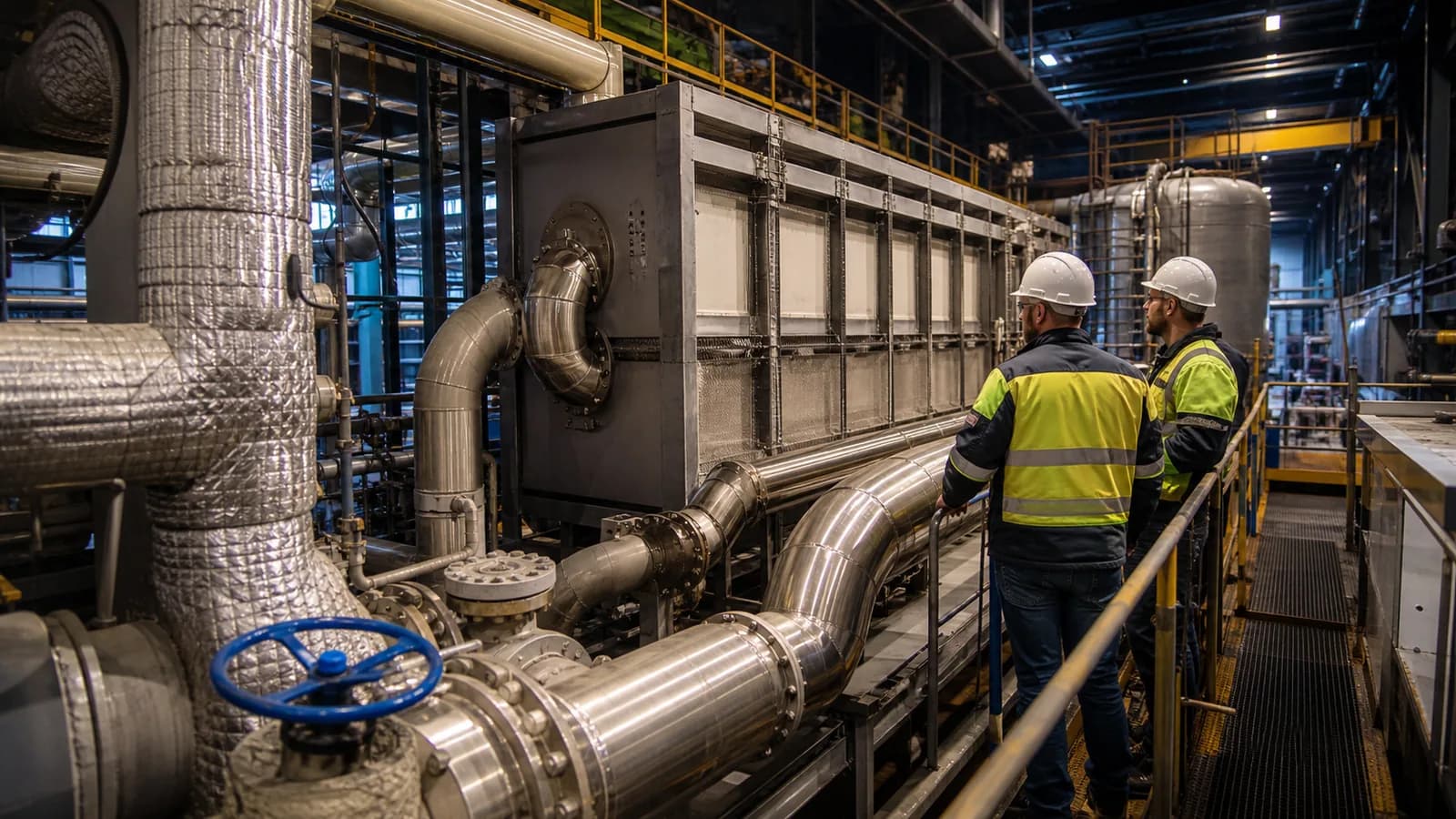
VEKI: scattered information versus Energy Intelligence
Many industrial sustainability measures are technically ready but hard to justify financially. Consider a manufacturer that wants to reuse waste heat: the technology works, yet the investment only pays back after many years. Such projects therefore often stall. The Dutch government wants to accelerate precisely these investments, because they directly reduce CO2 emissions. VEKI exists to unlock this category of projects: proven measures that, without support, pay back too slowly for a normal investment decision.
- Only proven, market-ready techniques qualify; research and pilot projects fall outside VEKI.
- The target group is industry: manufacturing, waste and waste water processing and energy distribution.
- Applications are submitted digitally via RVO; never start your project before submitting the application.
Insight
Traditional approach
Information is scattered across portals, documents, invoices or separate spreadsheets.
Modern approach
Data, context and interpretation are brought together into a clear decision picture.
Decision-making
Traditional approach
Choices are made based on averages, assumptions or occasional analyses.
Modern approach
Scenarios, KPIs and current measurement data make the trade-off more concrete and repeatable.
Follow-up
Traditional approach
Actions often stay non-committal or disappear into separate reports.
Modern approach
Follow-up actions, monitoring and reporting are linked to the same energy data.
What is VEKI intended for?
VEKI supports investments in your own operations that demonstrably reduce CO2 emissions. It covers techniques that have already proven themselves in practice and are commercially available. Research, pilot and demonstration projects fall outside the scheme; other instruments exist for those. The payback period is central. Precisely those measures that would only pay back after more than five years without support are eligible. Measures that pay back faster fall outside the scheme. RVO also works with thematic categories that your project must fit within. Their exact scope can shift per application round, so always check the current version of the scheme before writing a project plan.
- Themes such as energy efficiency: more economical equipment, systems and processes
- Recycling and reuse of waste, raw materials and residual flows
- Local infrastructure, such as the use of waste heat
- Other measures that demonstrably reduce CO2 emissions
- Proven, market-ready techniques only, no pilots or demonstrations
Who is eligible?
The scheme targets industry in the broad sense. RVO looks at the nature of your business activity. Manufacturing companies that process raw materials into physical goods form the core of the target group. Processors of waste and waste water and companies in energy distribution can also apply. An office organisation or retail business falls outside the scheme, even if its building uses a lot of energy; other schemes exist for those situations. You carry out the project at your own expense and risk, within your own company. A strict sequencing rule also applies: you may not start the project or enter into commitments before submitting the application. If you do, the project is no longer eligible.
- Manufacturers processing raw materials into goods
- Processors of waste and waste water
- Companies in energy distribution
- Project at your own expense and risk, in your own operations
- No starting before the application has been submitted
How does the application work?
VEKI works with application windows. Within such a window you submit your application digitally to RVO, using the Dutch business login eHerkenning. RVO handles applications in order of receipt, as long as budget remains available. Applying early is therefore sensible. The application includes a project plan with, among other things, a budget, a payback calculation and substantiation of the CO2 reduction. After approval, a completion period applies within which you carry out the project and put the installation into use. Also weigh the drawbacks in advance: preparation takes time, you must wait to start until after submission and the available budget can run out during the window. In return, the scheme makes projects feasible that would otherwise not get off the ground, using proven technology with limited technical risk.
- Apply digitally to RVO with eHerkenning
- Applications handled in order of receipt
- Project plan with budget, payback calculation and CO2 substantiation
- Start only after the application has been submitted
- Completion period for carrying out the project after approval
Curious what this looks like with your own data?
In a no-obligation call, a specialist looks at your meters, sites and energy questions with you. Response within one business day.
Search the knowledge base
Find the answer to your question.
Search using your own words. Abbreviations and spelling variants are recognised, so EMS also finds the articles on energy management systems.
Topic