
DEI+: a guide for businesses
Direct answer
DEI+ stands for Demonstratie Energie- en Klimaatinnovatie (Demonstration of Energy and Climate Innovation), a subsidy scheme run by the Netherlands Enterprise Agency (RVO) for pilot and demonstration projects involving innovative techniques that cut CO2 emissions or energy use. It targets technology that is new to the Netherlands and still needs to prove itself in practice. Themes and conditions differ per funding round, so always check the current status with RVO.
- Clear definition
- Data-driven assessment
- Risks and opportunities visible
- Practical next steps
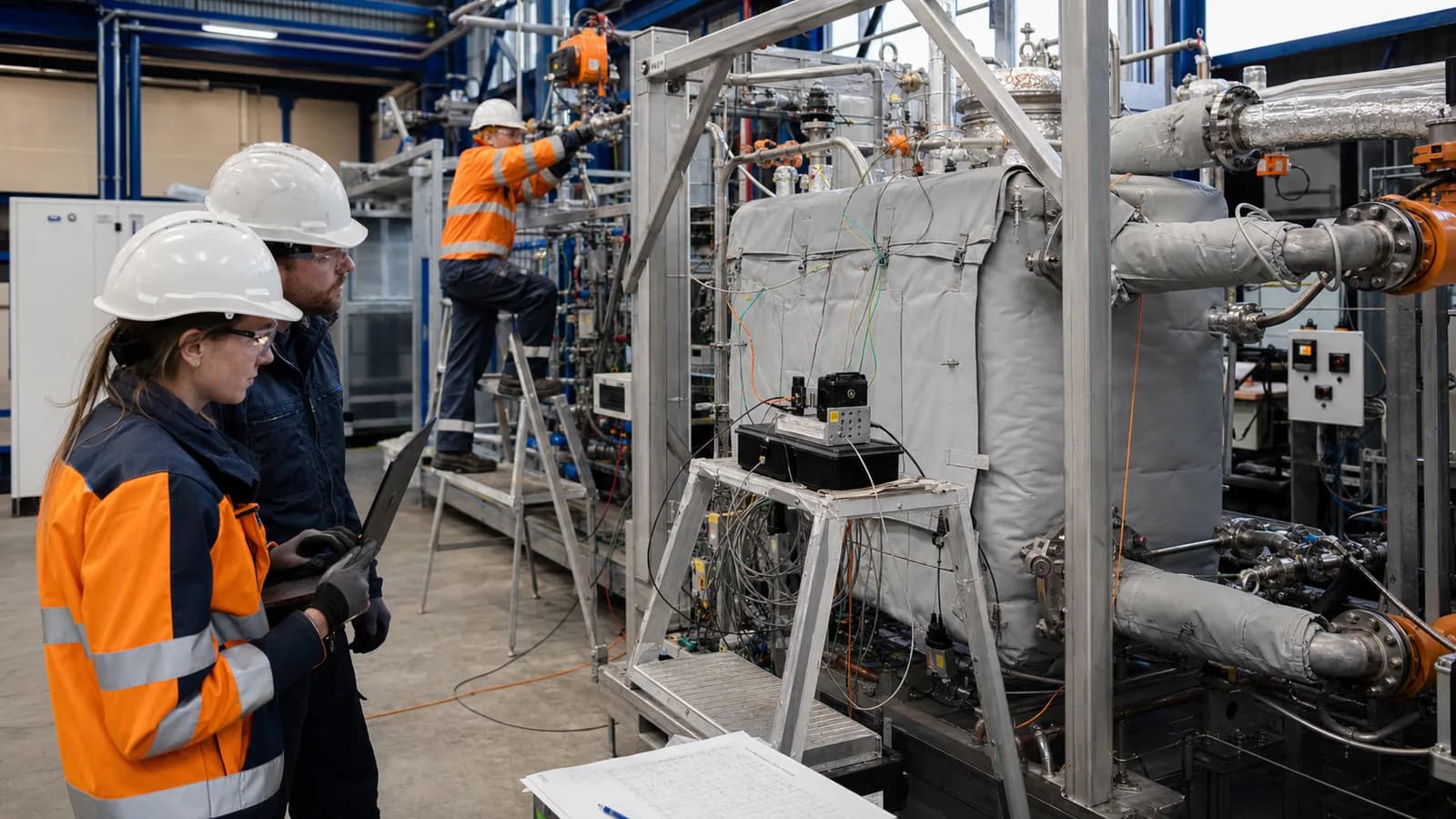
DEI+: scattered information versus Energy Intelligence
Anyone who has developed an innovative energy technique tends to hit the same barrier: the step from laboratory to practice is expensive and risky. Picture a manufacturer that wants to test a new form of heat recovery at full scale but cannot finance the investment because the technique has not yet proven itself. DEI+ exists for exactly that stage. The government contributes to the cost of testing and demonstrating, so that promising climate technology reaches the market sooner.
- DEI+ supports pilot projects (testing in a near-real-world setting) and demonstration projects (the first application of a technique that is new to the Netherlands).
- The scheme has changing themes, such as energy and climate innovations, sustainability of the built environment, hydrogen and green chemistry, and the circular economy.
- You apply through RVO; submitting an optional project idea form first gives you advice on the viability of your project.
Insight
Traditional approach
Information is scattered across portals, documents, invoices or separate spreadsheets.
Modern approach
Data, context and interpretation are brought together into a clear decision picture.
Decision-making
Traditional approach
Choices are made based on averages, assumptions or occasional analyses.
Modern approach
Scenarios, KPIs and current measurement data make the trade-off more concrete and repeatable.
Follow-up
Traditional approach
Actions often stay non-committal or disappear into separate reports.
Modern approach
Follow-up actions, monitoring and reporting are linked to the same energy data.
How does DEI+ work?
DEI+ subsidises two project types. A pilot project tests an innovative product, process or service in an environment that mimics real-world conditions, so you can improve the technique before scaling up. A demonstration project is the first real application of equipment, systems or techniques that are new to the Netherlands; the installation remains in use afterwards. In both cases there must be a genuine technical and economic risk: proven standard technology falls outside the scheme. RVO works with funding rounds per theme. Which themes are open, how much budget is available and which conditions apply differs per round. Applications are handled as long as budget remains. Always check the current funding rounds on the RVO website before investing time in an application.
- Pilot project: testing and improving in a near-real-world setting
- Demonstration project: first application in the Netherlands, installation stays in use
- Requirement: demonstrable technical and economic risk
- Themes, budgets and conditions change per funding round
Who is DEI+ for and how does it differ from VEKI?
DEI+ is open to companies established in the Netherlands, Bonaire, Sint Eustatius or Saba. In practice these are often technology developers, industrial companies and end users bringing an innovation into practice together. The themes change, but include energy and climate innovations, sustainability of the built environment, hydrogen and green chemistry, and the circular economy. The difference with VEKI (Versnelde klimaatinvesteringen industrie, accelerated climate investments in industry) lies in the maturity of the technique. DEI+ is for innovations that still need to prove themselves. VEKI supports investments in techniques whose effectiveness has already been demonstrated. If you are unsure which scheme fits, check whether your technique is new to the Netherlands. If it is, DEI+ is usually the logical route.
- Target group: companies established in the Netherlands or the Caribbean Netherlands
- Themes change per funding round, from the built environment to hydrogen
- DEI+: the technique is innovative and new to the Netherlands
- VEKI: the technique is proven, aimed at industry
How do you apply for DEI+ and what should you watch for?
Applications run through RVO. You can submit a project idea form first; an RVO adviser then assesses, without obligation, whether your idea is promising. Next comes the formal application with a project plan, a budget and substantiation of the technical and economic risk. After approval you report on progress, notify RVO of changes and request the final settlement at the end. The scheme has clear advantages: it lowers the financial risk of innovating and lends a project credibility with financiers and partners. There are also points of attention. Preparation takes time, the administrative obligations continue throughout the project, and a funding round can close once its budget is exhausted. Start well in advance.
- Step 1: optional project idea form for an initial assessment
- Step 2: formal application with project plan and risk substantiation
- After approval: report progress and request final settlement
- Advantage: lower innovation risk; point of attention: administrative burden
Curious what this looks like with your own data?
In a no-obligation call, a specialist looks at your meters, sites and energy questions with you. Response within one business day.
Search the knowledge base
Find the answer to your question.
Search using your own words. Abbreviations and spelling variants are recognised, so EMS also finds the articles on energy management systems.
Topic