
Market dynamics
Article 11 of 20 · Energy markets and market dynamicsSleeved PPA and virtual PPA: a guide for businesses
Direct answer
A sleeved PPA and a virtual PPA are two ways to enter a long-term power contract with a producer. In a sleeved PPA an intermediary physically sleeves the generated power into your consumption profile and manages the balance for a sleeving fee. A virtual PPA delivers no power, but is a purely financial contract for difference that settles the gap between an agreed price and the market price.
- Clear definition
- Data-driven assessment
- Risks and opportunities visible
- Practical next steps
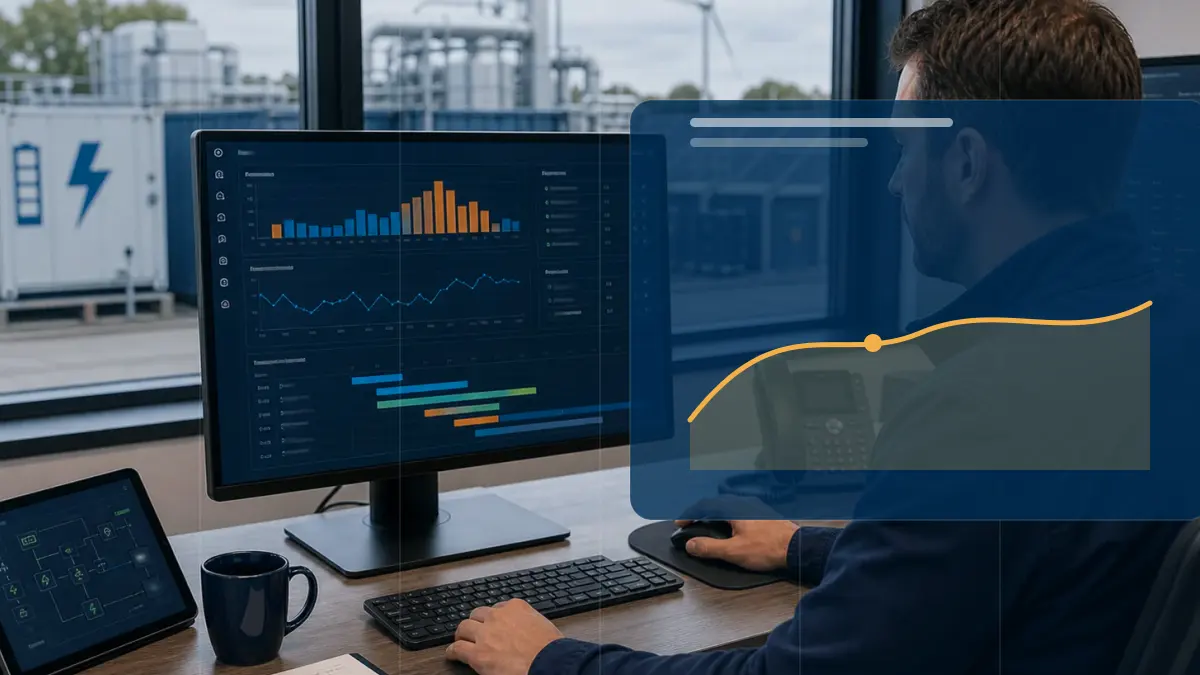
Sleeved PPA and virtual PPA: scattered information versus Energy Intelligence
More and more Dutch businesses want to lock in green power for the long term, to stabilise their price and meet their sustainability goals. A direct contract with a solar or wind farm, a Power Purchase Agreement, makes that possible. The catch: most companies are not located next to that farm and cannot simply receive the power physically. Two routes exist for this, the sleeved PPA and the virtual PPA, which work in very different ways. Confusing them often leads to the wrong contract.
- In a sleeved PPA an intermediary, usually an energy supplier, physically delivers the power to your connection and takes over balancing and program responsibility for a fee, the sleeving fee.
- A virtual PPA is a purely financial contract for difference: no physical power flows to you, only the difference between the contract price and the market price is settled.
- The green claim runs in both cases through Guarantees of Origin, certificates issued per megawatt-hour that can be transferred separately from the power itself.
Insight
Traditional approach
Information is scattered across portals, documents, invoices or separate spreadsheets.
Modern approach
Data, context and interpretation are brought together into a clear decision picture.
Decision-making
Traditional approach
Choices are made based on averages, assumptions or occasional analyses.
Modern approach
Scenarios, KPIs and current measurement data make the trade-off more concrete and repeatable.
Follow-up
Traditional approach
Actions often stay non-committal or disappear into separate reports.
Modern approach
Follow-up actions, monitoring and reporting are linked to the same energy data.
How does a sleeved PPA work?
In a sleeved PPA you buy the power from a producer, but delivery runs through an intermediary, usually an energy supplier. That party sleeves the generated power into your consumption profile. A solar farm's output rarely matches your use exactly: too much during the day, too little in the evening. The intermediary takes over the program responsibility, tops up shortfalls, sells surpluses and keeps your connection in balance. For that work and the associated risks it charges a fee, the sleeving fee. You receive physically delivered power and keep a single point of contact, while the contract with the producer sets the base price.
- The power is physically delivered; there is real supply to your connection.
- An intermediary takes over balancing, imbalance risk and administration.
- The sleeving fee is the charge for that sleeving and the risk transfer.
- The farm's output is matched to your consumption profile.
How does a virtual PPA work?
A virtual PPA, also called a financial PPA, is a purely financial contract. No power is delivered to you. You keep buying your electricity on the market or from your supplier, and the producer sells its output separately on the market. In addition, you agree a fixed price per megawatt-hour. If the market price falls below it, you pay the difference to the producer. If the market price rises above it, the producer pays the difference to you. This is called a contract for difference: it hedges the price risk without physical delivery. You arrange the green claim separately, through the Guarantees of Origin linked to the contract.
- No physical delivery; you buy your power yourself on the market.
- Only the difference between the contract price and the market price is settled.
- The contract works as a price hedge, not as power supply.
- The sustainability claim runs through separately transferred Guarantees of Origin.
When do you choose which?
The choice depends on what you want to achieve. If you want demonstrably physical green power at your connection, with one party handling balance and administration, a sleeved PPA fits. You pay the sleeving fee for that, but keep things simple. If you mainly want to lock in your electricity price and financially support a specific farm, without changing your current supply contract, a virtual PPA fits. Do watch the complexity: a virtual PPA is a financial instrument that can count as a derivative for accounting purposes and requires separate valuation and reporting. If the generation sits in a different price zone than your consumption, for example wind in Norway against demand in the Netherlands, the hedge may not align well.
- Sleeved PPA: physical green power and full service, for a sleeving fee.
- Virtual PPA: a price hedge and support for a farm, without changing supply.
- A virtual PPA can count as a derivative for accounting and needs separate reporting.
- A difference in price zone between generation and consumption can weaken the hedge.
Curious what this looks like with your own data?
In a no-obligation call, a specialist looks at your meters, sites and energy questions with you. Response within one business day.
Search the knowledge base
Find the answer to your question.
Search using your own words. Abbreviations and spelling variants are recognised, so EMS also finds the articles on energy management systems.
Topic