
Market dynamics
Article 17 of 20 · Energy markets and market dynamicsCBAM Carbon Border Adjustment Mechanism: a guide for businesses
Direct answer
CBAM, in full the Carbon Border Adjustment Mechanism, is an EU carbon charge at the external border. Businesses importing certain CO2-intensive goods pay for the emissions released during production. This keeps production outside the EU from becoming cheaper than under the emissions trading system, countering the shift of production to countries without a carbon price.
- Clear definition
- Data-driven assessment
- Risks and opportunities visible
- Practical next steps
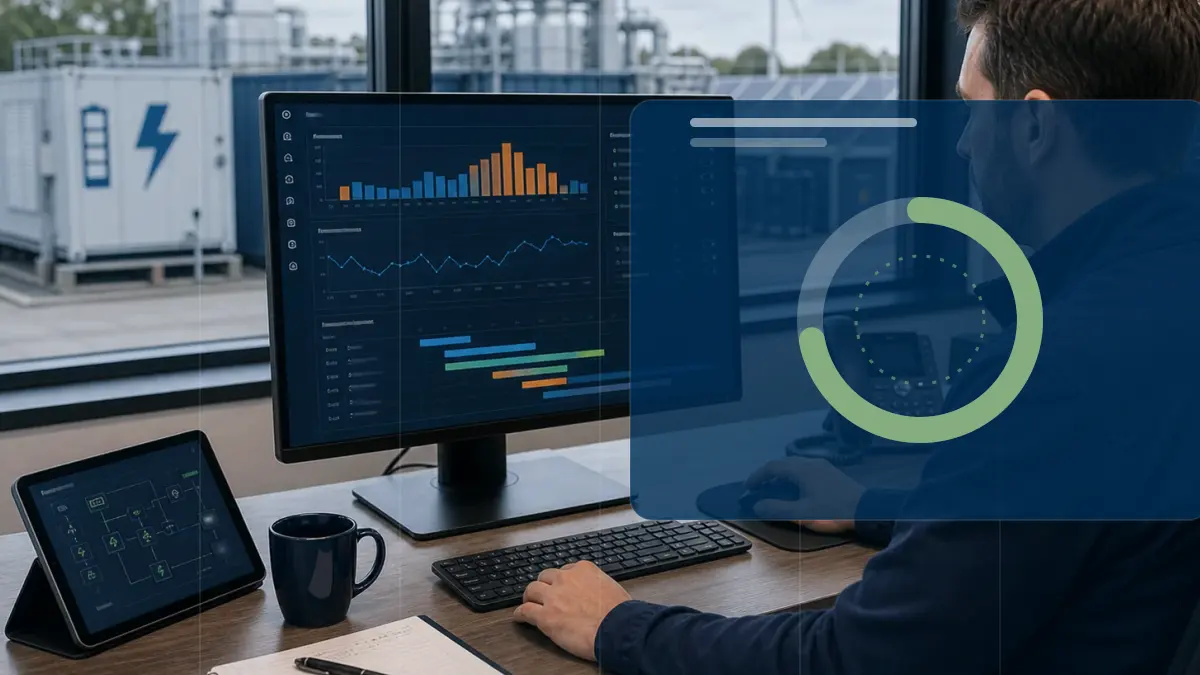
CBAM Carbon Border Adjustment Mechanism: scattered information versus Energy Intelligence
The EU sets strict requirements on the CO2 emissions of its own industry, and within the EU those emissions carry a price. That makes European products more expensive than imports from countries without such a price. Without a countermeasure, production shifts outside the EU and global emissions do not change. This is called carbon leakage. CBAM therefore also places a carbon price on imported goods. It matters to businesses importing steel, aluminium, cement, fertilisers, hydrogen or electricity.
- CBAM covers six product categories: iron and steel, aluminium, cement, fertilisers, hydrogen and electricity.
- After a transitional phase with reporting only, the definitive phase with payment and certificates has started; the price per tonne of CO2 tracks the price in the EU Emissions Trading System.
- A threshold based on the imported weight per importer currently applies, so small imports fall outside the obligation; this threshold does not apply to electricity and hydrogen.
Insight
Traditional approach
Information is scattered across portals, documents, invoices or separate spreadsheets.
Modern approach
Data, context and interpretation are brought together into a clear decision picture.
Decision-making
Traditional approach
Choices are made based on averages, assumptions or occasional analyses.
Modern approach
Scenarios, KPIs and current measurement data make the trade-off more concrete and repeatable.
Follow-up
Traditional approach
Actions often stay non-committal or disappear into separate reports.
Modern approach
Follow-up actions, monitoring and reporting are linked to the same energy data.
How does CBAM work?
CBAM places a carbon price on the emissions embedded in imported goods. Embedded emissions are the CO2 released during production in the country of origin. The charge aligns with the EU Emissions Trading System, under which European producers already pay for their emissions. CBAM started with a transitional phase in which importers only had to report their embedded emissions, without paying. In the definitive phase an importer must be authorised in advance and does pay. This works through CBAM certificates: for the reported emissions the importer buys and surrenders certificates to the authorities. The price per tonne of CO2 is linked to the price in the emissions trading system.
- CBAM prices embedded emissions: the CO2 released during production.
- In the transitional phase only a reporting obligation applied, without payment.
- In the definitive phase the importer buys and surrenders CBAM certificates.
- The price per tonne of CO2 tracks the price in the EU Emissions Trading System.
Who is affected by CBAM?
CBAM affects businesses importing goods in the six categories: iron and steel, aluminium, cement, fertilisers, hydrogen and electricity. Those importing above the threshold must be authorised as a CBAM declarant before the goods enter the EU. Without that authorisation, customs does not release the goods. For electricity and hydrogen this threshold does not apply. In the Netherlands the Dutch Emissions Authority and Customs carry out the mechanism together. Even if you do not import yourself, you may feel the effect: if you buy steel or aluminium from a supplier that sources from outside the EU, that cost can end up in the price.
- The mechanism applies to imports of iron and steel, aluminium, cement, fertilisers, hydrogen and electricity.
- Above the threshold, authorisation as a CBAM declarant is required for importing.
- No threshold applies to electricity and hydrogen.
- In the Netherlands the Emissions Authority and Customs carry out CBAM together.
What does CBAM mean for your business?
For importers, CBAM means extra administration and costs. You map the embedded emissions of your goods, get authorised as a declarant, file a declaration and buy certificates for the emissions. Gathering reliable emission data from foreign producers takes the most effort in practice. For buyers who do not import themselves, CBAM can make imports more expensive, because suppliers may pass on their costs. Those far from the import mainly notice the price effect. Those importing themselves are well advised to start early with requesting emission data and arranging authorisation, as both take lead time.
- Importers face administration: mapping emissions, filing a declaration and buying certificates.
- Requesting emission data from foreign producers often takes the most time.
- Buyers who do not import themselves may face more expensive imports.
- Start early with authorisation and data gathering, as both take lead time.
Curious what this looks like with your own data?
In a no-obligation call, a specialist looks at your meters, sites and energy questions with you. Response within one business day.
Search the knowledge base
Find the answer to your question.
Search using your own words. Abbreviations and spelling variants are recognised, so EMS also finds the articles on energy management systems.
Topic