
How do I choose an energy intelligence platform?
Direct answer
You choose an energy intelligence platform by first defining your needs and then comparing suppliers against a fixed set of criteria. Decide whether you need insight only or also control, which meters and sites must connect, and who will work with it. Then assess data connections, data quality, reporting, security and exit options, and test candidates with your own data.
- Clear definition
- Data-driven assessment
- Risks and opportunities visible
- Practical next steps
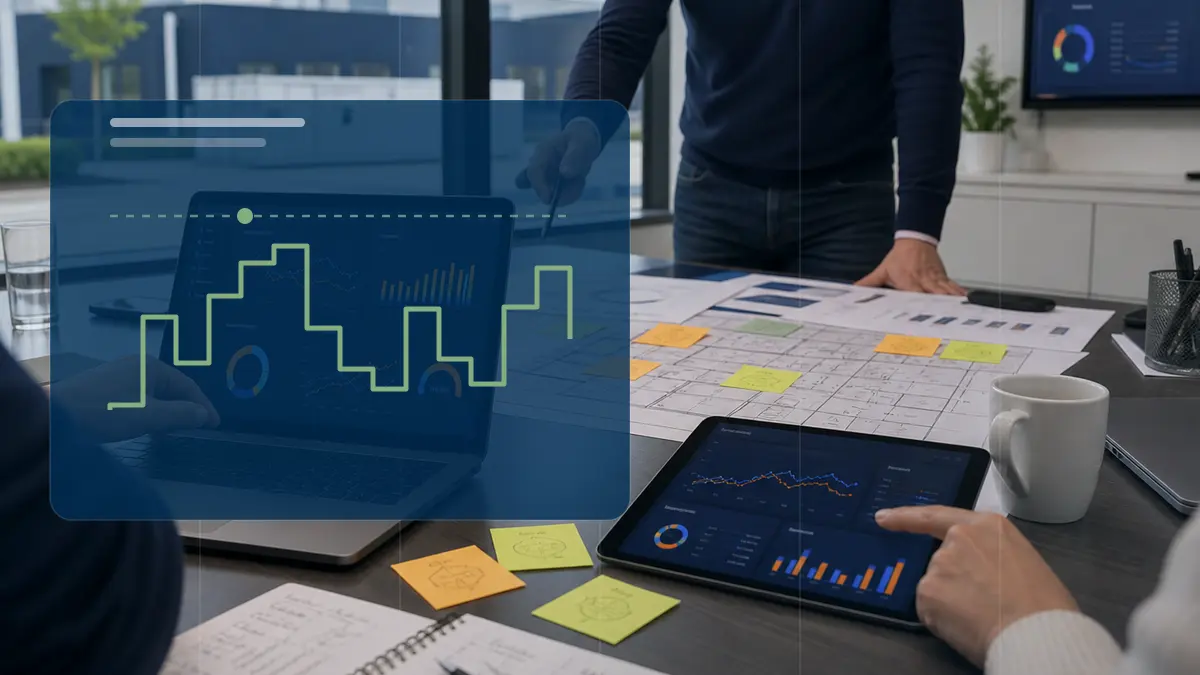
How do I choose an energy intelligence platform: scattered information versus Energy Intelligence
More and more businesses collect energy data from main meters, submeters and building systems. A facility manager with five buildings wants that data in one place, but the software on offer varies widely: from simple dashboards to platforms that actively control installations. You only notice a wrong choice after implementation, when connections are missing or reports do not match your obligations. This article offers a neutral decision framework for comparing suppliers step by step.
- Start with a needs analysis: monitoring only or also control, how many sites, which meters and data sources, and which colleagues will use the system.
- Test functional criteria such as data connections, data validation, alarms, API access and reporting for obligations such as the Dutch energy saving obligation and the CSRD.
- Also weigh non-functional requirements: information security, GDPR and data location, supplier continuity, maintenance burden and the ability to leave with your data.
Insight
Traditional approach
Information is scattered across portals, documents, invoices or separate spreadsheets.
Modern approach
Data, context and interpretation are brought together into a clear decision picture.
Decision-making
Traditional approach
Choices are made based on averages, assumptions or occasional analyses.
Modern approach
Scenarios, KPIs and current measurement data make the trade-off more concrete and repeatable.
Follow-up
Traditional approach
Actions often stay non-committal or disappear into separate reports.
Modern approach
Follow-up actions, monitoring and reporting are linked to the same energy data.
Start with your own needs
A sound choice does not start with suppliers but with your own situation. First determine what the platform must do: only make consumption visible, or also flag anomalies and help control installations. Then map your data sources. Think of the smart meter or main meter, submeters per department or machine, solar panels, charging points and the building management system. Count your sites: one building requires something different from thirty branches. Finally, decide who will work with it. A technical team wants detail per installation, a finance lead wants costs per site, a sustainability coordinator wants reports. The sharper this picture, the better you can compare offers and the smaller the chance of paying for features you never use.
- Insight only, or also alarms and active control
- Map all meters and sources: main meter, submeters, generation, building management
- Number of sites now and with expected growth
- Name the users: technical, finance, sustainability
Which functional criteria matter?
Next, compare platforms on what they can demonstrably do. Data connections come first: can the system read your smart meter, submeters and existing installations through common protocols, or does every connection require custom work? Then look at data quality. A platform must detect gaps and measurement errors and make them visible, otherwise you steer on wrong figures. Assess the reporting: does it match obligations such as the Dutch energy saving obligation with its associated reporting duty, and sustainability reporting under the CSRD if your organisation falls within its scope? Check that alarms and anomaly detection are configurable, so you spot deviating consumption quickly. Finally, ask about an API and export options, so your data remains usable in other systems.
- Connections to your meters and installations, without custom work per source
- Validation that makes gaps and measurement errors visible
- Reports that match the energy saving obligation and the CSRD
- Configurable alarms and anomaly detection
- API and export for use in other systems
Non-functional requirements and the selection process
Also consider requirements that only become tangible later. Information security weighs heavily: energy data reveals much about your operations, and if your organisation falls under the Dutch Cyber Security Act, the national implementation of the European NIS2 directive, supplier security counts towards your duty of care. Check where data is stored and how the supplier complies with the GDPR, especially when personal data is involved. Assess the supplier's continuity and agree exit terms: do you remain the owner of your data and can you take it with you in a usable format? Then follow a selection process: draw up a shortlist, run a trial with your own meter data, speak to references with a comparable profile and record agreements on maintenance, support and termination in the contract.
- Security and, where applicable, requirements from the Dutch Cyber Security Act (NIS2)
- GDPR compliance and clarity about data location
- Data ownership and exit options in the contract
- Trial period with your own meter data before the final decision
- References from organisations with a comparable profile
Curious what this looks like with your own data?
In a no-obligation call, a specialist looks at your meters, sites and energy questions with you. Response within one business day.
Search the knowledge base
Find the answer to your question.
Search using your own words. Abbreviations and spelling variants are recognised, so EMS also finds the articles on energy management systems.
Topic