
Recognised Measures List (EML): a guide for businesses
Direct answer
The Recognised Measures List, in Dutch the Erkende Maatregelenlijst, is a list drawn up per business sector of energy-saving measures that pay for themselves within five years or less. The lists belong to the energy-saving obligation under the Dutch Environment Act. If you take every measure on the list that applies to your site, you meet that obligation. The list also contains sustainability and CO2-reducing measures, such as solar panels.
- Clear definition
- Data-driven assessment
- Risks and opportunities visible
- Practical next steps
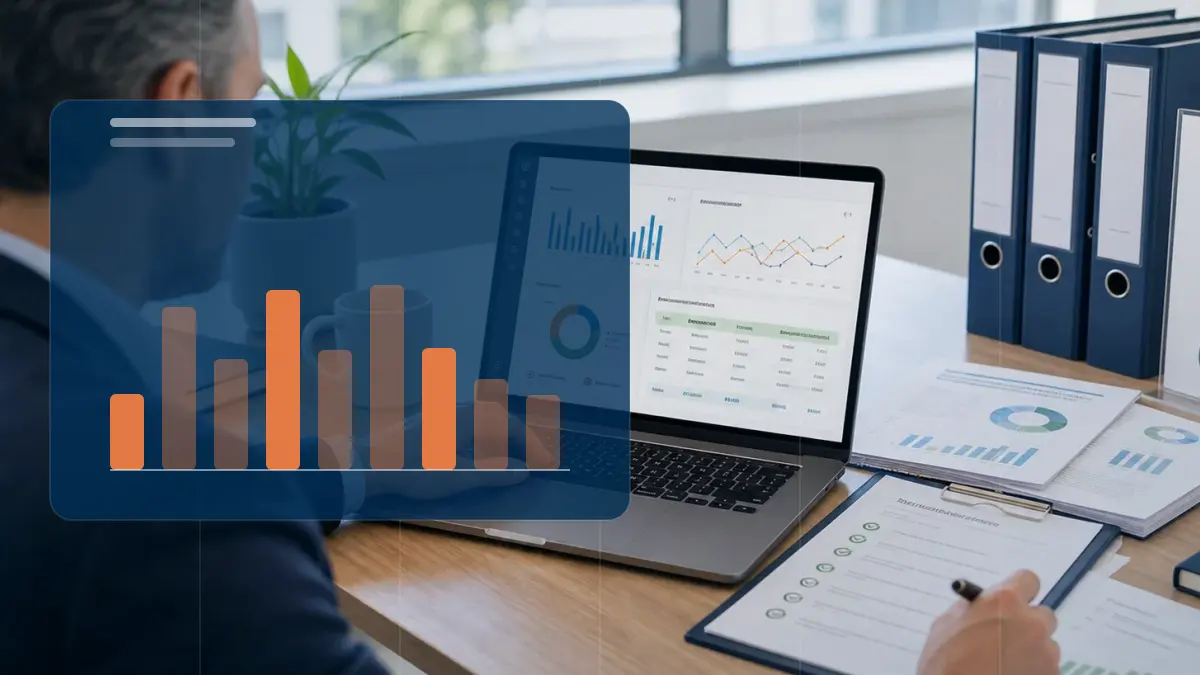
Recognised Measures List (EML): scattered information versus Energy Intelligence
Many Dutch businesses and institutions have an energy-saving obligation: they must take measures that pay for themselves within five years. But which measures exactly? To answer that, the Dutch government draws up a Recognised Measures List per business sector. A supermarket, an office and a metalworking company each get a list that suits their installations and processes. So you do not have to calculate which savings are profitable yourself; that has been done for you in advance.
- The measures are grouped into three parts, Buildings, Facilities and Processes, and are worked out per business sector.
- The list only contains measures that pay back in five years or less; take everything that applies to you and you meet the Dutch energy-saving obligation.
- The list is not exhaustive and is updated periodically; the current version is the EML 2023, which was last updated on 1 July 2023.
Insight
Traditional approach
Information is scattered across portals, documents, invoices or separate spreadsheets.
Modern approach
Data, context and interpretation are brought together into a clear decision picture.
Decision-making
Traditional approach
Choices are made based on averages, assumptions or occasional analyses.
Modern approach
Scenarios, KPIs and current measurement data make the trade-off more concrete and repeatable.
Follow-up
Traditional approach
Actions often stay non-committal or disappear into separate reports.
Modern approach
Follow-up actions, monitoring and reporting are linked to the same energy data.
What is the Recognised Measures List?
The Recognised Measures List, in Dutch the Erkende Maatregelenlijst or EML, is a list of energy-saving measures that pay for themselves within five years or less. The Dutch government has calculated that payback time in advance, so you do not have to. The measures are ordered into three parts: Buildings, such as insulation and lighting, Facilities, such as compressed air, cooling and server rooms, and Processes, such as process heat and drying. Each measure describes when it applies. Sustainability is included too: installing solar panels appears as a category to make electricity use greener. The lists are worked out per business sector, so you use the version that matches your sector.
- The list only contains measures with a payback time of five years or less.
- The measures are divided into Buildings, Facilities and Processes.
- Each measure describes the situation in which it applies.
- Besides saving, the list contains sustainability, such as solar panels to green electricity use.
- The lists are drawn up per business sector.
How do you use the list to meet the obligation?
You use the list as a checklist route. The Dutch Environmental Regulation states in articles 4.14 and 5.29 that you meet the energy-saving obligation by taking every applicable measure from the Recognised Measures List. You go through the list for your business sector and decide, per measure, whether it applies to your site. If you have no staff restaurant, the commercial kitchen measures fall away. If your wall has no cavity, cavity wall insulation falls away. Some measures only apply at a natural moment: when you are replacing or renovating anyway. Take what remains and you demonstrably meet the obligation, which you can substantiate in your report.
- You can meet the obligation by taking every applicable measure (Environmental Regulation articles 4.14 and 5.29).
- Per measure, you decide whether it applies to your site.
- Irrelevant categories, such as a missing staff restaurant, fall away for you.
- Some measures only apply at a natural moment, for example when replacing or renovating.
- The list route makes your compliance easy to substantiate towards the competent authority.
What are the limits of the list?
The Recognised Measures List is a tool, not a complete summary of everything possible. The list is not exhaustive: if a measure is technically not feasible in your specific case, you note that in your report and the competent authority assesses whether you still follow the system. You may then take an equivalent alternative measure. The list is also drawn up per business sector, so the right version depends on your sector; horticulture under glass even has its own list. Finally, the list is updated periodically. The current version is the EML 2023, which was last updated on 1 July 2023. Always work with the most recent version.
- The list is not exhaustive; for technically unfeasible measures the competent authority assesses your situation.
- An equivalent alternative measure can replace a listed measure.
- The list differs per business sector; horticulture under glass has its own list.
- The list is updated periodically; the current version is the EML 2023.
- The EML 2023 was last updated on 1 July 2023; always work with the most recent version.
Curious what this looks like with your own data?
In a no-obligation call, a specialist looks at your meters, sites and energy questions with you. Response within one business day.
Search the knowledge base
Find the answer to your question.
Search using your own words. Abbreviations and spelling variants are recognised, so EMS also finds the articles on energy management systems.
Topic