
How do I automate my statutory energy reporting?
Direct answer
You automate statutory energy reporting by structuring consumption data, locations, meters, measures and supporting evidence centrally. Automation mainly helps with data collection, checks, exports and repeatable reporting; the legal assessment remains dependent on the situation.
- Check data quality
- Track measures
- Automate exports
- Keep an audit trail
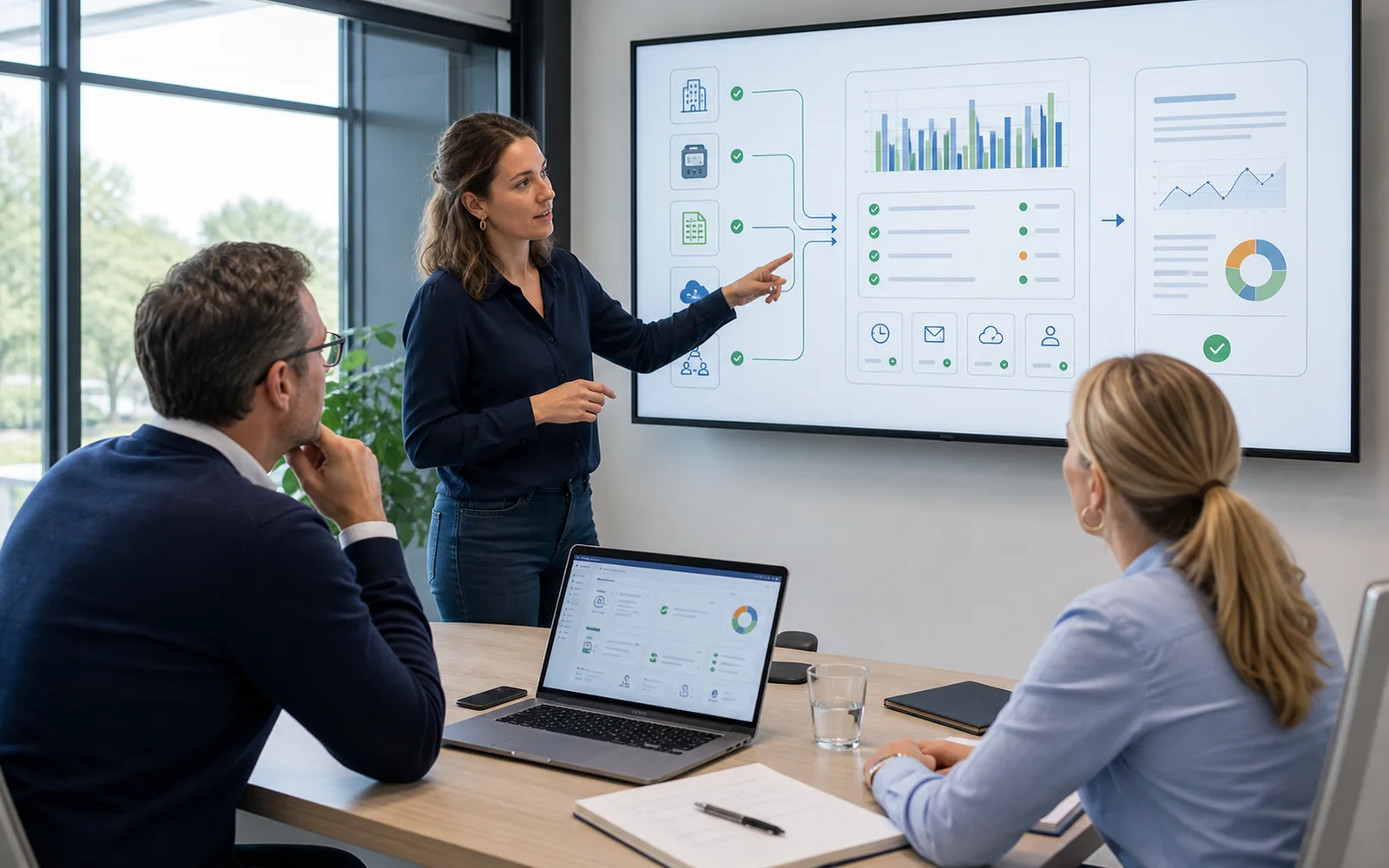
Manual reporting versus an automated reporting base
Much energy reporting is still compiled manually from invoices, portals and spreadsheets. That costs time and makes control difficult. By standardising the data foundation, reporting becomes less dependent on loose files and individual knowledge.
- Create a fixed structure for locations, connections, meters and measures.
- Automate data quality checks, exports and periodic management reports.
- Keep substantiation, status and measurement results so that reporting becomes repeatable.
Data
Traditional approach
Consumption data is collected manually for each report.
Modern approach
Metering data and location details are maintained centrally.
Control
Traditional approach
Errors surface late.
Modern approach
Missing data and deviations are detected early.
Repetition
Traditional approach
Every report starts over.
Modern approach
Reports build on the same up-to-date base.
What can you automate?
Automate mainly the recurring parts: data collection, validation, consolidation per location, measure status and exports for advisors or internal reporting.
- Retrieve and check metering data.
- Link locations and connections.
- Track measure status.
- Generate exports and reports.
What should you be careful with?
Regulations change and situations differ. Software must therefore provide substantiation and reduce work, but not pretend that every legal choice is automatically fixed.
- Use current official sources.
- Record assumptions and exceptions.
- Have the legal interpretation reviewed where necessary.
- Keep an audit trail and supporting evidence.
Curious what this looks like with your own data?
In a no-obligation call, a specialist looks at your meters, sites and energy questions with you. Response within one business day.
Search the knowledge base
Find the answer to your question.
Search using your own words. Abbreviations and spelling variants are recognised, so EMS also finds the articles on energy management systems.
Topic