
Data integration
Article 10 of 13 · Choosing platforms and providersHow do I link energy data from different sources?
Direct answer
You link energy data from different sources by first creating a fixed data structure for locations, meters, energy carriers and time periods. You then connect metering data, invoices, contracts, building data, charging station data and external sources via exports, APIs or data connections.
- Set up a data model
- Link APIs and exports
- Monitor data quality
- Combine costs and consumption
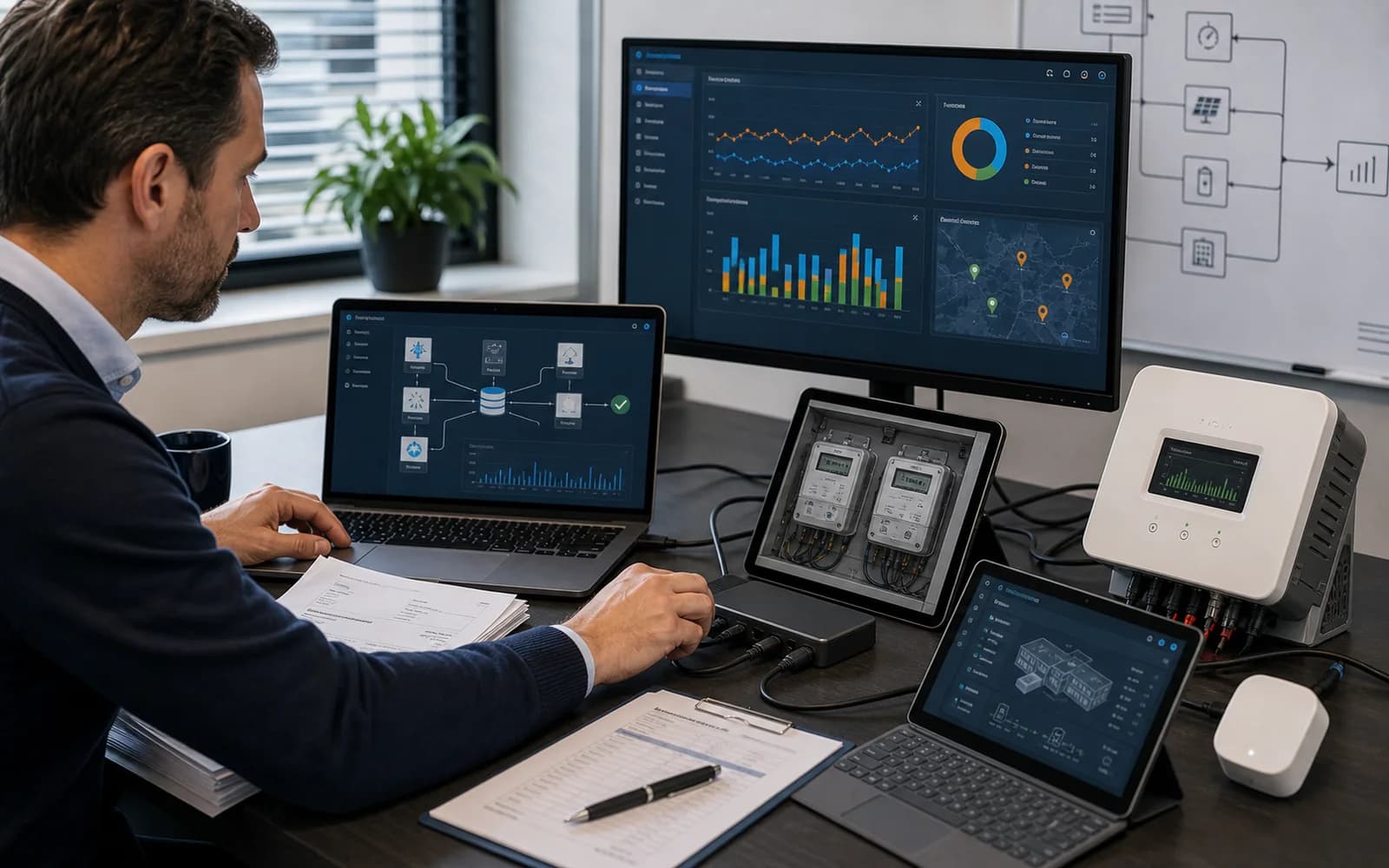
Separate data sources versus an energy data layer
Energy insight only becomes truly powerful when several sources come together. Metering data explains consumption, invoices explain costs, contracts explain risks and operational data explains why patterns arise. Without a data structure, that quickly becomes unclear.
- Start with a data model for locations, meters, sources and energy carriers.
- Check time periods, units, missing values and duplicate data.
- Combine metering data with costs, contracts and operational context.
Structure
Traditional approach
Each source has its own columns, time periods and definitions.
Modern approach
Sources are translated into a shared location and meter model.
Control
Traditional approach
Errors only surface in reports.
Modern approach
Data quality is monitored at import and analysis.
Insight
Traditional approach
Consumption, costs and contracts stay separate.
Modern approach
Data is combined into steering information.
Which sources do you often link?
Frequently used sources are smart meters, metering companies, supplier portals, invoices, EPEX prices, weather data, charging stations, building management systems and internal location data.
- Metering data and quarter-hourly values.
- Invoices and contracts.
- Charging station and building data.
- External price and weather data.
What makes linking difficult?
Sources differ in time zone, interval, meter ID, unit, history and data quality. A good link resolves that in the data layer, not only in the dashboard.
- Normalise units and energy carriers.
- Align time periods.
- Recognise duplicate or missing data.
- Keep sources traceable.
Curious what this looks like with your own data?
In a no-obligation call, a specialist looks at your meters, sites and energy questions with you. Response within one business day.
Search the knowledge base
Find the answer to your question.
Search using your own words. Abbreviations and spelling variants are recognised, so EMS also finds the articles on energy management systems.
Topic