
Energy procurement for businesses: a guide for businesses
Direct answer
Business energy procurement is the tailored contracting of electricity and gas, matched to your organisation's consumption profile. In the Netherlands, large consumers buy on the open market: their supplier needs no supply licence and prices and terms are negotiable. You choose the contract type and the timing of your purchase to suit your appetite for risk.
- Clear definition
- Data-driven assessment
- Risks and opportunities visible
- Practical next steps
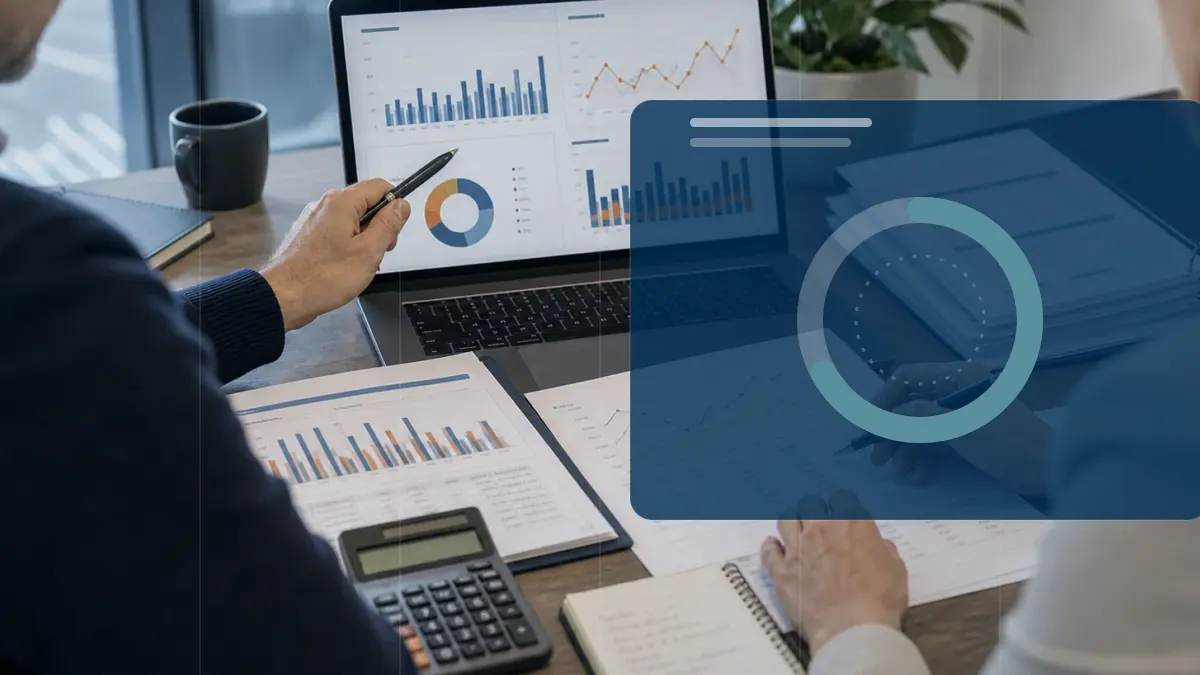
Energy procurement for businesses: scattered information versus Energy Intelligence
Almost every business buys energy, but the way it does so differs sharply from a household. An office, a production hall and a cold store each have a different demand and therefore different needs. Once your connection is large enough, you fall under large consumption and negotiate price and terms yourself. That gives freedom, but also demands choices: which contract type suits you, when do you buy, and how much price risk are you willing to carry?
- If you have a large-consumer connection, you buy on the open market; suppliers need no licence from the regulator ACM and the contract is bespoke.
- The price on your bill has three parts: the supply price for the energy itself, the grid operator charges and the taxes.
- The common contract types are fixed, variable, click or tranche, dynamic and the long-term PPA; each divides price risk and certainty differently.
Insight
Traditional approach
Information is scattered across portals, documents, invoices or separate spreadsheets.
Modern approach
Data, context and interpretation are brought together into a clear decision picture.
Decision-making
Traditional approach
Choices are made based on averages, assumptions or occasional analyses.
Modern approach
Scenarios, KPIs and current measurement data make the trade-off more concrete and repeatable.
Follow-up
Traditional approach
Actions often stay non-committal or disappear into separate reports.
Modern approach
Follow-up actions, monitoring and reporting are linked to the same energy data.
How does business procurement differ from consumer procurement?
The tipping point is your connection. Under the Dutch Energy Act you are a small consumer with an electricity connection of up to 3x80 amperes or a gas connection of roughly 40 cubic metres per hour. Above that you are a large consumer. To supply small consumers, a supplier needs a licence from the regulator ACM and must offer a model contract with fixed terms. This does not apply to large consumption: there the market is open and price, term and conditions are negotiable. You get bespoke arrangements, but also more responsibility. The protective standard terms a consumer receives automatically, you as a large consumer must arrange in the contract yourself.
- Small consumption: up to 3x80 amperes electricity or roughly 40 cubic metres of gas per hour.
- Supplying small consumers requires an ACM licence and a model contract; large consumption does not.
- For large consumption, price, term and conditions are negotiable and bespoke.
- You arrange yourself the terms a consumer receives as standard.
Which contract types and cost components exist?
There are a few main types. With a fixed contract the supply tariff is set for a period, which gives certainty. With a variable contract the tariff moves with the market periodically. With a click or tranche contract you fix the volume in parts at moments of your choosing, spreading the risk. A dynamic contract follows the exchange per hour or quarter hour and requires a smart meter. A PPA is a long-term agreement, often directly with a producer of solar or wind power. Whatever the type, your bill consists of three parts: the supply price for the energy itself, the grid operator charges and the taxes, including energy tax.
- Fixed: the tariff is set for a period, maximum price certainty.
- Variable and dynamic: the tariff moves with the market, dynamic even per hour or quarter hour.
- Click or tranche: you fix the volume in stages and spread the price risk.
- PPA: long-term procurement, often directly from a producer of green power.
- Cost build-up: supply price, grid operator charges and taxes together.
How do you buy wisely?
Start with your consumption profile: how much do you use, and when during the day and the year? That profile determines which contract type suits you and how valuable flexibility is for you. Then set your appetite for risk. Do you mainly want certainty about costs, or do you want to move with the market in exchange for possible gain? The timing of your purchase matters, because the market price fluctuates; a click or tranche strategy helps you avoid fixing everything at a peak. If you want to become more sustainable, you can buy green power. Its origin is guaranteed by Guarantees of Origin, a European certificate system in which every thousand kilowatt hours of green power yields one certificate.
- Map your consumption profile: how much and when you consume.
- Set your appetite for risk: certainty or moving with the market.
- Mind the timing of your purchase and consider spreading via clicks or tranches.
- For green procurement, Guarantees of Origin secure the sustainable origin.
Curious what this looks like with your own data?
In a no-obligation call, a specialist looks at your meters, sites and energy questions with you. Response within one business day.
Search the knowledge base
Find the answer to your question.
Search using your own words. Abbreviations and spelling variants are recognised, so EMS also finds the articles on energy management systems.
Topic