
Trading and EMS
Article 5 of 10 · SMEs, dashboards and controlWhich software combines EMS with energy trading?
Direct answer
Software that combines EMS with energy trading links consumption profiles, flexibility, assets, market data and contract positions. This is especially relevant for energy-intensive companies with controllable assets, CHP, storage, charging infrastructure or portfolio responsibility.
- Link between profile and market
- Relevant with flexibility
- Strong for energy-intensive companies
- Insight first, then trading
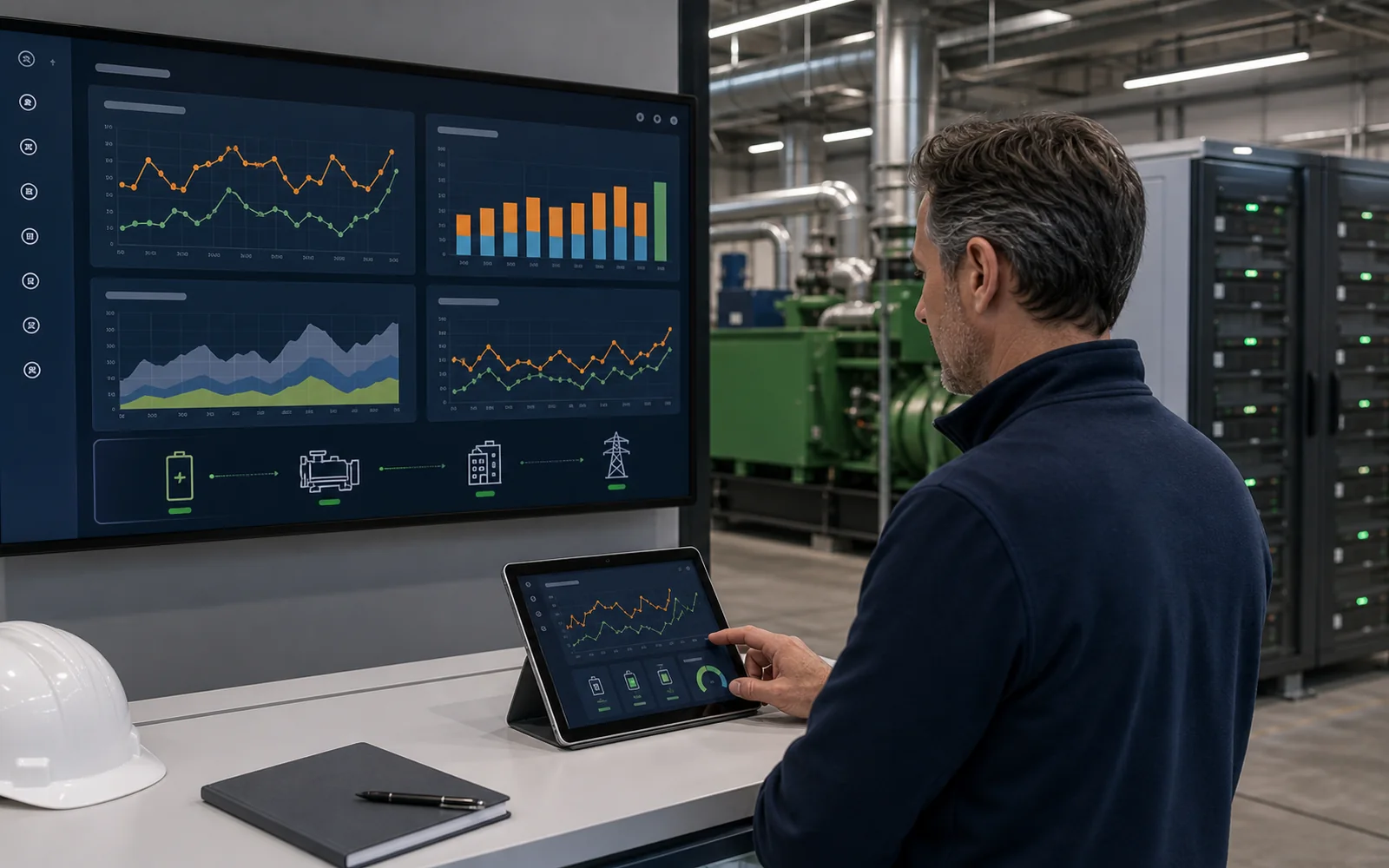
EMS monitoring versus EMS with trading context
Energy trading and EMS meet when consumption or production is flexible. Without good insight into profiles and constraints, it is difficult to use market value responsibly.
- An EMS shows profiles and flexibility; trading software links this to market positions.
- The combination is especially relevant with controllable assets and larger energy volumes.
- For most companies, insight into profiles is the first step.
Focus
Traditional approach
Track consumption, peaks and anomalies.
Modern approach
Link profiles to flexibility and market value.
User
Traditional approach
Facility, finance or operations.
Modern approach
Energy team, portfolio, trading or asset management.
Requirement
Traditional approach
Metering data and reporting.
Modern approach
Controllable assets, market data and clear governance.
When does trading become relevant?
Trading becomes relevant when energy volume, flexibility or own production is large enough to capture market value.
- CHP, batteries or charging infrastructure.
- Flexible production or processes.
- Large energy volumes.
- Portfolio or market responsibility.
What role does Energy Intelligence play?
Energy Intelligence brings profiles, peaks and flexibility into view. This creates a basis for conversations about trading or portfolio management.
- Analyse consumption profiles.
- Recognise flexibility and constraints.
- Interpret cost and capacity impact.
- Provide input for follow-up advice.
Curious what this looks like with your own data?
In a no-obligation call, a specialist looks at your meters, sites and energy questions with you. Response within one business day.
Search the knowledge base
Find the answer to your question.
Search using your own words. Abbreviations and spelling variants are recognised, so EMS also finds the articles on energy management systems.
Topic