
Which grid congestion software really helps businesses move forward?
Direct answer
Grid congestion software helps when it brings together peak load, contracted capacity, charging profiles, flexibility and scenarios. A plain consumption chart is not enough; the software must show which actions free up capacity.
- Monitor peak load
- Track contracted capacity
- Run scenarios
- Alerts on capacity risk
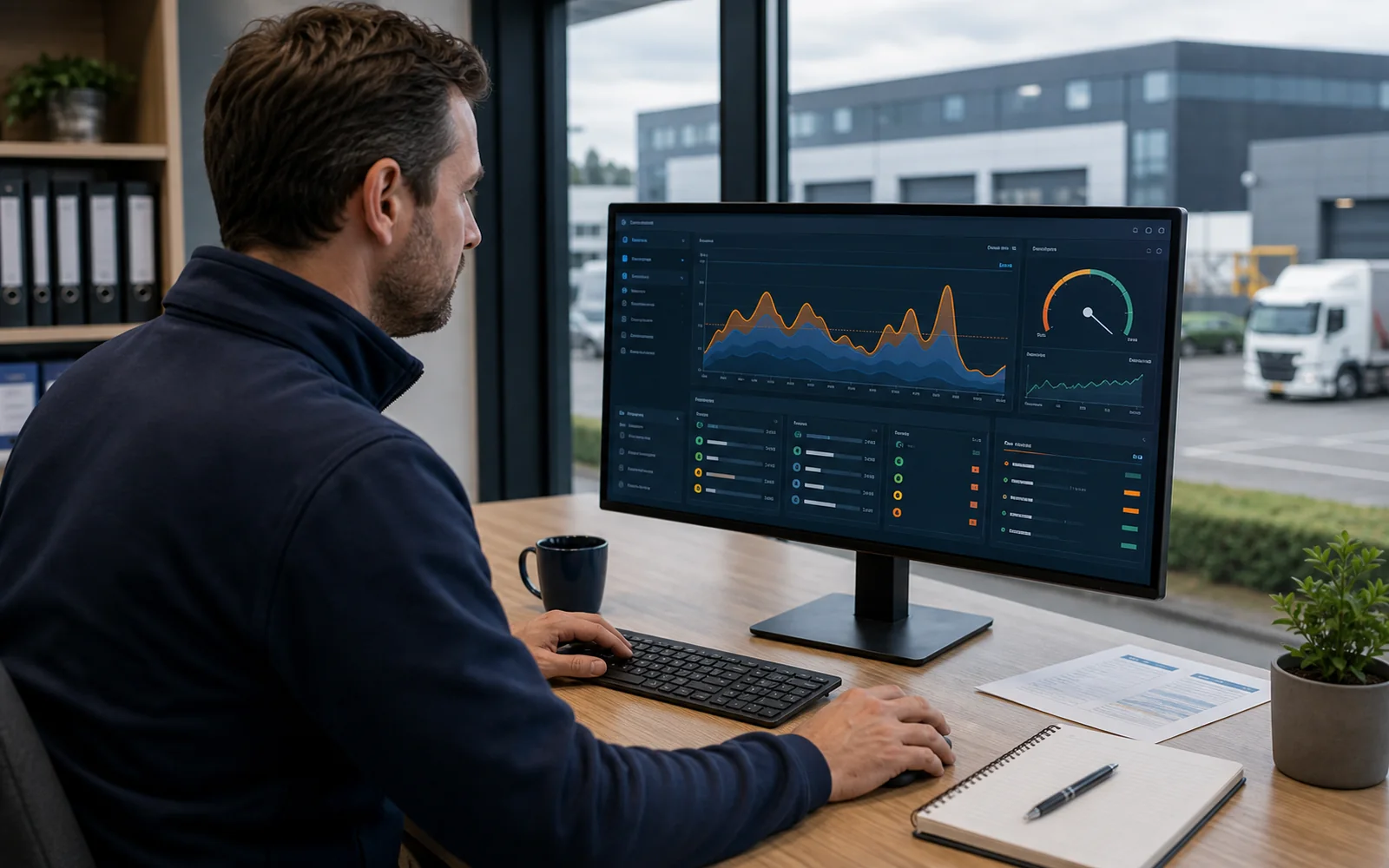
Energy monitoring versus grid congestion software
Grid congestion software must go beyond a dashboard. The core is that businesses can see where capacity is constrained, which loads are controllable and what effect measures such as smart charging, storage or process control have.
- Choose software that turns quarter-hour data into peak and capacity insights.
- Connect charging hub, building consumption, generation and contracted capacity into one profile.
- Use scenarios and alerts to prioritise measures.
Focus
Traditional approach
Show consumption and costs.
Modern approach
Steer capacity headroom, peaks and flexibility.
Analysis
Traditional approach
Review charts after the fact.
Modern approach
Scenarios and alerts for future bottlenecks.
Action
Traditional approach
Interpret problems manually.
Modern approach
Prioritise measures by their effect on grid capacity.
Which features matter?
What matters is peak analysis, contracted capacity, charging profiles, simultaneity, flexible assets, scenarios, alerts and reporting to management.
- Quarter-hour values and peak load.
- Contracted capacity and grid capacity.
- Charging hub, battery, CHP or generation.
- Scenarios for growth and measures.
When is software not enough?
Software provides insight and control, but physical adjustments, contracts, permits and agreements with the grid operator or neighbours may still be needed.
- Assess technical feasibility.
- Define operational constraints.
- Involve the grid operator and installer.
- Monitor the effect after implementation.
Curious what this looks like with your own data?
In a no-obligation call, a specialist looks at your meters, sites and energy questions with you. Response within one business day.
Search the knowledge base
Find the answer to your question.
Search using your own words. Abbreviations and spelling variants are recognised, so EMS also finds the articles on energy management systems.
Topic